

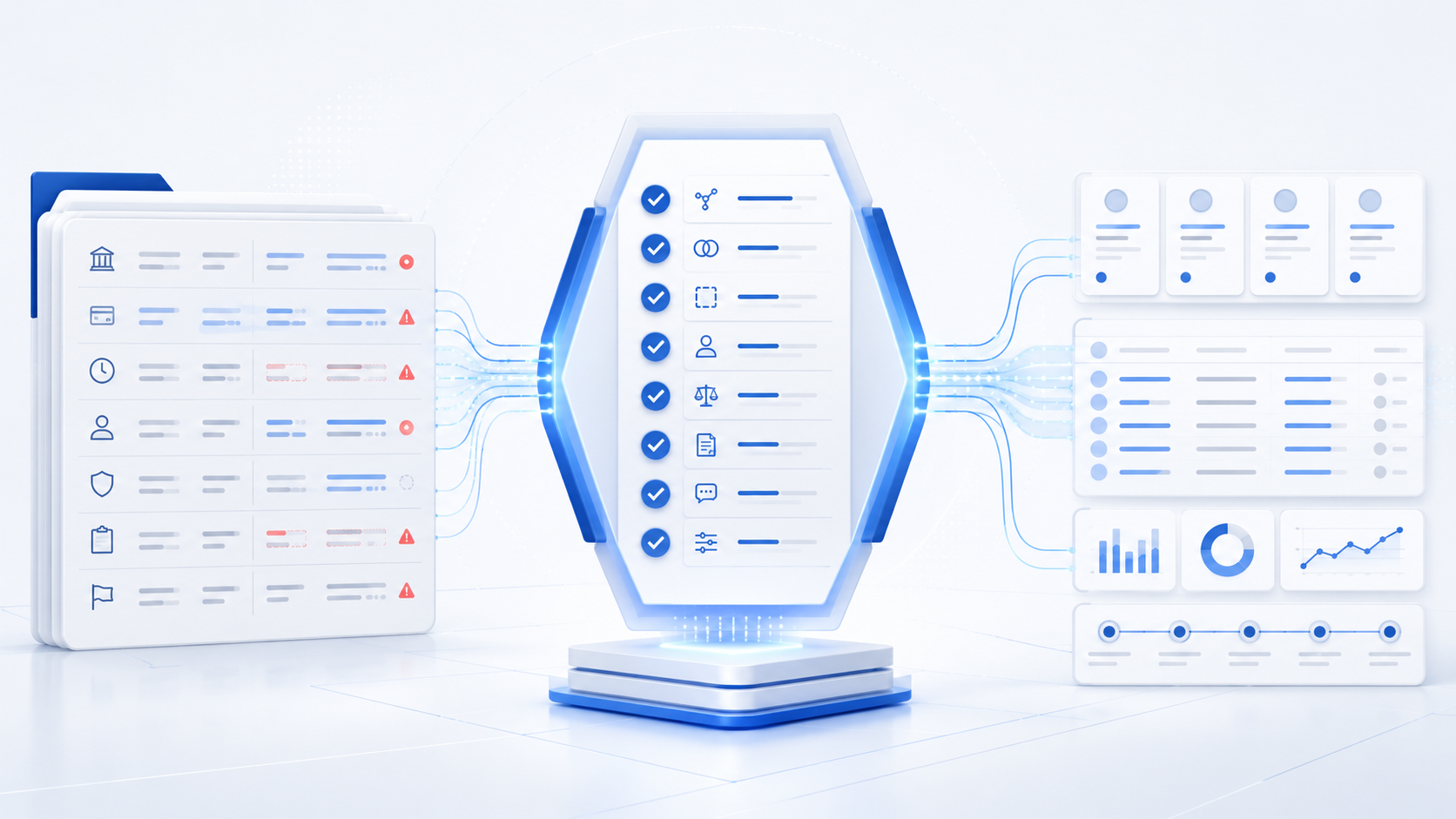
A collection agency placement file is the starting point for everything that happens in collections and recovery. It tells the agency who the consumer is, which creditor owns or placed the account, what balance is being worked, what documents support the debt, and what rules should apply before outreach begins.
For a large debt collection agency, that file is not just an upload. It is an operating control. If the data is clean, accounts can move quickly into segmentation, collector queues, payment workflows, reporting, and compliance review. If the data is weak, the same errors spread across every part of the collection process.
That is why enterprise agency placement needs a disciplined intake process before accounts enter production.
Why Agency Placement Data Matters
Agency placement is the point when a creditor places accounts with a third-party collection agency to begin collection activity. At enterprise scale, one placement can include thousands or millions of accounts across multiple portfolios, geographies, debt types, and client-specific rules.
Poor intake quality creates real operational risk. Collectors waste time researching basic account details. Client services teams chase missing files. Compliance teams review gaps after work has already started. Consumers may receive outreach based on outdated balances, missing dispute history, or incorrect contact information.
A strong agency placement process helps an agency answer four questions before work begins:
Is the consumer and account data complete enough to work?
- Is there enough documentation to support the account if challenged?
- Are compliance rules, consent indicators, and restrictions available in structured fields?
- Can the agency report back to the creditor without manual cleanup?
- The goal is simple: give the debt collection agency reliable data before collectors, automation, or AI touch the account.
What Should Be in a Placement File?
A placement file should give the agency enough information to identify the consumer, understand the account, determine the right workflow, and document the debt recovery process.
Consumer and Account Identifiers
Core identifiers usually include consumer name, mailing address, phone numbers, email address, account number, creditor reference ID, date of birth when applicable, and the last four digits of their Social Security number when appropriate. Agencies should validate these fields for completeness, formatting, duplicates, and conflicts.
Some creditors also send account history from the original credit application. That information may help confirm account context, but it should be handled carefully because it can include sensitive customer data.
Balance and Debt Details
A strong file should include the original creditor, current account owner, account type, placement date, charge-off date where relevant, principal, interest, fees, payments, credits, and current balance. It should also show whether the account is eligible for settlement, credit report activity, legal review, repayment options, or special handling.
Date fields matter. For example, statute of limitations analysis often depends on dates such as last payment, charge-off, default, or account activity. Agencies should not treat those fields as optional if they affect communications, legal routing, or escalation decisions.
Documentation and Substantiation
Agencies do not always need a signed contract to work an account, but they need sufficient documentation to substantiate the debt if challenged. That may include account statements, payment history, service records, client metadata, itemized charges, or other records showing why the debt is owed.
The FTC’s Fair Debt Collection Practices Act and the CFPB’s Regulation F resources are useful reference points for teams building non-legal compliance workflows. Agencies should still consult qualified counsel before setting legal or compliance policies.
Communication, Consent, and Restrictions
Modern debt collection depends on structured communication fields. Intake should capture phone numbers, email addresses, mailing addresses, language preference, opt-outs, consent indicators, dispute status, deceased or bankruptcy indicators, and any channel-specific restrictions.
This is especially important when the agency uses SMS, email, voicemail drops, AI phone agents, skip tracing, or automated reminders. Consent and revocation details should not live in free-text notes. They should drive workflow rules inside the collections platform.
How Enterprise Agencies Should Validate Placement Files
A mature validation process combines automation, exception handling, and human review where judgment is required.
1. Standardize Mapping Before Import
Every incoming field should map to a known system field before production. If one client sends “consumer ID” and another sends “debtor reference,” the agency needs repeatable mapping logic so the same data lands in the right place every time.
Modern collections software should support configurable templates, API-based intake, and client-specific mappings. For larger third-party agencies, this is far safer than rebuilding a manual import process for every new client.
2. Run Required-Field and Logic Checks
Required fields may vary by portfolio, but most agency placement workflows should check account number, consumer name, balance, creditor name, placement date, account status, contact information, and key date fields.
Format checks catch obvious issues: malformed emails, invalid phone numbers, missing state fields, negative balances, duplicate IDs, or dates in the wrong format. Logic checks catch deeper problems, such as a statute of limitations date that is missing, a balance that does not match payment history, or a repayment flag with no terms attached.
3. Separate Exceptions from Collector Work
Collectors should not be the first people to discover placement-file issues. If an account is missing documentation, has conflicting balances, or lacks usable contact information, it should route to the right exception queue before assignment.
Exception paths may include client services review, compliance review, data operations, legal review, or a client correction request. This protects productivity and helps the collection agency recover debts without turning collectors into data cleaners.
4. Protect Sensitive Data
Placement files often contain customer data, including phone numbers, addresses, account records, application details, and partial Social Security number values. Agencies need data security controls around ingestion, user access, file transfer, retention, and audit trails.
For enterprise teams, data collection should be intentional: collect what is needed to work the account, validate it, secure it, and make it usable for collections management. More data is not always better if it is unstructured, duplicated, or poorly controlled.
Special Handling Fields to Flag Early
Some placement data should trigger special workflows before outreach begins.
Credit reporting: If the account may be furnished to a credit report, the agency needs accurate dispute, verification, balance, and account-status fields. Credit reporting decisions should not depend on guesswork.
Legal and garnishment workflows: If an account is eligible for legal review, placement data should identify venue, balance support, dates, documentation, and any wage garnishment restrictions that may apply. Legal teams need clean records before escalation.
Tax or government portfolios: Consumer debt collection is different from the collection of taxes. Agencies handling government or public-sector work should confirm which rules apply before treating those placements like standard consumer portfolios. The IRS collection process page is one example of how tax collection follows a separate framework.
Payment workflows: If a consumer already has a payment plan, prior settlement offer, hardship status, or recurring payment arrangement, that data needs to arrive with the file. Otherwise, collecting payments can create consumer friction and reconciliation problems.
Where Aktos Fits Into Placement Governance
Aktos helps agencies turn agency placement from a manual intake burden into a controlled workflow. Instead of relying on disconnected files, custom development, or delayed cleanup, teams can use structured records, configurable workflows, API integrations, real-time dashboards, and audit trails.
That matters because placement data affects almost every downstream workflow: collector assignment, debt management rules, payment plan setup, dispute handling, skip tracing, client reporting, compliance review, and debt recovery performance.
For a deeper look at evaluating platform requirements, see Aktos’ guide to collection software. If your agency is connecting creditor systems, client portals, payment vendors, and reporting tools, the guide to API integration is also relevant.
Placement File Governance Checklist
Before a placement goes live, enterprise agencies should confirm:
Required consumer, account, creditor, and balance fields are present
- Documentation is available or clearly marked as missing
- Statute of limitations fields are included where relevant
- Consent, opt-out, dispute, and restriction data are structured
- Duplicate and conflicting records are routed to exceptions
- Sensitive account data is protected by access controls
- Credit report, legal, payment, and wage garnishment indicators are reviewed
- Client reporting fields are ready for reconciliation
- Every import, change, and exception has an audit trail
- This checklist gives collections management teams a shared standard for moving accounts from data compilation to active work.
Final Thoughts: Placement Quality Drives Collection Quality
A collection agency placement file sets the quality standard for the entire lifecycle. If intake is messy, the agency pays for it later through exceptions, manual cleanup, compliance review, reporting gaps, and slower debt recovery.
If intake is governed well, the agency can move faster, protect data quality, improve client visibility, and give collectors the context they need to recover debts responsibly.
For enterprise agencies, agency placement is not just an upload. It is where collection quality begins.


