
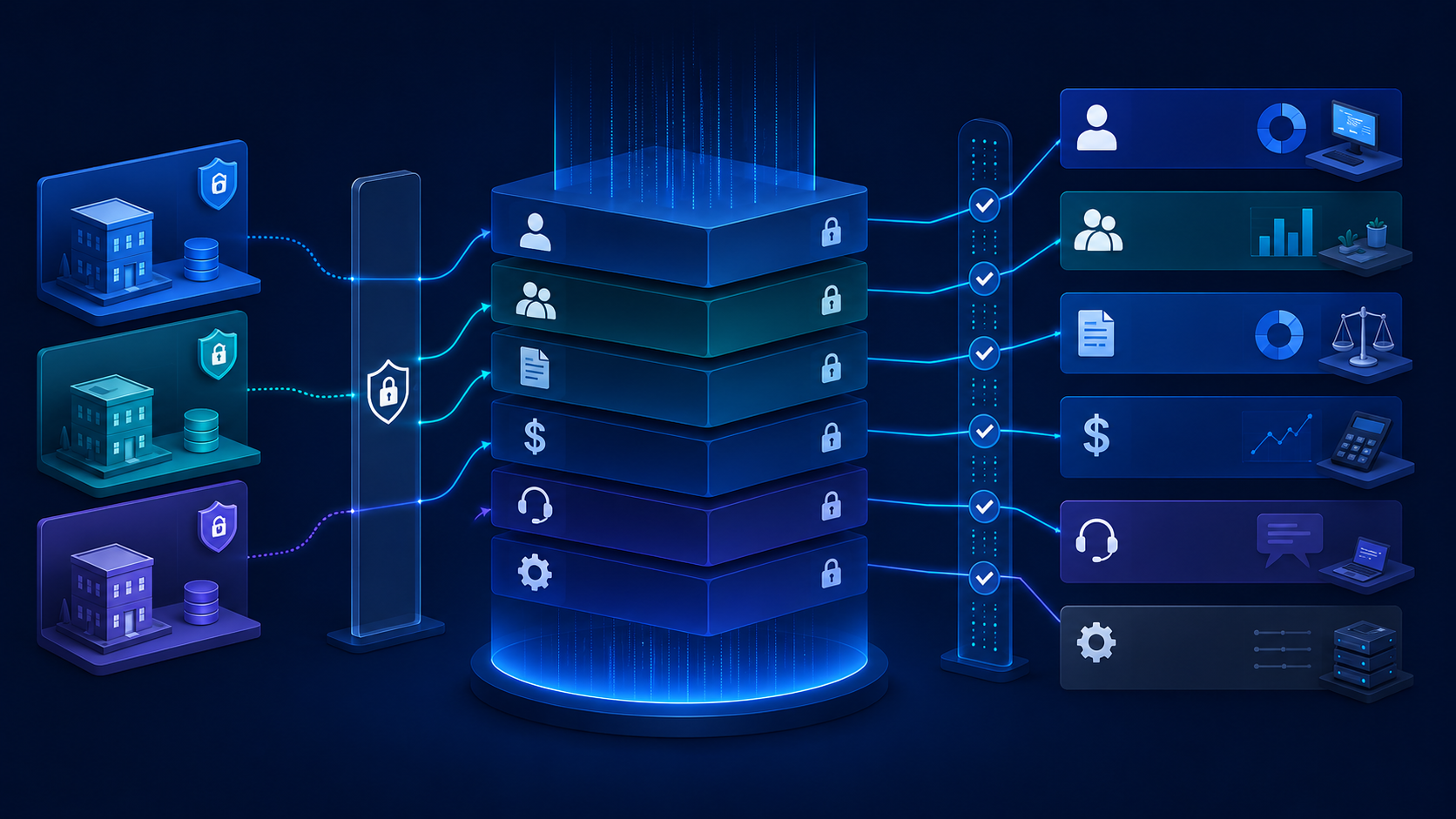
Debt collection data permissions determine who can view, edit, export, approve, or act on consumer and client information inside your collection platform. For a small agency, this may sound like an IT setting. For a multi-client agency, it is a daily operating control that affects compliance, security, client confidence, and collector productivity.
The question is not simply whether your team can access account data. The better question is: who should see what, when, and why? A collector may need enough account context to resolve a call, but not every portfolio, export, fee configuration, or client-level dashboard. A client services leader may need placement visibility and dispute queues, but not administrator controls. A compliance manager may need complete audit trails and communication history, but not the ability to change payment routing. Good permissioning creates clarity before mistakes happen.
Why Data Permissions Matter In Collections
Debt collection agencies handle sensitive consumer information: names, phone numbers, addresses, account balances, payment history, dispute records, credit reporting status, and sometimes healthcare-related or financial services data. That information needs to be useful to the team, but it also needs boundaries.
Weak permissions create two common problems. First, people see more than they need. That increases exposure if a user account is compromised or if an employee exports data outside the right workflow. Second, people cannot see what they need, so they create workarounds. Workarounds slow down repayment conversations, make validation and dispute workflows harder, and create extra operational risk.
Modern debt collection software should help agencies balance access and control. The platform should support the work collectors actually do while limiting unnecessary access to debtor, creditor, and portfolio data.
Start With Roles, Not Individual Exceptions
The cleanest permissions model starts with roles. Instead of building access around individual people one by one, define permission groups that match how the agency operates.
Common roles include:
- Collectors: View assigned accounts, log collection activities, initiate approved communications, document outcomes, and follow workflow prompts.
- Supervisors: Review team performance, reassign accounts, approve exceptions, monitor queues, and audit collector actions.
- Compliance users: Review communication logs, disputes, consent changes, validation workflows, and audit trails.
- Client services users: View client-facing reports, placements, open issues, and performance dashboards.
- Finance users: Access payment reporting, reconciliation, fees, and remittance workflows.
- Administrators: Configure workflows, integrations, users, templates, and system-level settings.
This structure makes onboarding easier and reduces the temptation to grant broad access because "it is faster." If someone changes jobs, their role changes. If a client relationship changes, the client-specific access changes. The system should make those updates traceable.
Client-Specific Access Is Essential For Multi-Client Agencies
Enterprise and upper-midmarket agencies often serve many creditors at once. A collector, supervisor, or client portal user may need access to one client portfolio but not another. That means permissions cannot stop at the user role. They also need to account for client, portfolio, office, queue, placement batch, and sometimes debt type.
Client-specific permissions help answer practical questions:
- Which users can view this creditor's accounts?
- Which users can export client data?
- Which users can see settlement authority or payment plan rules?
- Which users can view dispute documentation?
- Which users can access client dashboards or reporting templates?
Without this layer, agencies are left relying on policy rather than system controls. Policy still matters, but software should enforce the boundaries your agency has already decided.
Collectors Need Context, Not Unlimited Visibility
Collectors need enough data to have accurate, compliant conversations. That can include the consumer's contact information, balance, original creditor, payment history, communication preferences, dispute status, and workflow instructions. But unlimited visibility can create unnecessary risk.
For example, a collector may need to know that an account has a dispute flag, but not necessarily view every document across the client's portfolio. A collector may need to know that a consumer revoked SMS consent, but not modify global consent settings. A collector may need to offer a payment plan, but only within approved parameters.
Well-designed permissions let the user do the right work without exposing the entire system. That is how agencies reduce human error while keeping the collections process moving.
Audit Logs Turn Permissions Into Evidence
Permissions are only half the story. Agencies also need audit logs that show what happened after access was granted. If someone views an account, changes a phone number, edits a payment arrangement, updates consent, sends a text message, exports a report, or changes a workflow, the system should capture the action with a user, timestamp, and account context.
Audit logs support internal QA, client reviews, dispute research, and compliance investigations. They also help managers identify training issues. If a recurring mistake appears in the logs, the agency can improve the workflow or adjust user permissions before the mistake spreads.
The FDCPA and Regulation F create important debt collection requirements, and agencies should consult qualified counsel for legal interpretation. From an operational standpoint, strong audit trails help prove that your team followed the process you designed.
Learn more: Proven Audit Trails for Debt Collection Compliance
Data Permissioning Should Connect To Workflow Automation
Permissions become more powerful when they connect to workflows. A platform should not only decide what a user can see; it should also decide what actions are available based on account status, role, client, and compliance context.
For example, an account in dispute may need to limit outbound outreach until the correct workflow step is completed. A settlement offer may need supervisor approval above a certain threshold. A payment plan change may need to be logged and visible to finance. A client-facing report may need to exclude fields that are not approved for that client portal.
This is where modern software has an advantage over older collection systems. Instead of relying on collectors to remember every rule, the platform can guide the work and restrict risky actions in real time.
What To Ask Vendors About Permissions
When evaluating debt collection software, ask practical questions rather than accepting a generic "role-based access" checkbox.
- Can permissions be managed by role, client, portfolio, queue, and function?
- Can access be limited for exports, reports, payment data, and system settings?
- Are permission changes logged in an audit trail?
- Can workflows change available actions based on account status?
- Can client portal access be restricted to approved dashboards and accounts?
- Can administrators review inactive users and excessive privileges?
These questions help reveal whether the platform is built for real collection agency complexity or simply offers basic user roles.
How Aktos Supports Controlled Access
Aktos is designed for agencies that need modern workflows, client visibility, and compliance-aware operations in one platform. That includes the ability to structure access around operational roles, client reporting needs, audit trails, and workflow controls. The result is a cleaner operating model: users get the context they need, while sensitive data and system actions stay protected.
For agencies serving multiple creditor clients, this can reduce manual oversight and make client reporting more trustworthy. Permissioning becomes part of the operating system, not an afterthought.
Learn more: How an Aktos AI Phone Agent Transformed Collections
The Consumer Data Permissioning Model Agencies Should Pressure-Test
Debt collection data permissions should reflect how information actually moves among lenders, debt collectors, the debt collection agency, and creditor clients. A borrower record may include credit cards, a car loan, medical balances, retail accounts, or other types of debt. It may show the amount of money owed, outstanding debt, past due status, repayment history, interest rate details, credit reporting status, credit scores, credit rating, creditworthiness signals, and the credit bureau fields needed for account handling. Not every user should see or export all of that consumer information.
Data protection also depends on field-level controls. Contact information, phone number records, social security details, authentication results, validation activity, and dispute documentation should be visible only to the roles that need them. The same is true for data processing permissions, export rights, account notes, client files, and documentation that could affect legal action. A clear disclaimer inside policy documentation can remind users that workflow guidance is not legal advice and that agency counsel should interpret requirements for each portfolio.
Permissioning should also support operational goals. The platform should streamline collection efforts, debt recovery, debt management, and client reporting without opening sensitive information to everyone. Managers need metrics that show whether permissions are slowing work, creating exceptions, or exposing too much data. Compliance teams may also need to account for Fair Debt Collection Practices Act requirements, data protection expectations, and, for certain organizations or data flows, GDPR considerations. The system should make those controls practical rather than forcing teams to choose between access and safety.
The best model is simple to explain: users see the minimum consumer information needed to complete approved collection activities, and every exception is logged. That creates better governance for bad debt portfolios, better support for financial services clients, and fewer informal workarounds when teams need to move quickly.
Teams should also maintain FAQs for users and clients so routine permission questions are answered consistently before exceptions are requested.
Final Thoughts: Permissioning Is A Growth Control
Debt collection data permissions are not just security settings. They shape how safely and efficiently your agency can grow. If your system cannot control access by role, client, workflow, and account context, your team will eventually compensate with manual reviews and workarounds. A modern platform should make the right access easy and the wrong access difficult.
FAQ
Q: What Are Debt Collection Data Permissions?
A: They are controls that define which users can view, edit, export, approve, or act on consumer, account, client, payment, reporting, and workflow data inside a collection platform.
Q: Why Is Role-Based Access Important For Collection Agencies?
A: Role-based access helps users do their jobs without exposing unnecessary data or actions. It can reduce operational risk, simplify onboarding, and improve accountability.
Q: Should Permissions Be Client-Specific?
A: For agencies managing multiple creditor clients, yes. Client-specific controls help prevent users from seeing or exporting data from portfolios they do not support.