
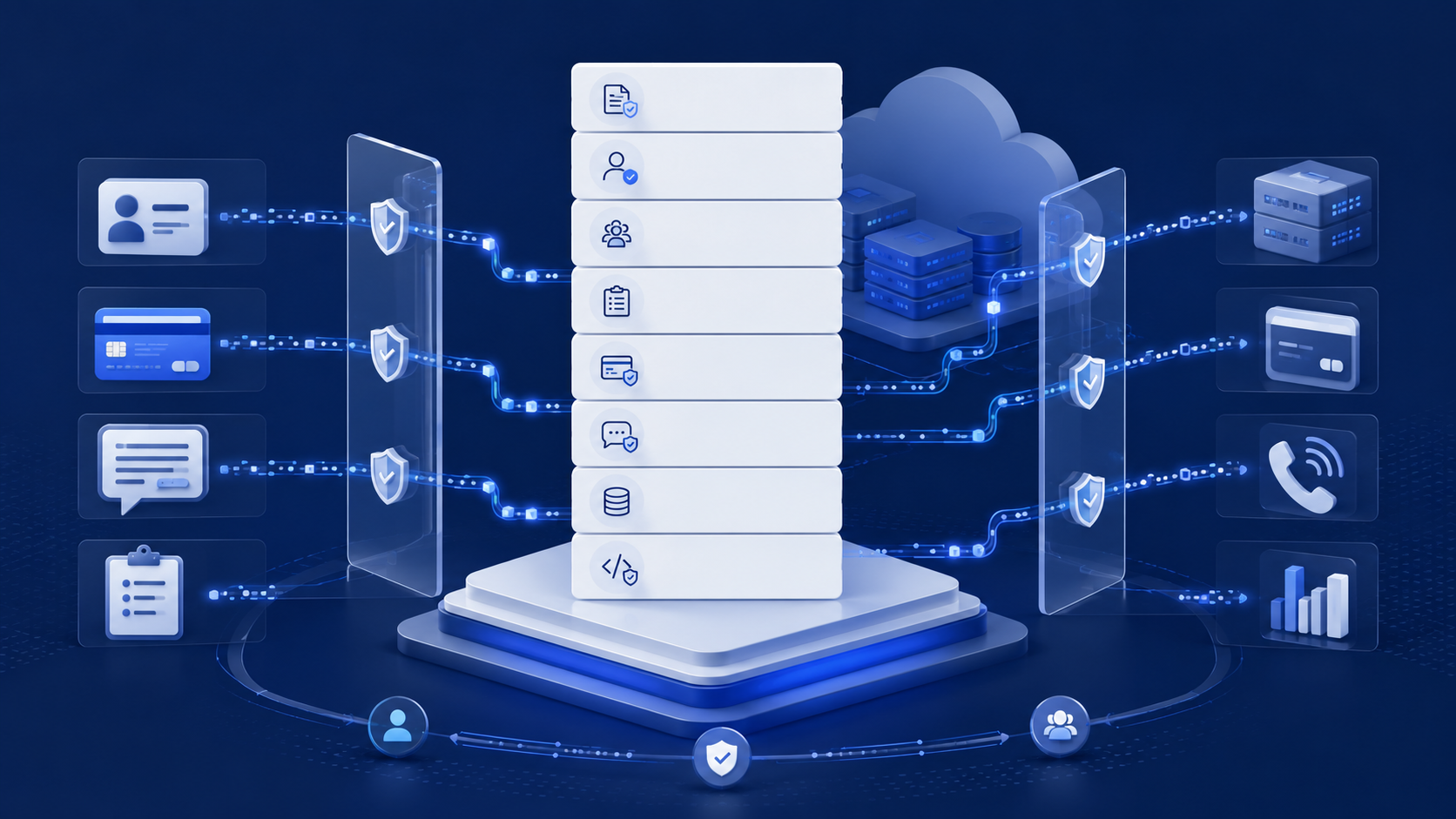
Collection agencies do not just buy software. They approve infrastructure that will hold consumer records, creditor data, payment activity, call notes, dispute history, documents, and client reporting. That is why a generic SaaS security checklist is not enough.
Security reviews affect client trust, implementation approval, audit confidence, and compliance readiness. Use this checklist during RFPs, vendor demos, and final procurement approval. This is not legal or security advice; involve internal IT, compliance, security, and counsel.
1. SOC 2 And Security Documentation
Start with evidence. Ask whether the vendor has a SOC 2 Type II report, whether it can be provided under NDA, which systems are in scope, when the audit period ended, and which trust services criteria were covered. SOC 2 is especially relevant for software as a service vendors that process sensitive customer data. The AICPA’s SOC suite of services explains these reports.
Also ask about ISO 27001, annual penetration testing, vulnerability management, security training, and incident response. Aktos has SOC 2 Type II compliance, and buyers can review the public Aktos Security Commitments page as part of their vendor security review.
2. Authentication, SSO, And IAM Controls
Access control is a common source of risky gaps. Require multi-factor authentication (MFA), for administrators and sensitive roles. Confirm whether the platform supports SSO, single sign-on, and SAML for enterprise identity providers.
Your IT team should also evaluate IAM (identity and access management). Ask how users are provisioned, how access is removed, whether sessions expire, and whether admin actions require elevated permissions. Strong identity security reduces exposure from stolen credentials, shared logins, and insider threats.
For larger agencies, ask about IP allowlisting, VPN controls, access reviews, and suspicious login alerts. If your security team uses SIEM tooling, confirm which logs can be exported into the SIEM.
3. Role-Based Permissions By Agency Function
Enterprise collection agencies need more than broad “admin” and “user” roles. Look for RBAC that reflects how your agency actually works.
Collectors should only see the accounts, queues, payment actions, and communication options they need. Supervisors need escalation visibility. Compliance users need policy controls and audit access. Finance may need payment, refund, reconciliation, and settlement permissions.
Excessive access creates avoidable risk. If every user can export data, change workflows, alter payment plans, or edit client reports, one mistake can become a security, compliance, or client-trust problem.
4. Audit Logs And Activity History
A secure collection platform should show what happened, who did it, and when. Ask for audit logs covering user logins, account edits, payment actions, communication attempts, dispute actions, workflow changes, permission changes, and export activity.
For collection agencies, audit trails must be channel-aware. Calls, SMS, email, voicemail, letters, and portal actions should connect to the account record so teams can reconstruct outreach history, consent status, opt-outs, and workflow decisions.
5. Cloud Security, Data Protection, And Recovery
Your checklist should translate cloud security into operational questions. Where is the platform hosted? Is data encrypted at rest? Is data in transit protected with TLS? What recovery objectives support disaster recovery plans?
Ask about monitoring, firewalls, vendor access controls, data redundancy, incident escalation, and how the vendor prevents misconfigurations. Configuration drift can happen across integrations, permissions, and cloud services. Ask how the vendor detects misconfiguration issues before they become data breaches.
The NIST Cybersecurity Framework 2.0 can help teams think through governance, protection, detection, response, and recovery. The practical question is simple: can this vendor show repeatable controls?
6. Payment Data And Processing Controls
Payment security deserves its own review. Ask how the platform handles cards, ACH, text-to-pay, recurring payment controls, stored payment methods, tokenization, refunds, and payment plan changes.
If card data is involved, confirm how PCI DSS responsibilities are split between the software vendor, payment processor, and your agency. The PCI Security Standards Council publishes official PCI DSS resources for procurement and finance teams.
Also review permissions for refunds, fee changes, convenience fee workflows, settlements, and reconciliation exports. Payment data management is both a finance and security issue.
7. Compliance-Aware Communication Controls
Do not accept generic SaaS security best practices without collection-specific controls. Collection software should support FDCPA and Regulation F workflows, TCPA consent and revocation logs, time-zone rules, Mini-Miranda workflows, state-level rule configuration, and channel-level opt-out handling. See the CFPB’s Regulation F resource.
For healthcare accounts, ask how HIPAA related configurations are supported.
8. Data Retention, Deletion, And Exports
Security review should cover the full data lifecycle. Ask how long active accounts, archived accounts, audit records, call data, documents, and client reports are retained, and whether settings can support client-specific requirements.
At termination, ask how data is returned, exported, or deleted. Confirm backup retention windows, deletion timelines, and whether exports include audit history for later disputes, audits, or client questions.
9. Integration And API Security
Integrations are often where risk enters the system. Enterprise agencies connect creditor systems, payment processors, dialers, SMS providers, email tools, credit bureaus, portals, and reporting tools. That expands the SaaS attack surface.
Ask how API keys are created, stored, rotated, scoped, and revoked. Review webhook security, integration logging, vendor access, and permission scopes. The best platforms reduce shadow IT by giving teams approved, governed ways to connect systems instead of forcing one-off workarounds. For a deeper look, see Aktos’ guide to debt collection API integration.
Some larger IT teams may also ask about app discovery, DevSecOps practices, ITDR, and saas security posture management. SSPM tools can help monitor SaaS misconfigurations, identity exposure, risky permissions, and configuration drift across connected applications. SSPM is not a replacement for vendor controls, but SSPM can support ongoing review after implementation. If your organization uses SSPM, ask whether the platform supports the logs and integrations your SSPM process needs.
10. RFP Questions To Ask Every Vendor
Use these questions in procurement:
- What security certifications and third-party audits do you maintain?
- Can you provide SOC 2 documentation under NDA?
- How do MFA, SSO, SAML, IAM, and RBAC work?
- How are audit logs accessed, retained, and exported?
- How are payment details protected, tokenized, and permissioned?
- What happens during a security incident?
- How do you secure APIs, webhooks, and third-party integrations?
- How do you prevent misconfigurations across cloud, identity, and workflow settings?
How Aktos Supports Enterprise Security Review
Aktos is built for modern collection agencies that need secure cloud infrastructure, role-based controls, audit trails, payment workflows, compliance-aware communications, and open integrations. Its AWS-based infrastructure, security documentation, access controls, monitoring practices, and API-first approach help enterprise buyers evaluate the platform with proof, not guesswork. For adjacent criteria, read Aktos’ guide on what to look for in debt collection software and AI phone agent compliance.
Final Thoughts
An enterprise SaaS security checklist should show how the platform protects consumer data, supports compliant workflows, controls access, secures payments, and reduces risk after go-live.
Talk to Aktos about enterprise security, implementation, and software evaluation requirements for modern collection agencies.
FAQs
Q: What is a SaaS security checklist?
A: It is a structured set of questions used to evaluate vendor controls, documentation, access management, data protection, monitoring, integrations, and incident response readiness.
Q: Why does SOC 2 matter for collection software?
A: SOC 2 gives buyers a third-party framework for reviewing controls around systems that process sensitive data. Agencies should still review the report scope, audit period, exceptions, and vendor-specific controls.
Q: What security questions should agencies ask software vendors?
A: Ask about SOC 2, MFA, SSO, permissions, audit logs, payment security, incident response, API security, data retention, backups, and staff access.
Q: How do audit logs reduce risk in collection operations?
A: Audit logs help agencies investigate account changes, payment actions, communication attempts, permission changes, exports, disputes, and compliance events.
Q: What should buyers ask about payment data security?
A: Ask how payment data is tokenized, which processor is used, how PCI DSS responsibilities are handled, who can change payment plans or refunds, and how failures are logged.