
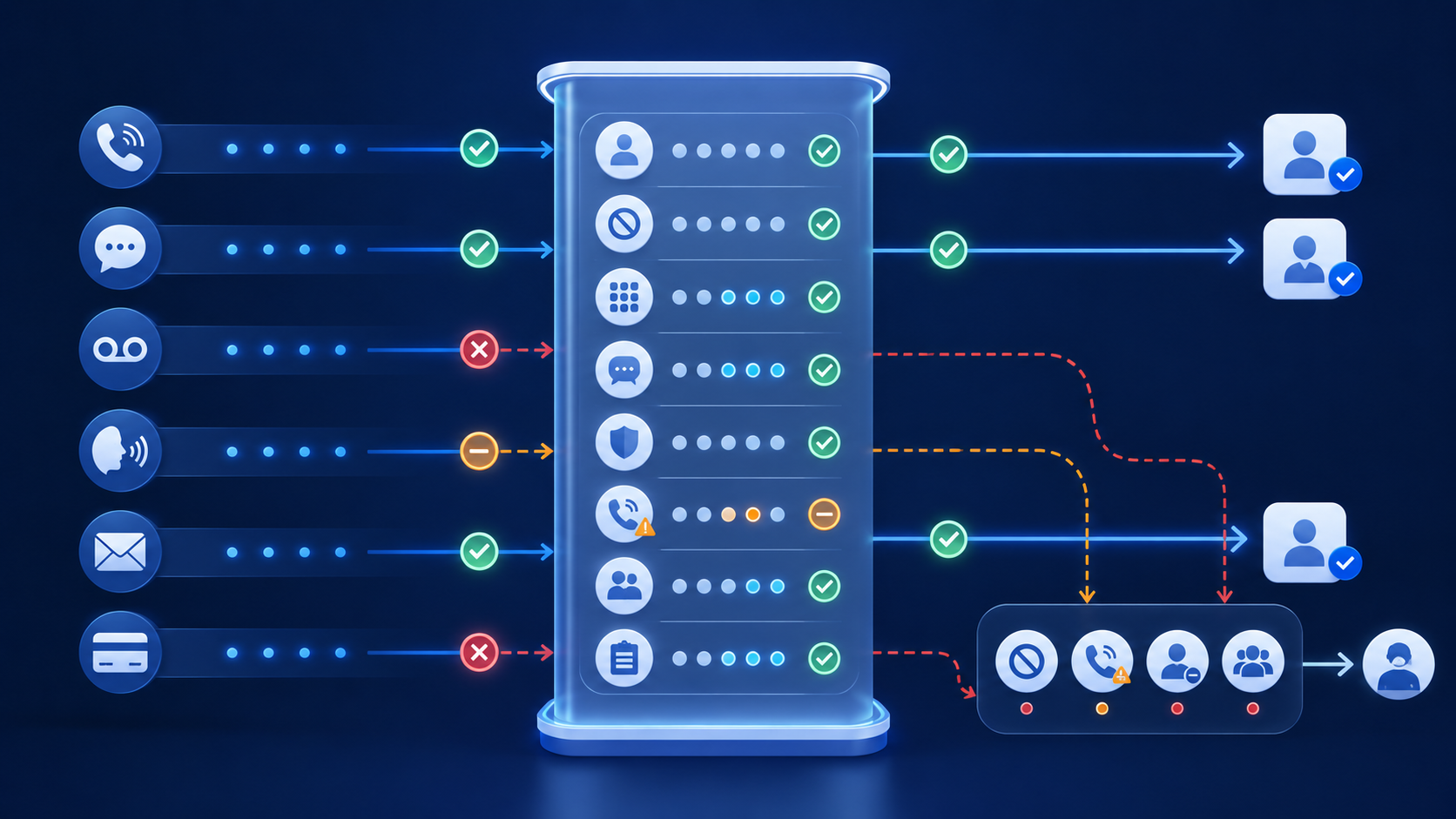
TCPA compliance software matters because collection agencies rely on high-volume communication: phone calls, SMS, voicemail drops, predictive dialer campaigns, AI phone agents, payment reminders, and follow-up messages. Each channel can improve consumer engagement, but each also introduces compliance risk if consent, opt-outs, dialing methods, and audit trails are not managed correctly.
The Telephone Consumer Protection Act, commonly called the TCPA, affects how organizations use automated calls, prerecorded messages, artificial voice messages, text messages, faxes, and certain dialing technologies. For debt collection agencies, TCPA compliance cannot sit in a policy binder. It has to be built into the software collectors, supervisors, compliance teams, and operations leaders use every day.
This article is practical guidance, not legal advice. Agencies should work with qualified counsel to interpret TCPA requirements, Federal Communications Commission guidance, state laws, client consent language, and collection-specific communication rules.
Why TCPA Compliance Software Matters
TCPA compliance becomes harder when outreach lives across disconnected tools. One system may store consumer data. Another may manage call center software. A third may send text messages. A predictive dialer may place outbound calls. An AI phone agent may handle routine conversations. A payment portal may send reminders. If those systems do not share current consent status and opt-out history, mistakes become more likely.
The core question for buyers is simple: can the platform prove that outreach was permitted before it happened and document what happened afterward?
The eCFR’s TCPA-related calling rules are a key reference for calls, autodialed calls, prerecorded voice messages, artificial voice messages, opt-out mechanisms, and related restrictions. Agencies should evaluate TCPA compliance software based on whether it can operationalize those requirements inside collection workflows.
Start With Consent Management
Consent management is the foundation of TCPA compliance. Software should show whether the agency has consent, where that consent came from, what channel it applies to, what technology it covers, and when it changed.
Ask vendors whether the platform can track:
- Prior express consent.
- Prior express written consent where required.
- Pass-through consent from creditors.
- Consent by phone number, account, client, and portfolio.
- Channel-specific consent for calls, SMS, prerecorded messages, voicemail, and email.
- Consent history and revocations.
- Evidence that can be exported for compliance audits or client questions.
A free-text note is not enough. Collectors should not have to read through account history to decide whether an automated call, text message, or AI phone agent workflow is allowed.
Review Opt-Out Handling And Revocations
Consumers may revoke consent or opt out of a specific channel. TCPA compliance software should capture those signals quickly and apply them across the right workflows.
Strong opt-out handling should include SMS STOP processing, verbal revocation logging, internal suppression lists, channel-specific preferences, and supervisor review queues. If a consumer opts out of text messages, SMS workflows should stop without requiring a manual spreadsheet update. If a consumer revokes consent during a phone call, that revocation should update the account record and affect future automated calls.
Not every preference has the same scope. An email unsubscribe may not equal a full no-contact request. A request to stop calls may not block letters. The software should help users distinguish opt-out handling by channel instead of flattening every preference into one unclear checkbox.
Identify The Dialing Technology Being Used
TCPA questions often depend on the outreach method. Buyers should ask whether the platform can identify manual dialing, auto dialer workflows, autodialer campaigns, predictive dialer activity, automatic telephone dialing system use, prerecorded messages, and artificial voice calls.
Useful questions include:
- Can call records show whether outreach was manual or automated?
- Can managers report on predictive dialer and autodialer usage?
- Can the system block automated calls when consent is missing or unclear?
- Can prerecorded messages be restricted by consent status?
- Can AI phone agents follow the same consent checks as other automated outreach?
- Can dialing methods be included in audit trails?
The goal is not to make collectors analyze ATDS rules while working accounts. The goal is to prevent the wrong communication workflow from being used on the wrong consumer account.
For a deeper look at how AI outreach should fit inside consent checks, escalation paths, and audit trails, see Aktos’s guide to AI phone agent compliance.
Connect TCPA, Reg F, And FDCPA Controls
Debt collection agencies cannot manage TCPA compliance in isolation. A call or text may pass one consent check but still create risk under debt collection communication rules, state laws, client requirements, or consumer preferences.
The CFPB’s Regulation F and the FTC’s FDCPA text are important references because collection communication has its own requirements beyond TCPA controls.
A strong platform should check multiple conditions before outreach:
- Is consent available for this channel and technology?
- Is the consumer inside an allowed calling window?
- Has the account hit a frequency cap?
- Has the consumer opted out?
- Is the account disputed, paid, recalled, bankrupt, or in legal review?
- Is the message template approved for this account status?
Integrated debt collection software should let TCPA, Reg F, FDCPA, state rules, and client-specific workflows operate together. For a broader view of managing calls, SMS, email, AI outreach, and compliance rules together, Aktos’s guide to enterprise omnichannel outreach explains how agencies can avoid disconnected-channel risk.
Manage SMS, Voicemail Drops, And Faxes Separately
Text messages should not be treated as just another campaign type. SMS needs its own consent status, approved templates, opt-out mechanism, STOP handling, delivery logs, frequency controls, and suppression rules.
Voicemail drops and prerecorded voice messages also need careful review because they may involve prerecorded or artificial voice content. If an agency uses voicemail workflows, the software should track consent status, message version, delivery attempt, suppression reason, and any consumer response.
Faxes are less common in modern consumer collections, but if an agency uses them for any regulated communication, they should be tracked with the same seriousness as other channels.
Account For DNC Scrubbing And Reassigned Numbers
Many contact center compliance programs include do-not-call list management and DNC scrubbing. Debt collection is different from telemarketing, but agencies should still ask whether software can support internal do-not-call lists, client-specific suppression, and national do not call registry workflows where counsel recommends them.
Reassigned numbers are another risk area. Phone numbers change owners. If an agency calls or texts a reassigned number, the recipient may not be the consumer tied to the account. TCPA compliance software should help flag wrong-party contacts, suppress bad numbers, preserve phone number history, and support reassigned number checks where appropriate.
These controls can reduce complaints, prevent repeated wrong-party outreach, and lower exposure to class action lawsuits.
Audit Trails And Reporting Should Be Account-Level
Campaign reports are not enough. Compliance teams need account-level audit trails that show what happened at the moment outreach occurred.
Audit trails should capture:
- Consent status at the time of outreach.
- Channel used.
- Dialing method or message type.
- Template, script, or message version.
- Opt-out and revocation history.
- User or automated workflow responsible.
- Timestamp and outcome.
- Suppression reason when outreach was blocked.
Managers should also see reporting dashboards for consent trends, opt-outs, automated calls, predictive dialer usage, AI phone agent outcomes, blocked attempts, and exception queues.
How Aktos Helps Agencies Manage TCPA Risk
Aktos brings communication workflows, consent-aware automation, AI phone agents, payment links, omnichannel outreach, audit trails, and reporting into one modern debt collection platform. Agencies evaluating AI workflows can also review how AI phone agents benefit debt collection agencies, especially when automation needs to support payment follow-up, routine conversations, and compliant escalation.
Before outreach happens, Aktos can help agencies check account status, consent, channel preferences, timing rules, and workflow restrictions. After outreach happens, the activity is logged for supervisors, compliance teams, and client reporting.
That gives agencies more control than stitching together separate dialers, SMS tools, voicemail vendors, spreadsheets, and payment systems.
FAQs
Q: What is TCPA compliance software?
A: TCPA compliance software helps agencies manage consent, opt-outs, dialing methods, automated calls, text messages, prerecorded messages, AI phone agents, suppression rules, and audit trails.
Q: Does TCPA compliance apply to debt collection agencies?
A: TCPA analysis can apply depending on the channel, consent, technology, and communication type. Collection agencies should work with qualified counsel to apply TCPA rules to their workflows.
Q: What should a TCPA compliance checklist include?
A: A TCPA compliance checklist should include consent management, opt-out handling, revocation tracking, dialing method records, SMS controls, DNC scrubbing, reassigned number handling, and audit trails.
Q: Should AI phone agents follow TCPA compliance controls?
A: Yes. AI phone agents should follow the same consent checks, channel preferences, timing rules, suppression conditions, disclosures, and audit trail requirements as other outreach workflows.