
ACA International 2026 should be more than a few days of handshakes, booth visits, and badge scans. For collection agency leaders, operators, compliance teams, and technology buyers, the conference is a chance to step back from daily queue pressure and ask a bigger question: is our operation built for where collections is heading?
ACA International is one of the central associations serving the accounts receivable management industry, which makes its annual conference a useful checkpoint for agencies tracking advocacy, technology, the regulatory landscape, and peer priorities. If you are heading to Rosen Shingle Creek in Orlando, FL, arrive with a plan, not just a calendar.
Why ACA International 2026 Matters
The value of ACA International 2026 is not only the exhibitor hall or the inspiring keynotes. The real value is context. Agency leaders can compare notes with peers, evaluate vendors, review compliance pressure, and see how other agencies are approaching AI, digital payments, client reporting, and staffing constraints.
ACA’s flagship event also gives agencies a broader view of industry priorities, including advocacy, political action, the industry advancement fund, and member resources such as SearchPoint, the Safeguards Resource Center, the Hunstein Resource Center, the Reg F Compliance Center, the FDCPA Compliance Center, and the FCRA Compliance Center.
Those resources matter because compliance affects every daily decision: contact timing, channel choice, credit reporting, outreach stops, and documentation.
What to Do Before You Arrive in Orlando
Before you get to Rosen Shingle Creek Orlando, define the business problems you want the event to help solve. Start with your top priorities. Are you trying to reduce manual work? Improve client reporting? Modernize payments? Evaluate AI? Replace legacy software? Improve collector productivity? Strengthen TCPA, FDCPA, FCRA, or Reg F controls?
Then build a shortlist of vendors and sessions. Schedule meetings early and bring specific workflows you want to see: a payment updating account status, an SMS opt-out applying correctly, a dispute triggering review, or a client viewing recovery and compliance reporting from one dashboard.
What to Look for in Collection Technology at ACA
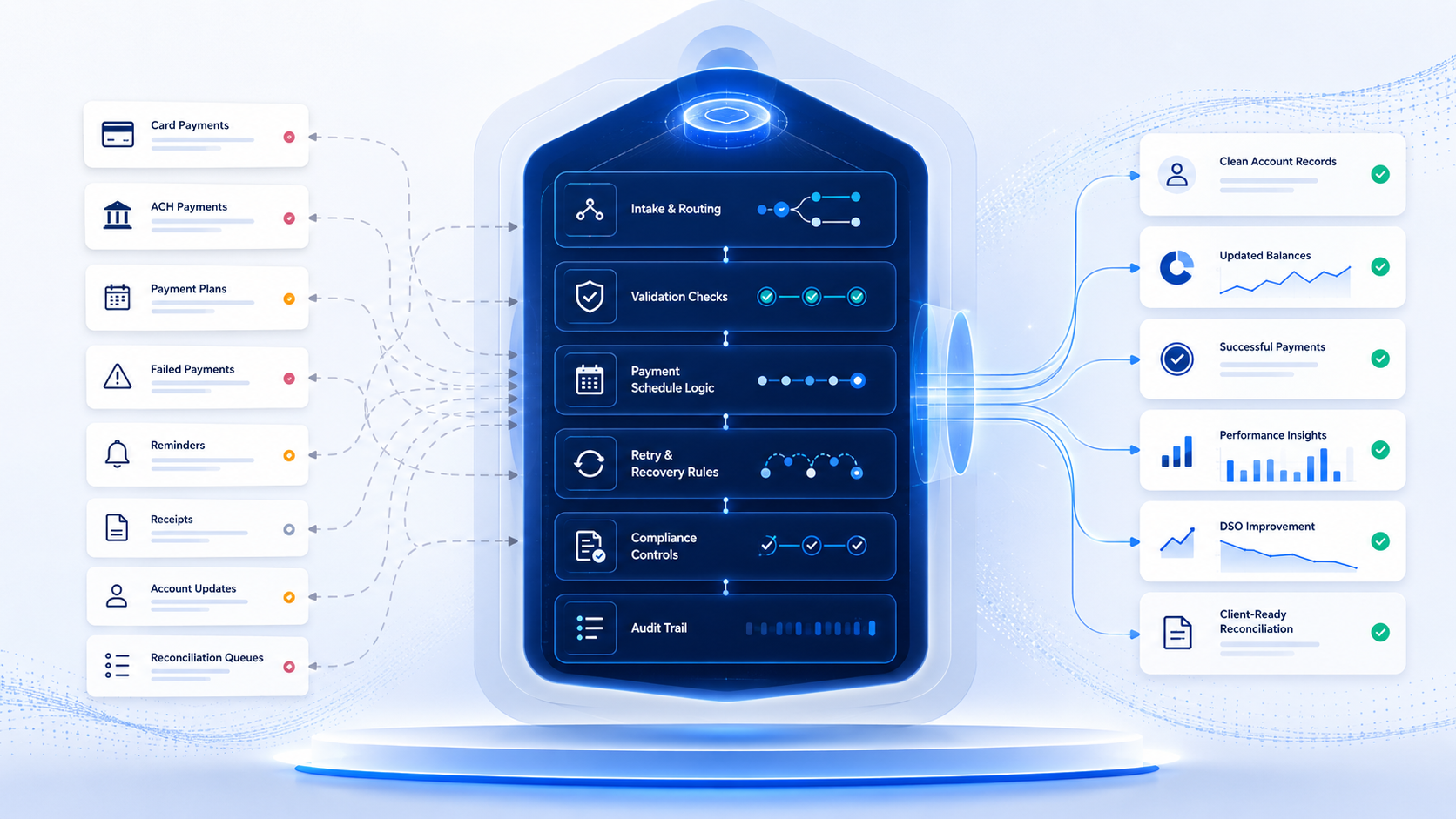
Modern collection technology should feel less like a patchwork of tools and more like an operating system. The strongest platforms connect AI, workflows, payments, compliance, and reporting.
AI That Connects to Real Workflows
AI should not be treated as a standalone novelty. An AI phone agent, call summary tool, or decision engine is only useful when it can safely access current account context and trigger the right next step.
Ask whether AI connects to account records, payment status, consent information, escalation workflows, and reporting. For more context, see Aktos’ guide to why AI agents need real-time collections data.
Workflows Operators Can Change
Agency operations change quickly. New clients bring different placement rules, state requirements shift, and payment exceptions need new paths. Look for no-code workflow builders, segmentation, approval paths, compliance-aware actions, and escalation rules your operations team can update without a developer ticket.
Payments That Reduce Friction
Payment workflows should connect to the account record, not live in a separate processor login. Look for online payments, text-to-pay, recurring plans, payment portals, settlement workflows, payment status syncing, and exception routing.
If a consumer pays, outreach should adjust. If a payment fails, the right follow-up should trigger. See Aktos’ guide to debt collection payment automation.
Compliance Controls Built Into the Process
Regulatory controls should be part of the workflow itself. Ask vendors how they support contact caps, time-zone controls, consent logging, revocation logging, mini-Miranda workflows, audit trails, state-specific rules, and documentation.
The CFPB’s Regulation F, the FTC’s FDCPA resources, and the CFPB’s Debt Collection Compliance Resources are useful federal references for agencies reviewing Debt Collection Rule materials, FAQs, forms, and implementation guidance. Agencies should also work with qualified counsel to understand how federal, state, client, and portfolio-specific rules apply to their own operations.
Reporting Clients Can Actually Use
Client reporting should not depend on month-end spreadsheet rebuilds or one-off status emails. Modern agencies need dashboards for recovery performance, account status, payment activity, compliance reports, collector performance, and scheduled reporting. For enterprise clients, reporting is part of vendor trust. Aktos’ article on collection agency reporting dashboards is a helpful primer.
Questions to Ask Every Software Vendor
Use ACA International 2026 to pressure-test what vendors can actually support. Ask:
- How does your platform handle high account volume?
- What happens when we add new clients, portfolios, or business lines?
- Can our team configure workflows without developer support?
- How do payments update account status, reporting, and follow-up workflows?
- Which communication channels are native?
- How are audit trails stored and searched?
- Which integrations are native, and which require custom work?
- What security documentation can you provide?
- What does implementation and post-go-live support look like?
If your agency is preparing a formal evaluation, Aktos’ guide to debt collection software RFP questions can turn conference notes into a structured scorecard.
Where to Meet Aktos at ACA International in Orlando
Aktos will be at ACA International in Orlando at Booth #100. We'll be hosting a 20-minute innovation demo focused on what modern collection software can do when AI, workflows, payments, compliance, and reporting live in one connected system.
Do not just ask what the software does. Ask what becomes possible when these pieces stop living in separate systems.
During the Aktos demo, agency leaders can expect to see AI-assisted activity, payment actions tied to account status, compliance guardrails across channels, real-time dashboards, and workflow automation without dev tickets. It is a look at modern debt collection software as a connected operating layer.
Aktos is also hosting an invite-only dinner for agency leaders, operators, and industry peers who want to talk candidly about where collection technology is heading. The dinner is designed as a peer conversation, not a sales pitch: a space to discuss what is working, what is broken, and what needs to change. RSVP on Partiful to receive your invite.
How to Turn ACA Conversations Into Action
The event type matters less than what your team does afterward. Within a week of returning from Orlando, debrief with the people who own operations, compliance, finance, IT, client services, and collector performance.
Ask which vendors addressed real operational pain, which demos connected to your workflows, which ideas could improve operational efficiency within 90 days, which tools would help consumers “know my debt” details more clearly, and which notes should become RFP requirements.
Then rank opportunities by business impact: manual work reduction, payment workflows, compliance automation, client visibility, collector productivity, integration flexibility, and reporting depth.
Final Thoughts: Go to ACA With a Buyer’s Mindset
ACA International 2026 can be a valuable conference if you treat it as more than a networking trip. For modern third-party collection agencies, the biggest technology question is no longer whether a platform has AI, payments, workflows, compliance, or reporting. The bigger question is whether those pieces work together.
That is what agency leaders should evaluate in Orlando: not isolated tools, but connected systems that help teams move faster, reduce manual cleanup, improve visibility, and scale with more control.
FAQs
Q: What is ACA International 2026?
A: ACA International 2026 is an industry conference for professionals in collections and accounts receivable management. For agencies, it is a chance to meet peers, attend sessions, review vendors, and evaluate industry trends.
Q: Who should attend ACA International 2026?
A: Agency owners, executives, operators, compliance leaders, client services teams, IT leaders, and collection managers can all benefit, especially if the agency is evaluating technology, workflow improvement, AI, payments, or reporting.
Q: How should collection agencies prepare for ACA International?
A: Define top priorities before the event, schedule vendor meetings early, bring real workflows to demos, and prepare a scorecard for technology, implementation, compliance, integrations, and support.
Q: What software questions should agencies ask at ACA?
A: Ask how each platform handles account volume, workflow configuration, payments, communication channels, audit trails, security, implementation, integrations, and post-go-live support.
Q: Where can agencies meet Aktos at ACA International in Orlando?
A: Agencies can visit Aktos at Booth #100, attend the 20-minute innovation demo, or request an invite to the Aktos dinner for agency leaders and operators.