A long feature list does not make collection agency software enterprise-ready. A platform may work for today’s users and account volume while still becoming the reason an agency cannot satisfy a larger creditor’s security review, reporting requirements, integration model, or implementation timeline.
Enterprise readiness means supporting greater volume and complexity without sacrificing control. The software must coordinate data, workflows, permissions, payments, digital communications, and client reporting as the agency grows. Use this checklist to evaluate a current system or pressure-test prospective vendors before a demonstration becomes a risky contract.
1. Infrastructure and Performance Readiness
Start with the operating foundation. Enterprise debt collection software should support rising account, user, client, transaction, and API volume without forcing recurring hardware projects. Ask how the platform performs during placement imports, workflow runs, reporting, and peak online payment periods.
A cloud-native architecture should also provide backup, recovery, business continuity, monitoring, and secure access for distributed teams. Warning signs include overnight reports, automation that slows collectors, or growth that requires local maintenance. A system is not scalable if every increase in volume raises operational costs and creates another infrastructure project.
2. Multi-Client and Multi-Portfolio Architecture
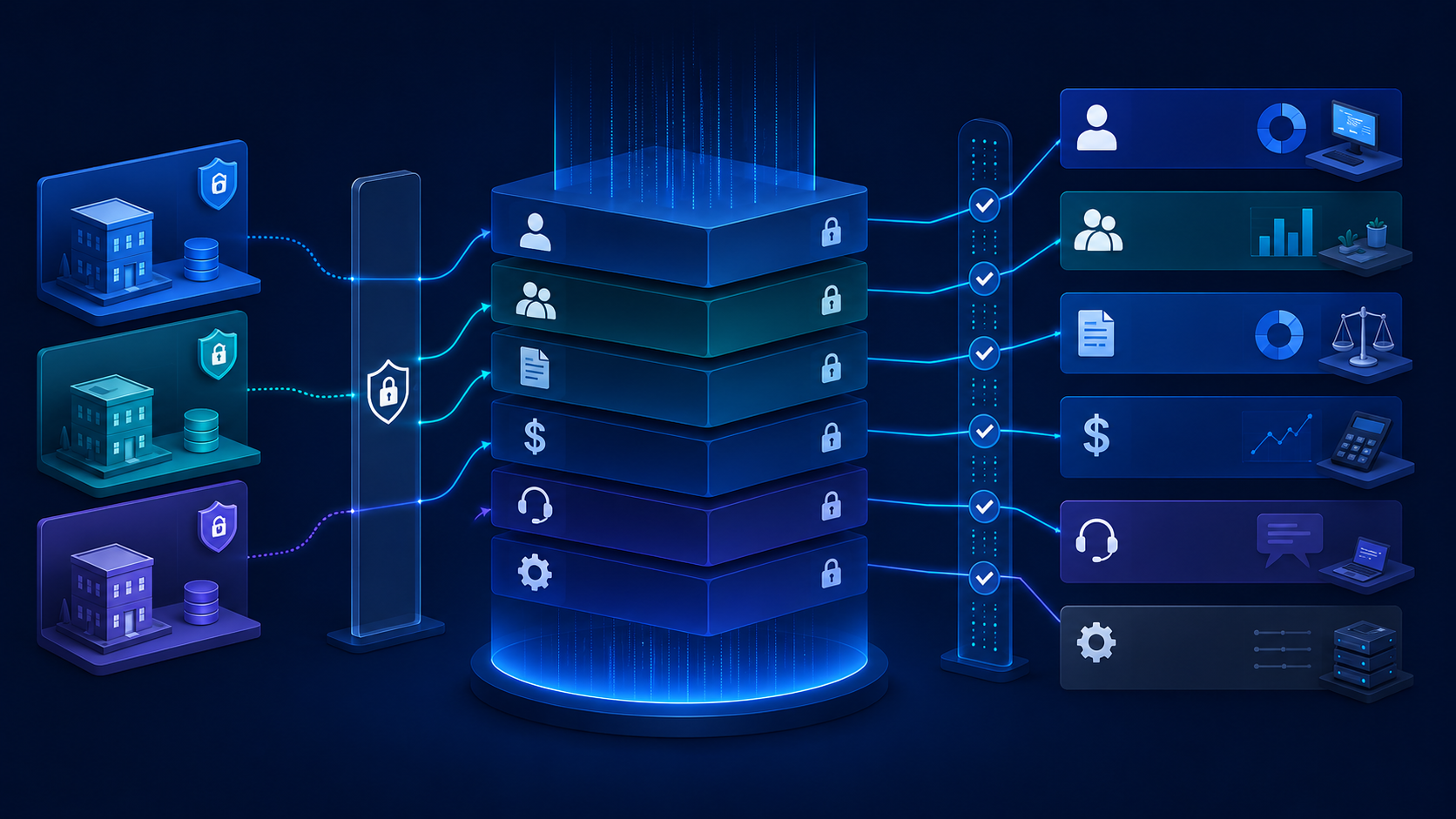
Larger collection agencies need to organize accounts by client, portfolio, placement, account type, and business line. Confirm each creditor can have distinct service levels, fee arrangements, reporting fields, communication strategies, and compliance management rules.
Then test isolation. Can one client’s workflow or report change without disrupting another? Can users be restricted by client and portfolio? Strong architecture keeps overdue accounts, client configurations, and performance data separated while still giving leadership consolidated cash flow visibility.
3. Workflow Configuration and Automation
Enterprise-ready collection agency software should let operations teams configure routine business logic without waiting for specialized developers. Look for automated workflows covering segmentation, queue assignment, payment plans, missed-payment follow-up, disputes, complaints, exceptions, supervisor approvals, and administrative reporting.
The key question: can operators update a rule themselves? A configurable decision engine should use factors such as account status, balance, risk profile, payment history, jurisdiction, and client requirements. Predictive analytics and machine learning may improve prioritization, but only when their recommendations are visible, governed, and connected to real agency workflows. Useful automation improves agent productivity; it does not create a black box.
4. Integration and API Readiness
Enterprise agencies rarely operate in one system. Review connections with creditor platforms, payment processors, dialers, communication providers, credit bureaus, skip tracing services, legal tools, and reporting environments. Documented APIs should support reliable synchronization, authentication, error handling, retry logic, and integration logs.
Favor native integrations and bring-your-own-provider flexibility. Closed ecosystems create vendor lock-in and make future changes expensive. During evaluation, use an API-first software migration framework to map which systems send data, which depend on real-time updates, and what happens when a connection fails.
5. Security, Permissions, and Data Governance
Enterprise buyers assess how an agency controls data, not merely whether it uses cloud-native hosting. Review role-based access, client- and portfolio-level restrictions, multi-factor authentication, administrative permissions, user provisioning, deactivation, export controls, file transfers, third-party access, and audit trails.
Ask for security documentation that supports client due diligence. The FTC’s Start with Security guidance offers practical questions around data access, retention, protection, and vendor oversight. Some clients may also ask how the vendor’s information security management aligns with requirements for an information security management system. For a deeper operating review, use Aktos’s guide to data permissioning in debt collection software.
6. Compliance-Aware Operational Controls
Modern debt collection software should support timing and frequency rules, consent and revocation records, disputes, communication preferences, approved templates, disclosures, and searchable evidence of system and user activity. Controls may need to vary by jurisdiction, client, account, and channel across multi-channel communication, chatbots, calls, letters, and self-service portals.
Use the official CFPB Regulation F reference and the FDCPA as starting points, then validate configurations against applicable state laws and client policies. Compliance management must be updateable without a long development cycle. Compliance management software can support control and documentation, but it is not legal advice; agencies should confirm requirements with qualified counsel.
7. Reporting and Client Transparency
Enterprise clients expect more than static totals. Assess whether the platform provides real-time analytics, client-specific dashboards, collector and team views, debt recovery reporting, payment activity, communication history, workflow status, compliance exceptions, custom calculations, scheduled delivery, and secure client access.
Warning signs are easy to spot: client services must ask IT for answers, reports require manual assembly, totals cannot be traced to underlying activity, or different teams produce different numbers. Reporting should help leaders monitor recovery, DSO, operational capacity, and risk from one governed data set.
8. Implementation and Migration Readiness
A controlled implementation covers data, workflows, testing, training, cutover, rollback, and support. Inventory accounts, notes, documents, payment records, communication history, custom fields, and historical audit trails. Define how each field will be mapped, validated, reconciled, and approved.
Document current workflows, but do not carry every outdated process into the new platform. Test client-specific rules, integrations, payment posting, reports, and exception paths. Ask vendors to name project owners, responsibilities, milestones, escalation routes, and acceptance criteria, not just an estimated go-live date.
9. Vendor Support and Product Direction
Evaluate the people and roadmap behind the product. Ask who owns implementation, how knowledgeable support personnel are reached, how requests are prioritized, how releases are communicated, and whether the vendor is still investing in the core platform.
Request references from agencies with comparable volume, integrations, portfolio complexity, and client requirements. A sales demonstration shows what is possible. Strong support proves the vendor can help when real operating conditions do not match the script.
10. Total Cost of Ownership
Subscription price is only one line. Include infrastructure, hosting, integration work, custom development, third-party add-ons, support charges, upgrade projects, reporting labor, downtime, internal IT resources, and the cost of slow manual processes.
Also separate specialized collection technology from adjacent finance tools. General accounting, CRM, and accounts receivable platforms may support overdue invoices, DSO follow-up, customer records, or payment tracking. These tools can help finance teams manage receivables, but they are built for a different operating model than third-party collections. Agencies need specialized software for debt management, compliance controls, payment plans, communication history, and account-level evidence.
Enterprise Readiness Scorecard
Rate each category against requirements expected over the next three to five years:
- Ready: Meets current and expected requirements.
- Conditional: Works with defined limitations or added controls.
- Gap: Cannot support the requirement reliably.
- Red flag: Creates material operational or client risk.
Score real scenarios, not marketing claims. Ask vendors to demonstrate a placement import, a payment update, a dispute, a client-specific rule change, an integration failure, and an executive report. Aktos’s debt collection software RFP can help structure that evaluation.
Final Thoughts: Evaluate the Operating Foundation
Enterprise growth demands more than adding users. The platform must coordinate data, automation, permissions, integrations, reporting, and client requirements without making the agency more fragile. Modern collection agency software is not simply an account database; it is infrastructure for sustainable debt recovery and omnichannel engagement.
FAQs
Q: What makes collection agency software enterprise-ready?
A: It combines reliable scale, configurable workflows, integrations, security, governance, reporting, compliance-aware controls, and structured implementation support across multiple clients and portfolios.
Q: When should an agency replace its collection software?
A: Replacement becomes urgent when performance constraints, inflexible workflows, reporting gaps, integration limitations, rising maintenance burden, or weak controls begin limiting client service and growth.
Q: What should agencies ask during a software demonstration?
A: Use scenario-based questions. Ask the vendor to run real placements, exceptions, payment workflows, reports, permission changes, and integration failures rather than showing isolated features.
Q: How long does a collection software implementation take?
A: Timing varies with data quality, integration count, workflow complexity, testing requirements, training, and internal availability. Demand a documented plan with owners, milestones, acceptance criteria, and escalation paths.
Q: How should agencies compare software costs?
A: Compare total cost of ownership, including infrastructure, integration, reporting labor, support, add-ons, maintenance, downtime, and internal resources—not subscription price alone.
Use this checklist during your next software review, then see how Aktos supports enterprise-scale workflows, integrations, reporting, and implementation.