
October is already giving collection agency leaders plenty to track. In the first week of the month, the debt collection industry has seen a major FCC change to consent-revocation rules, another state-level medical debt enforcement action, new uncertainty around the CFPB's operating future, continued consolidation in collection technology, and fresh evidence that consumer debt remains elevated even as delinquency measures move unevenly.
1. The FCC Reworked TCPA Consent-Revocation Rules
On September 30, the Federal Communications Commission adopted changes to its TCPA consent-revocation framework, and the order was released October 1. Once the new rules take effect, a consumer will be able to revoke consent for a specific category of informational robocalls instead of automatically revoking every consent-based informational call from the same caller. The changes take effect 30 days after publication in the Federal Register. Once effective, the rules will also permit callers, in certain circumstances, to designate an exclusive revocation method. The FCC also opened further comment on issues including two-way texting and the timeframe for honoring revocation requests. The FCC's October 1 order explains the new framework.
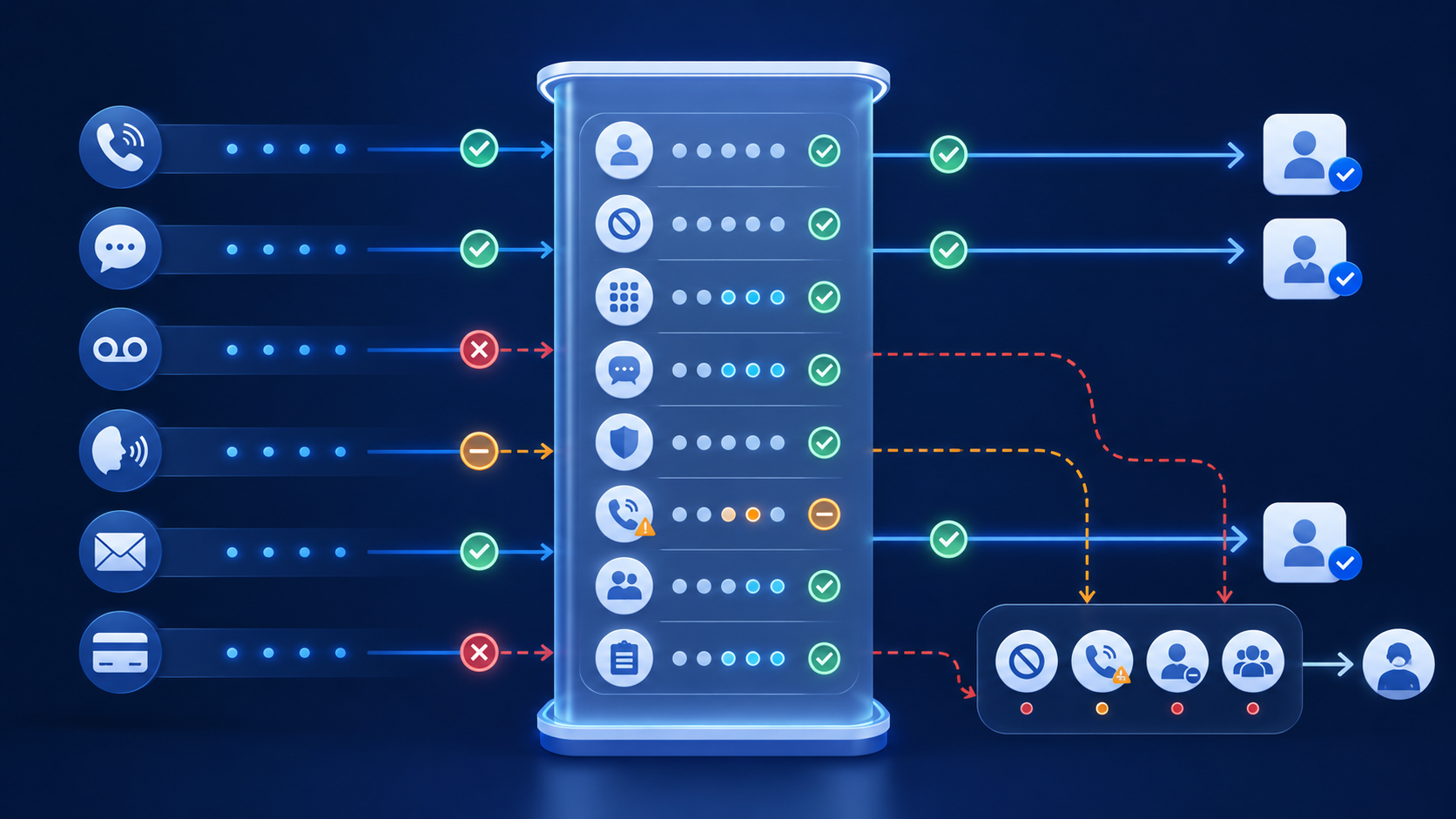
For debt collectors, this is a workflow issue as much as a legal one. Consent and revocation data cannot live only in a dialer, texting platform, or collector note. Agencies need to record what the consumer requested, identify the communication category or channel affected, apply the correct suppression logic, and preserve the history for review.
The operational lesson is simple: revocation logic needs to be structured data. If a team has to rely on a collector remembering which calls, texts, or messages should stop, the process is too fragile. Our guide to TCPA compliance software shows why channel-specific consent, opt-outs, and audit trails need to stay connected to the account record.
Agencies should review the order with qualified counsel and map where consent enters the system, where revocations are recorded, and which workflows use that status.
2. State Enforcement Is Becoming More Operationally Specific
Colorado announced a September 23 settlement involving Wakefield & Associates after alleging unlawful medical debt collection practices. According to the Colorado Attorney General's announcement, the collector had sought default judgments on 44 Colorado accounts without satisfying state requirements tied to evidence and notices for qualifying medical debt.
A legal-placement workflow may need to confirm that required documentation exists before an account moves to a law firm. Documentation gaps can shape debt collection lawsuits and whether counsel can take legal action to collect the debt. A medical debt portfolio may require different checkpoints than credit cards or other consumer debt. Accounts tied to medical bills from nonprofit hospitals may also carry client-specific rules. That is part of operational debt recovery, not just legal review.
This is where rigid collection systems create operational risk. If a rule changes and the only response is a development ticket, manual workaround, or separate tracker, the approved policy can drift away from daily execution. Our guide to debt collection state laws provides a practical overview of why jurisdiction-specific logic matters.
3. The CFPB's Future Remains Unsettled, but Controls Still Need to Be Stable
On September 25, a federal district court in Oregon ruled that the CFPB's refusal to request funding based on its interpretation of Federal Reserve earnings violated the Administrative Procedure Act and separation-of-powers principles. An ABA Banking Journal summary of the ruling explains the dispute and the court's conclusion.
For debt collection agencies, the practical mistake would be to let every federal headline trigger a swing in operating discipline. Uncertainty around the Consumer Financial Protection Bureau does not erase the FDCPA, Regulation F, state collection laws, contractual requirements, court decisions, or the need for defensible records.
Stable controls still matter: complete communication histories, visible disputes and cease requests, configurable workflow rules, client-specific requirements, and enough account history to reconstruct what happened.
For debt collection companies serving lenders, credit unions, debt buyers, healthcare creditors, and other lenders, that consistency matters more than predicting the next federal headline. The Federal Trade Commission (FTC) remains another federal enforcement layer, so agencies should continue monitoring FTC debt collection guidance alongside CFPB developments.
4. Collection Technology Consolidation Is Moving Deeper Into AI
On October 1, TCN announced that it had acquired Abstrakt, a company focused on real-time agent assist and automated quality assurance. The TCN acquisition announcement is another sign that artificial intelligence in collections is expanding beyond standalone voice bots into the operating layer around human agents: QA, coaching, monitoring, workflow support, and decision assistance.
An AI phone agent that cannot see current account information is limited. An automated QA tool that cannot connect findings to coaching or account review creates another queue. A scoring model that does not change routing is simply a report. Aktos' guide to AI in debt collection explains why AI works best when it is connected to the collection platform rather than bolted onto it.
5. Consumer Debt Is Still High, While Delinquency Signals Are Mixed
The Federal Reserve Bank of New York reported that total household debt stood at $18.8 trillion in Q2 2026. Credit card balances rose $21 billion during the quarter to $1.26 trillion, while auto loan balances increased $28 billion to $1.71 trillion. Aggregate delinquency improved slightly, but the New York Fed said new delinquencies for auto loans and credit cards remained elevated. The figures are available in the New York Fed's Q2 2026 household debt report.
Portfolio behavior can still vary by debt type, placement source, age, creditor strategy, and credit report activity. TransUnion and the other nationwide credit bureaus may show additional signals, but agencies need to connect outside trends to their own placements. Ask whether volumes, balances, payment-plan failures, settlement authority, or receivables management timing are changing by portfolio and vintage.
What Agency Leaders Should Watch Next
Watch three things: how vendors implement the FCC's new revocation framework, whether state enforcement changes account eligibility or documentation requirements, and whether new AI acquisitions reduce fragmentation or simply add another system to manage.
Final Thoughts: Connected Operations Matter More Than Any One Headline
The biggest takeaway from October's early debt collection industry news is not one FCC order, one CFPB case, or one technology acquisition. It is the growing importance of connected operations.
Aktos is built around that connected model: modern debt collection software with configurable workflows, omnichannel communication, payments, portals, reporting, AI capabilities, and open integrations. The objective is not to automate every decision. It is to make account state clear enough that the right automated or human action can happen at the right time.