A feature demonstration shows what software does today. Architecture shows how it behaves when volume doubles, a major client adds requirements, or an integration fails.
For enterprise collection agencies, the foundation beneath dashboards, automated workflows, and AI matters as much as the interface. A strong debt collection system preserves reliable records, separates clients and portfolios, scales critical services, and keeps actions traceable. Architecture is the building frame: the structure determines whether it can support another floor.
What Is the Core Collection Platform?
The core platform centrally manages placements, accounts, consumers, clients, collectors, communications, payments, disputes, documents, workflows, and reporting.
It is not a dialer, payment gateway, letter vendor, or standalone self-service payment portal. Those tools support collections operations, but the core platform should remain the authoritative record for account status, balances, communication history, payment plans, and decisions. That prevents connected systems from acting on conflicting information.
The Core Layers of Enterprise Collection Architecture
Data Layer
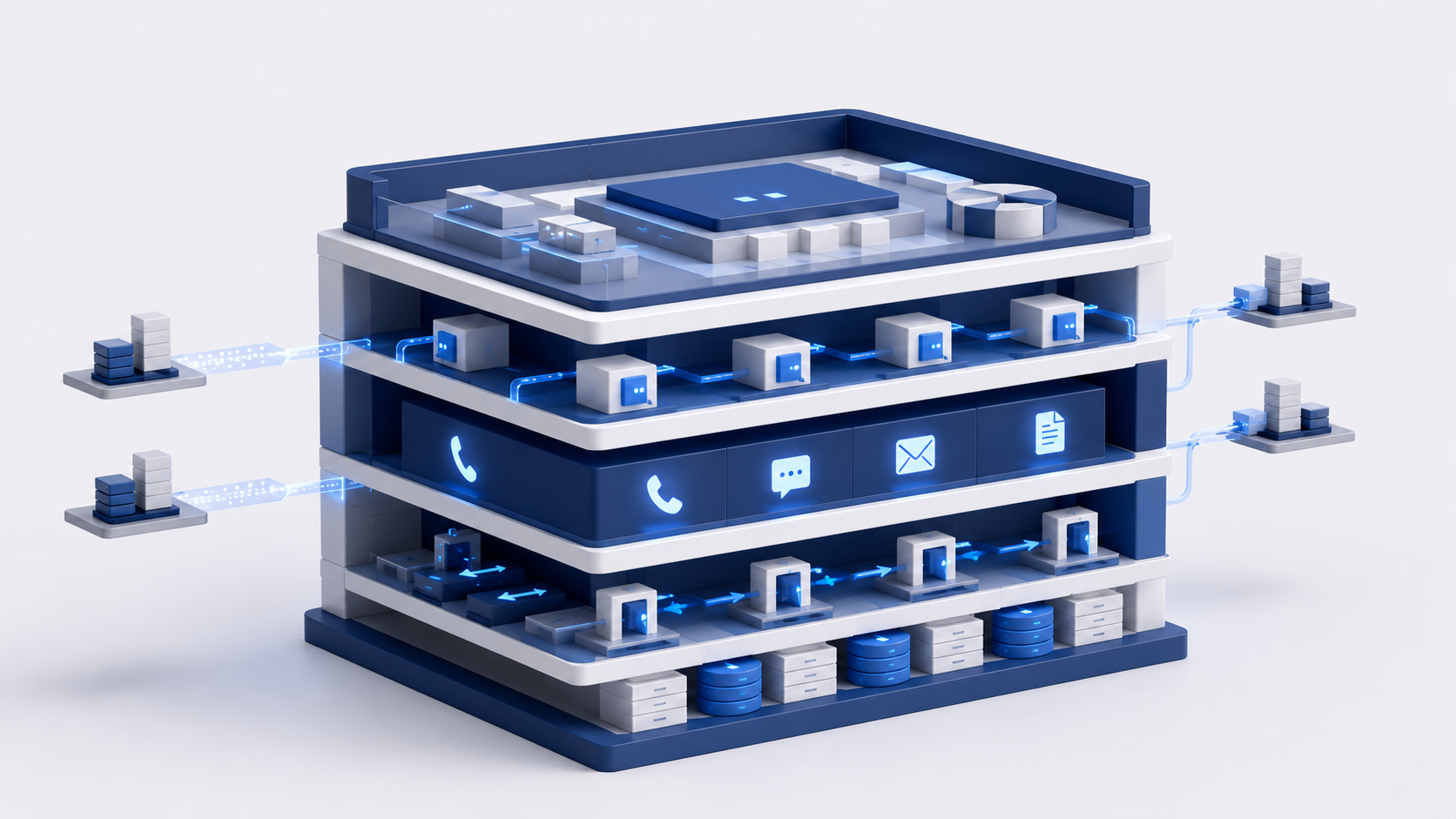
The data layer stores consumer and account records, client and portfolio relationships, balances, adjustments, payment processing activity, communication history, dispute management records, documents, user actions, and audit trails.
Buyers should ask who owns each field, how duplicates are handled, and how corrections propagate. Consistent definitions support debt management, client reporting, credit bureaus, and automation. If one service marks an account paid while another shows delinquent accounts, payment reminders and queues become inaccurate.
Workflow Layer
The workflow layer turns data into queue routing, segmentation, collector tasks, approvals, escalations, payment follow-up, and client-specific processing. Strong workflow management lets administrators configure logic without changing the data model.
This is where debt management rules should support different portfolios without creating separate systems. Automated workflows may use balance, placement age, risk scoring, risk profiles, or predictive analytics to prioritize work, but the logic should remain explainable and governed.
Communication Layer
Phone, SMS, email, voicemail, letters, and portals should share the same account history and rules. Omnichannel communication becomes risky when vendors maintain separate consent and outcome records.
The core platform should coordinate channel eligibility, local-time restrictions, opt-outs, and escalation paths. Operational controls should reflect the Fair Debt Collection Practices Act, FDCPA requirements, TCPA considerations, and CFPB Regulation F, while agencies work with qualified counsel on legal interpretation.
Integration Layer
APIs, webhooks, event-based updates, and batch imports connect the debt collection platform with creditor systems, dialers, payment processors, credit bureaus, business-intelligence tools, and communication providers.
Buyers should review endpoint coverage, authentication, rate limits, errors, retries, and event logs. Aktos’ guide to a debt collection developer portal explains why sandbox access and visible failures matter. The OWASP API Security Top 10 helps teams assess authorization, authentication, and resource-consumption risks.
Reporting Layer
Reporting should cover collector productivity, portfolio results, payments, disputes, workflow operations, compliance, DSO, and executive trends. Real-time reporting supports decisions during the workday; delayed exports explain events afterward.
For agencies managing consumer debt and unpaid invoices, stale reporting distorts cash flow, DSO, and client expectations. Confirm that dashboards use current operational data rather than an overnight reporting refresh.
Cloud Infrastructure and Scalability
Scalability is not simply the ability to add storage. A modern debt collection platform must absorb increases in users, API activity, files, communications, reporting queries, and machine learning workloads without slowing core account work.
Ask which services scale independently when a large placement file arrives during automated communications and reporting. The vendor should isolate failures, queue noncritical work, and prevent one heavy process from degrading the platform. The NIST Cloud Computing Standards Roadmap provides guidance on designing scalable, reliable cloud systems and evaluating infrastructure resilience.
Multi-Client Architecture and Security Boundaries
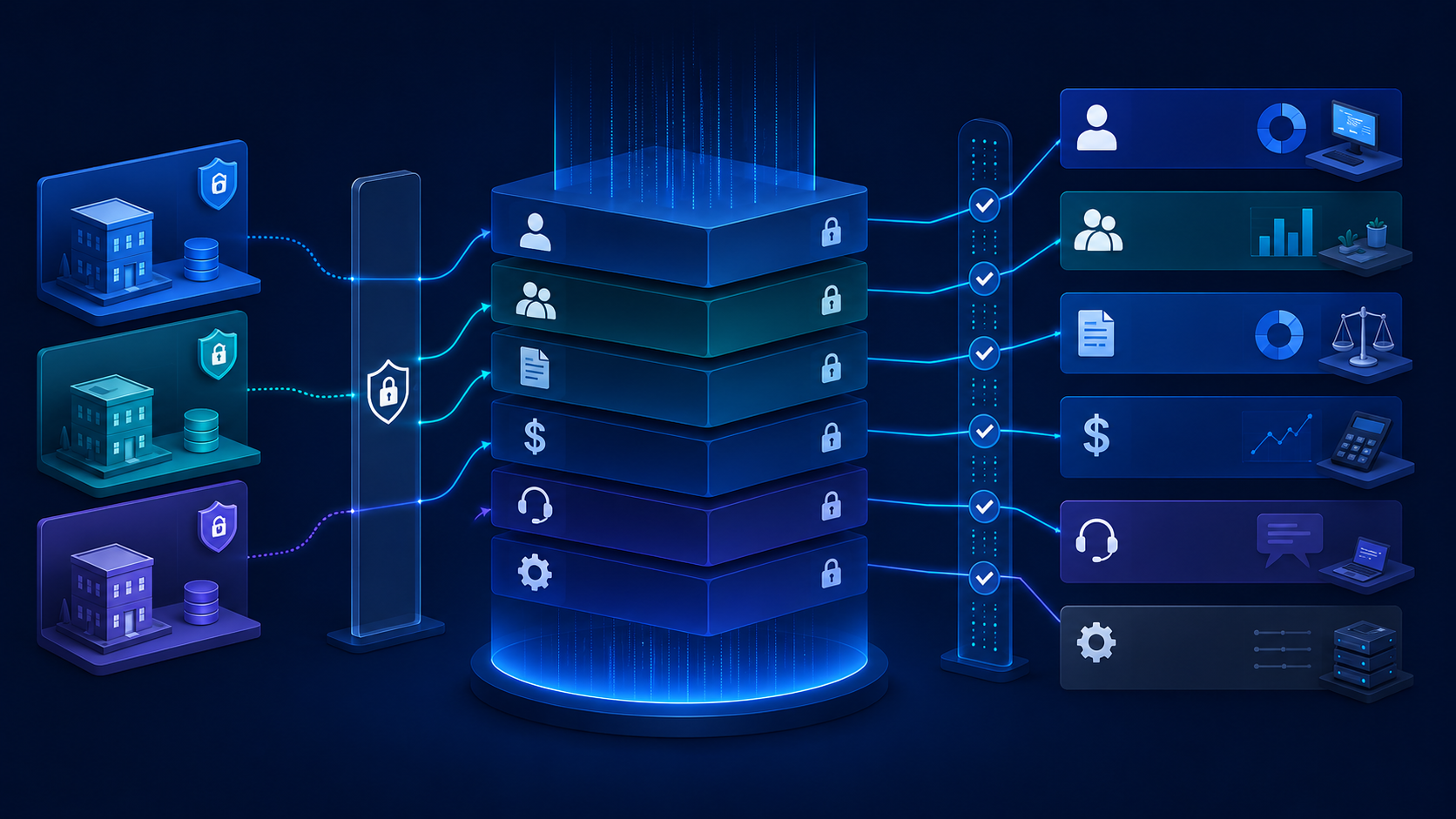
Third-party agencies need stronger separation than single-creditor teams. Each client may require different fields, branding, reports, approvals, and debt management workflows. Agency-wide standards can remain consistent, but one client’s configuration must not affect another.
Role-based access control should work by role, client, portfolio, queue, function, and data type. Test real scenarios: a collector changing a payment plan, a supervisor approving a settlement, finance viewing payment data, or a client user opening a dashboard. Aktos’ guide to data permissioning in debt collection software offers practical validation questions.
Data security also includes authentication, session controls, administrative privileges, export restrictions, and permission-change records. Broad user permissions are not enough.
Auditability and Real-Time Synchronization
Audit trails should record user activity, automated actions, data changes, communications, approvals, and integration events. Important changes should show previous and current values, timestamps, and the responsible user or service. Logs should be searchable and exportable, supporting client reviews and CFPB or FDCPA inquiries.
Real-time synchronization matters when a consumer pays, disputes an account, revokes SMS consent, or changes an arrangement. Distinguish real-time, near-real-time, and batch updates, then ask how failures are detected, retried, and surfaced. Debt collection solutions should not let automation act on stale payment or dispute data.
Reliability, Backups, and Recovery
A backup matters only if it can be restored. Review frequency, restoration tests, recovery objectives, incident communication, and safeguards against duplicated actions.
Critical debt management functions should resume in the correct order: account access, payment processing, consent controls, dispute workflows, communications, and client reporting. The Aktos guide to secure cloud disaster recovery outlines why agencies must test workflows and integrations, not just database restoration.
How AI Should Fit Into the Architecture
AI should operate inside established permissions, workflows, and records. It should access only the data required for its task, write outputs back to the authoritative account history, and escalate with relevant context.
Machine learning models supporting segmentation or risk scoring should not become black boxes. Reviewers need visibility into recommendations, exceptions, and outcomes. AI actions belong in audit trails like collector or integration actions.
Architectural Warning Signs
Watch for separate databases for communications and accounts, reporting that depends on manual exports, customization that changes core code, closed integrations, broad permissions, incomplete audit trails, delayed payment updates, manual infrastructure expansion, and undocumented client workarounds.
These weaknesses often look manageable during a demo. At enterprise scale, they become implementation risk, inconsistent debt management, slower reporting, and preventable operational exposure.
Enterprise RFP Questions
Ask vendors:
- Which system is the authoritative account record?
- How is client and portfolio data separated?
- Which services scale independently during heavy workloads?
- How are failed integrations detected, retried, and resolved?
- Can permissions be applied by role, client, portfolio, and function?
- Are automated and AI actions included in audit logs?
- How quickly do payment, consent, and dispute updates reach workflows?
- How are backups restored and tested?
- Which changes require vendor development?
Final Thoughts: Evaluate the Foundation, Not Just the Features
Architecture affects implementation, reliability, integrations, reporting, governance, and future debt collection software capabilities. Evaluations should involve operations, compliance, IT, client services, and finance so the platform is tested against real work.
Aktos brings cloud infrastructure, configurable workflows, connected data, open integrations, permissions, and auditability into one modern debt collection software environment. Explore how Aktos supports enterprise architecture for complex clients, portfolios, and growth.
FAQs
Q: What is the difference between collection software and a core collection platform?
A: Collection software may describe an individual application, while the core system coordinates account data, users, payments, communications, workflows, and reporting across the full lifecycle.
Q: Why does cloud architecture matter to collection agencies?
A: Cloud architecture can reduce infrastructure management and provide a more adaptable foundation for changing account volume, integrations, users, reporting demand, and recovery requirements.
Q: What should enterprise buyers ask about APIs?
A: Ask what data and actions are available, how authentication works, how limits are handled, how errors are reported, and whether integrations receive current information.
Q: How should a collection system separate client data?
A: The platform should enforce defined permissions and data boundaries so users, integrations, reports, and workflows can access only authorized clients and portfolios.