Choosing enterprise debt collection software is a risk decision before it is a feature decision. The platform may touch every team in the agency, but the buyer’s real job is to understand what could break during implementation, adoption, reporting, compliance review, security approval, and long-term scale. A polished demo is useful. A vendor that can prove how the system behaves under real agency conditions is far more valuable.
The right evaluation process should expose risk before the contract is signed. Buyers should know how the vendor handles migration planning, permission design, workflow configuration, reporting validation, integration testing, security documentation, and post-go-live support. If those answers stay vague, the risk does not disappear. It moves into implementation.
Why Enterprise Collection Software Decisions Carry More Risk
Enterprise buyers are rarely evaluating software in isolation. They are balancing input from operations, compliance, IT, finance, client services, executives, and sometimes creditor clients. Each stakeholder sees a different version of risk. Operations worries about adoption. Compliance worries about documentation. IT worries about access controls and integrations. Finance worries about payment reconciliation. Executives worry about whether the platform can support growth without creating another expensive transition in two years.
When the wrong platform is chosen, the cost appears fast: delayed onboarding, weak permissions, manual reports, disconnected payment processors, brittle integrations, poor adoption, and more work pushed back to operations. Modern enterprise debt collection software should reduce those risks before the contract is signed.
What Makes Enterprise Debt Collection Software Different?
It Supports More Than Account Management
In a de-risked evaluation, buyers should not ask, “Does the platform have this feature?” They should ask, “Can the vendor show this feature working in the exact sequence our agency depends on?” Account placement, payment updates, disputes, consumer preferences, collector notes, client reporting, and compliance documentation all need to be tested as connected workflows, not separate demo screens.
The work also has to stay connected. If a consumer pays through a portal, opts out of SMS, disputes a balance, or requests verification, that update should inform the next action across phone, email, letters, chatbot experiences, AI agents, and automated workflows.
It Works Across Teams And Portfolios
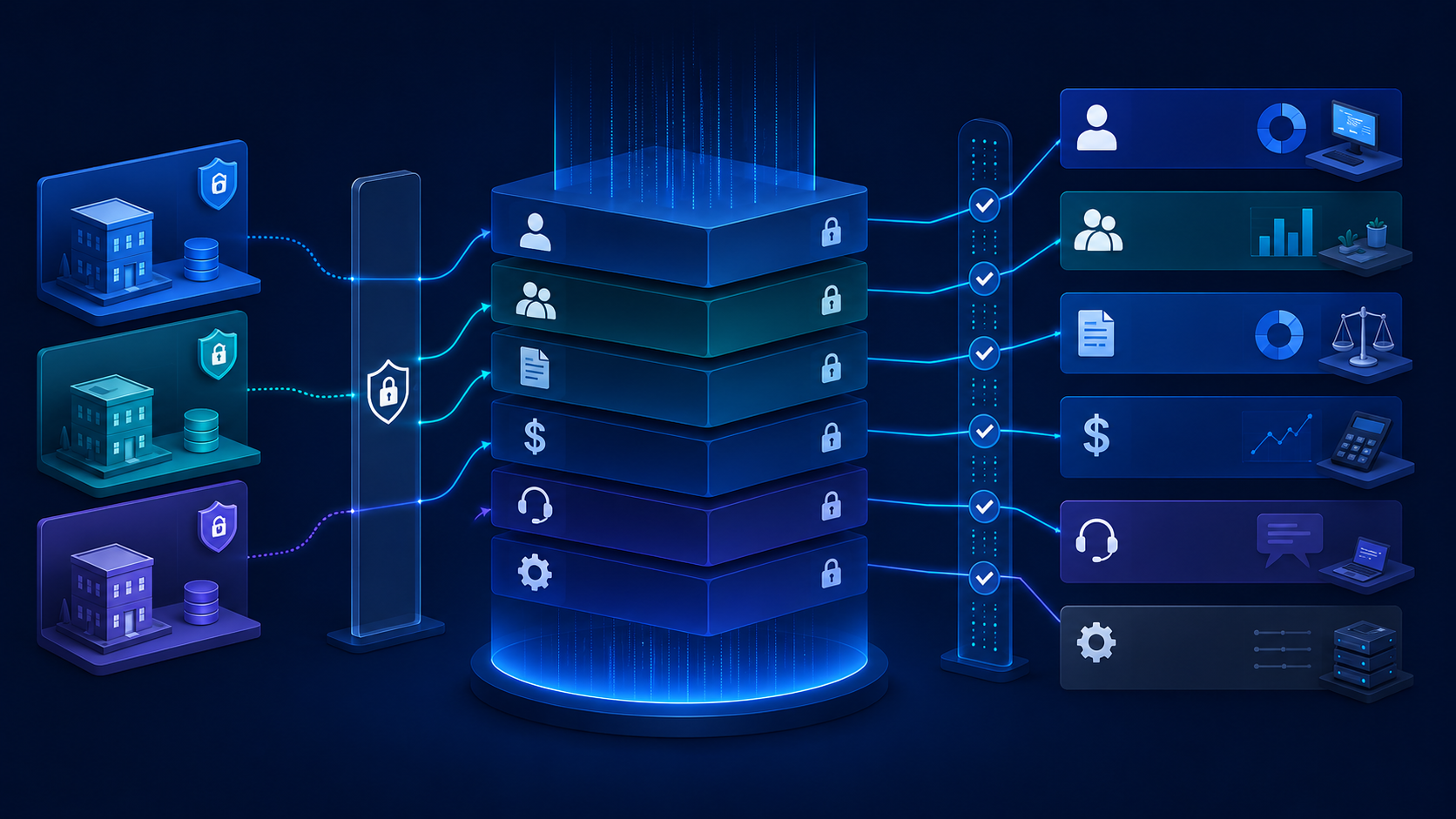
Buyers should evaluate role-based access by user, client, portfolio, queue, function, and report type. Collectors need account context. Supervisors need queue visibility. Compliance users need audit trails. Finance needs reconciliation and remittance data. Client services need real-time reporting. Executives need recovery rates, DSO, staffing capacity, and cash flow visibility.
This matters for agencies serving financial institutions, healthcare providers, debt buyers, and creditor clients with different placement formats, reporting requirements, credit scoring context, and customer experience expectations.
It Scales Without Becoming Fragile
Scalability should be proven through scenarios, not promises. Ask what happens when a new creditor sends a large placement file, when reporting demand spikes at month-end, when integrations retry failed updates, or when a client adds new portfolio rules. Enterprise debt collection software should not only handle more volume; it should keep the agency’s controls, visibility, and user experience intact as that volume increases.
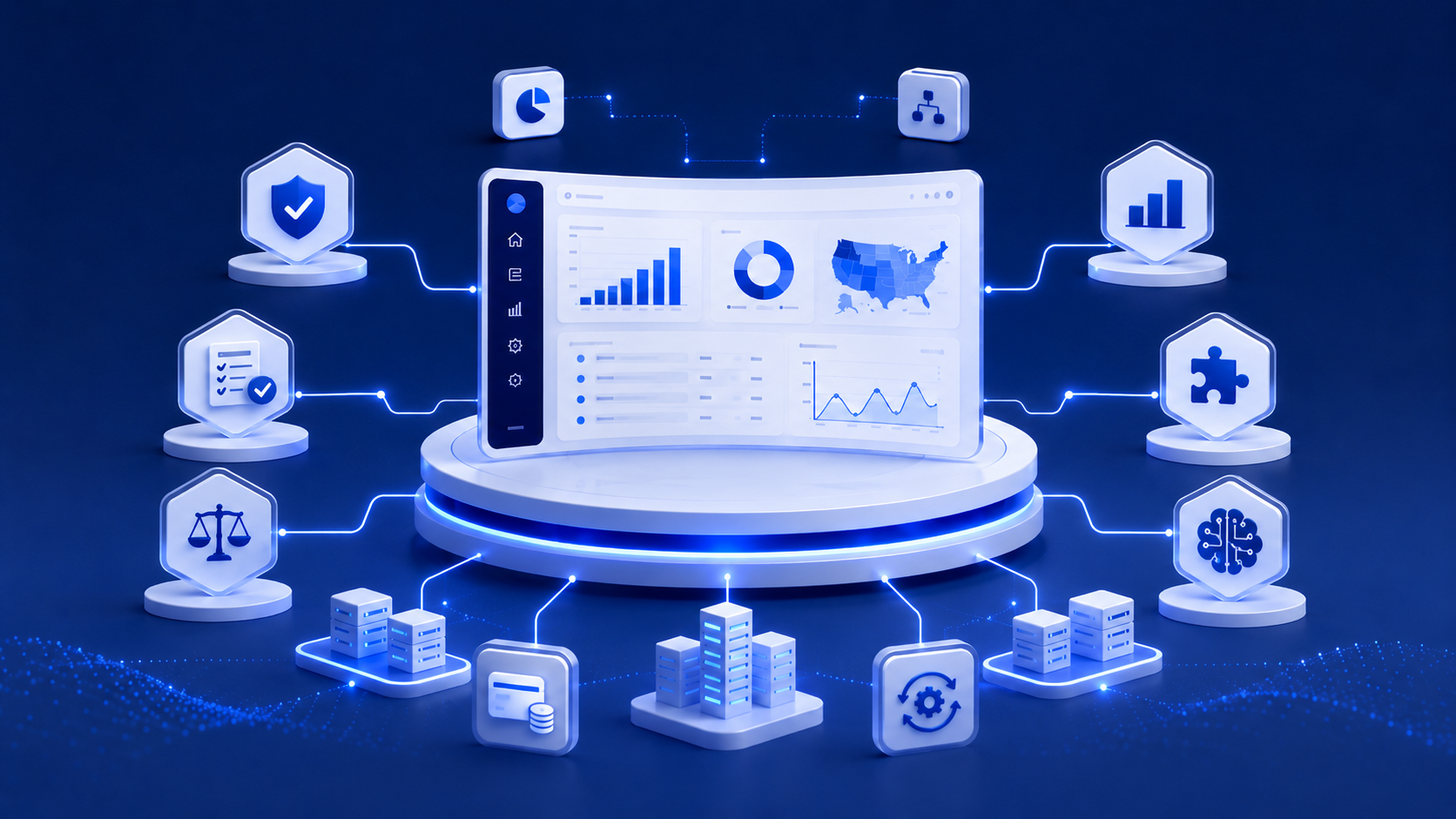
Cloud-native infrastructure helps buyers avoid on-premise hardware headaches, but the evaluation should go deeper than hosting. Ask the vendor to show how the platform handles high account volume, automated workflow triggers, real-time reporting, disaster recovery, and integration spikes under realistic agency conditions. Aktos uses a modern cloud-native model with open APIs, client and debtor portals, omnichannel engagement, no-code workflow automation, AI technology, and scalable account volume in one connected platform.
The Enterprise Buyer’s Risk Checklist
1. Security And Data Protection
Security review should happen early. Ask for the vendor’s security packet, access control model, encryption practices, penetration testing summary, incident response process, business continuity documentation, and audit status.
For many enterprise buyers, SOC 2 Type II is a practical benchmark because it evaluates whether security controls operate effectively over time. Buyers can review the AICPA SOC resources for context. Aktos has SOC 2 Type II compliance, giving buyers a clearer standard for evaluating data protection, access controls, and operational security.
Procurement teams may also ask about ISO 27001, SSO, MFA, support access, export controls, and admin permissions. The goal is not to collect paperwork for its own sake. It is to confirm that the platform can protect sensitive account data at enterprise scale.
2. Compliance Controls
Regulatory compliance should not depend on collectors remembering every rule. Buyers should evaluate support for the FDCPA, Regulation F, TCPA, HIPAA where relevant, and state-level rule management. GDPR is usually not the central framework for U.S. third-party collections, but international data flows should be reviewed with counsel.
Strong controls include contact caps, time-zone enforcement, mini-Miranda workflows, consent and revocation logging, legally reviewed templates, audit trails, state-based logic, and channel-specific opt-out handling. Compliance guardrails should apply across phone, SMS, email, voicemail, letters, portals, AI agents, and automated workflows.
3. Implementation Confidence
Be careful with vague “easy migration” claims. A low-risk implementation plan should explain data import, field mapping, historical notes, payment history, dispute records, documents, consent indicators, software configuration, user roles, training, testing, and operational continuity.
For buyers evaluating migration risk, an API-first software migration plan can clarify how data, workflows, integrations, testing, and cutover planning should be handled before go-live.
Ask the vendor to walk through real scenarios: a creditor sends a placement file, a payment updates the account and dashboard, an SMS revocation changes future digital communications, a dispute pauses the right workflow, and a supervisor updates a queue without a developer ticket. Migration is not just moving data. It is proving the new platform can run the agency.
4. Reporting Depth
Reporting risk often shows up after go-live, when clients ask for the same visibility they expected during implementation and the agency discovers that dashboards, exports, or scheduled reports do not match real operating needs. During evaluation, buyers should validate reporting with actual portfolio examples instead of accepting sample dashboards at face value.
Enterprise debt collection software should give each team the visibility it needs, from operators and executives to compliance, finance, and creditor clients.
During evaluation, test whether reporting can show the metrics that actually drive agency performance: recovery rate, liquidation, promise-to-pay activity, payment plans, DSO, disputes, complaints, collector productivity, breach alerts, and portfolio performance.
Then go one level deeper. Ask whether the platform supports scheduled reporting subscriptions, audit-ready exports, and client-specific dashboards, so reporting becomes part of the operating system instead of another manual back-office task.
5. Integration Flexibility
Enterprise agencies rarely run on one tool. They need integrations with creditor CRMs, payment processors, dialers, credit bureaus, letter vendors, legal systems, client portals, data warehouses, and reporting tools.
Closed ecosystems create vendor lock-in. Open APIs reduce that risk by giving the agency more control over providers and data flow. Ask whether integrations are real time or batch-based, how failures surface, whether retries are automated, and whether operations can monitor integration health.
This is where specialized collections software differs from broader accounts receivable platforms. General AR tools can help finance teams manage invoices, payment reminders, DSO follow-up, and customer payment workflows. But enterprise collection agencies need a more regulated operating system for delinquent accounts: payment processing, audit trails, client-specific reporting, decision engine logic, predictive analytics, machine learning use cases, compliance controls, and debt collection operations.
Questions Enterprise Buyers Should Ask Before Signing
Before signing, ask how the platform handles high account volume, API spikes, security documentation, permissions, channel-level compliance rules, workflow changes, implementation support, payment processing, reconciliation, remittance, and post-go-live audit trails. A structured debt collection software RFP can help buyers pressure-test these requirements before a vendor demo becomes a contract.
Good vendors answer with specifics. Risky vendors stay vague.
What A Low-Risk Evaluation Should Feel Like
A low-risk evaluation should feel operationally specific. The demo should map to placements, queues, payment arrangements, disputes, client reporting, permissions, compliance controls, integrations, and executive visibility.
You should receive security and compliance documentation, understand the implementation plan, and test the platform against real portfolios. Enterprise buyers are not purchasing a generic CRM. They are choosing the system that coordinates collectors, consumers, clients, payments, reporting, and leadership decisions.
Final Thoughts: De-Risk The Decision Before Signing
The best enterprise debt collection software decision is the one that reduces uncertainty before the agency commits. Buyers should leave the evaluation process with clear proof around security, compliance, implementation, reporting, integrations, payments, AI, user adoption, and scale. If the vendor cannot demonstrate how the platform performs under real agency conditions, the evaluation is not finished.
Before signing, make the vendor prove how the platform works under real agency conditions. Review documentation, test workflows, pressure-test integrations, and confirm how compliance controls operate across every channel.
Ready to see what this looks like in practice? Book an enterprise software walkthrough with Aktos to see how AI, workflows, payments, compliance, reporting, and integrations work in one connected platform.
FAQs
Q: What is enterprise debt collection software?
A: Enterprise debt collection software is a platform built for high-volume agencies managing multiple clients, portfolios, users, compliance rules, integrations, payment workflows, reports, and communication channels.
Q: What should enterprise buyers look for in collection software?
A: Buyers should evaluate security documentation, role-based permissions, compliance controls, implementation support, real-time reporting, open integrations, workflow automation, payment processing, audit trails, and scalability.
Q: Why does SOC 2 matter when evaluating debt collection software?
A: SOC 2 matters because agencies handle sensitive consumer and client data. A SOC 2 Type II report can help buyers understand whether vendor controls have been independently assessed over time.
Q: How can agencies reduce implementation risk?
A: Agencies can reduce implementation risk by mapping fields early, testing real workflows, validating payments and reports, training users by role, preserving audit trails, and confirming integration behavior before go-live.