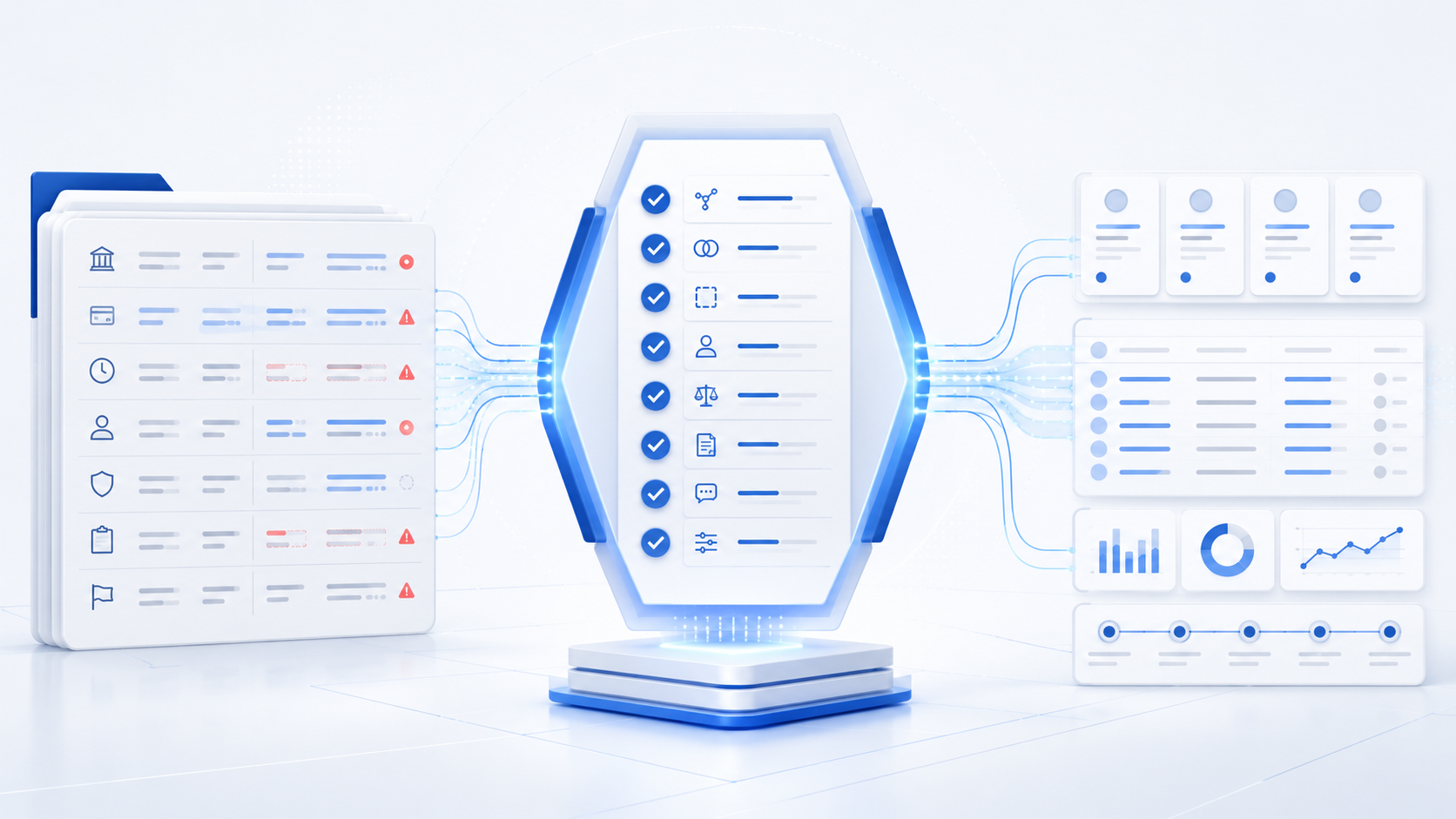
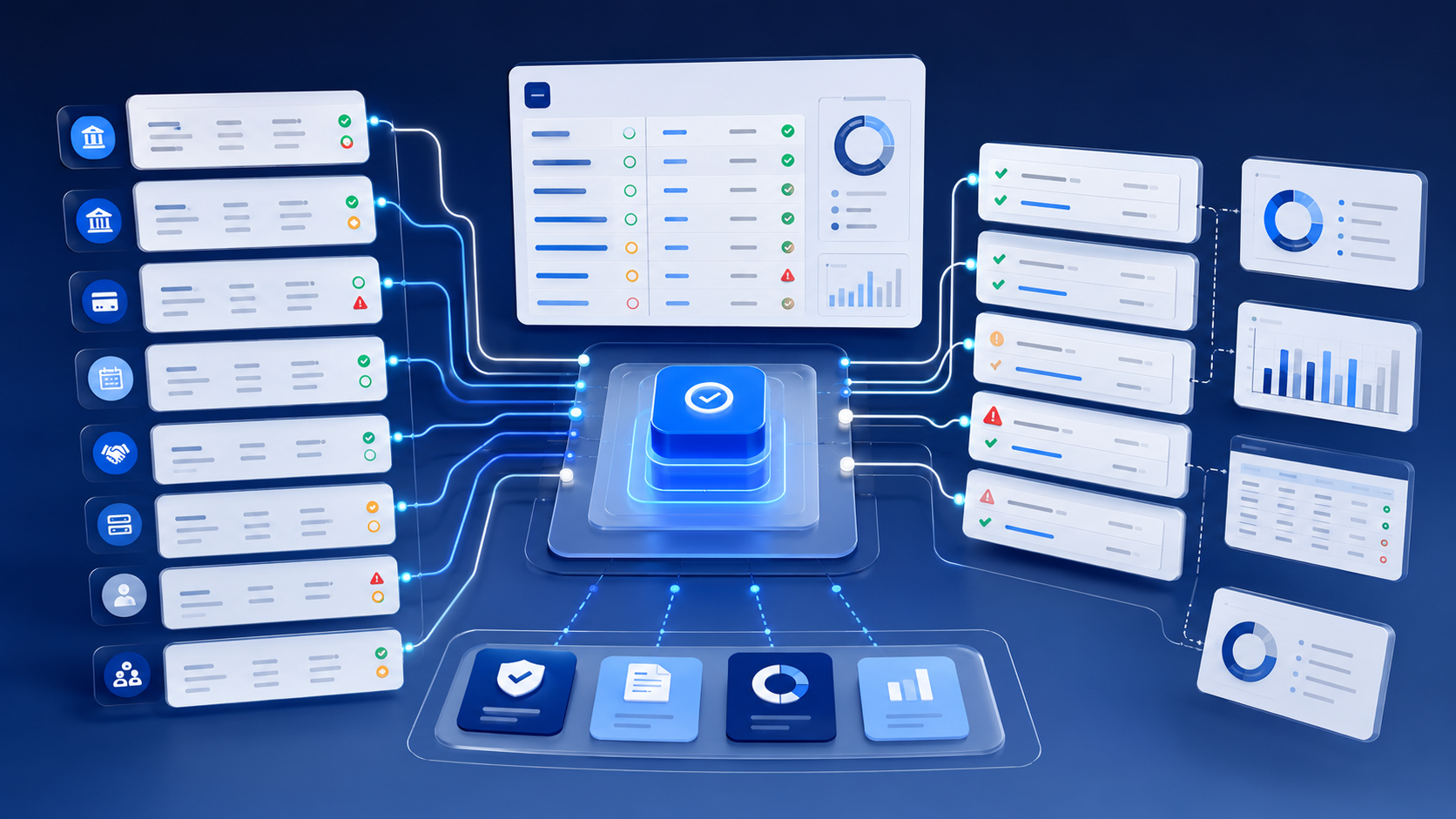
Payment reconciliation is the process of confirming that every consumer payment is reflected accurately across the collection platform, payment processor, bank activity, client report, and accounting software. For debt collection agencies, payment reconciliation is not just a finance task. It affects collector queues, payment plans, consumer communication, client remittance, financial reporting, compliance visibility, and daily trust in the operation.
When payment reconciliation works, financial records stay clean, balances update quickly, and teams can explain exactly what happened to a payment. When payment reconciliation breaks, agencies deal with discrepancies, delayed posting, duplicate outreach, unposted bank deposits, chargebacks, reversals, and hours of cleanup.
This guide explains how payment reconciliation should work inside a modern collection agency, where errors usually appear, and what software capabilities help agencies improve financial accuracy without adding more back-office work.
What Payment Reconciliation Means in Collections
In a typical business, payment reconciliation may mean comparing bank statements to the general ledger. In collections, the process has more moving parts. Agencies need to match customer payments against debtor account balances, processor activity, client placement data, contingency fees, settlement terms, refunds, and remittance reports.
That means payment reconciliation often includes bank reconciliation, credit card reconciliation, cash reconciliation, digital wallet reconciliation, and accounts receivable reconciliation. Larger agencies may also need ERP connections, internal financial records, and accounting exports so payment activity does not live in a separate system from finance.
The goal is simple: every payment should have a clear source, amount, account match, timestamp, status, and destination.
Why Reconciliation Problems Create Operational Risk
Payment errors rarely stay isolated. A single mismatch can create downstream discrepancies across consumer balances, client reporting, collector activity, and financial records.
Common problems include:
A consumer makes a payment, but the account balance does not update.
- Processor data and bank statements do not match because of timing differences or fees.
- A payment plan installment is posted incorrectly.
- Chargebacks or refunds are not reflected in the agency’s reporting.
- A client asks for backup, but record retrieval takes hours.
- Manual review creates data entry errors that are hard to trace.
- These issues can create revenue leakage, weaken cash flow management, and make it harder to maintain liquidity visibility. They can also affect balance sheet accuracy when payment activity is not reconciled cleanly. They also create avoidable service problems: collectors may follow up on paid accounts, clients may question remittance reports, and finance teams may spend too much time identifying discrepancies instead of improving financial controls.
The Core Payment Reconciliation Workflow
A reliable payment reconciliation workflow should follow the money from consumer action to final reporting.
First, the agency captures payment processing data from payment gateways, ACH files, card transactions, debtor portals, settlement workflows, and payment plans. Each financial transaction should include transaction data such as amount, date, method, processor ID, consumer account, and status.
Second, the system should support matching transactions against transaction records in the collection platform. This is where payment reconciliation confirms whether the payment belongs to the right account, whether the expected amount was collected, and whether the balance should be updated.
Third, the agency must identify and resolve discrepancies. Discrepancies may come from failed payments, duplicate payments, processor delays, missing references, partial settlements, convenience fees, or unauthorized transactions. Strong payment reconciliation tools should flag exceptions and show the supporting records instead of leaving staff to search across multiple tabs.
Finally, reconciled payments should update financial reporting, client remittance, collector visibility, and the audit trail. For agencies handling high volume, this workflow should happen daily, not just at month-end.
Compliance, Security, and Records
Payment reconciliation also supports compliance. Agencies still need to follow debt collection rules under the FTC’s FDCPA text and CFPB Regulation F, while payment workflows should align with payment security standards such as PCI Security Standards Council guidance and ACH network rules from Nacha. Agencies should also retain appropriate records for tax compliance and reporting; the IRS recordkeeping guidance is a useful starting point.
From an operational standpoint, payment reconciliation helps agencies prove what happened. The system should preserve timestamps, user actions, processor responses, dispute notes, and balance changes. This improves audit readiness and gives supervisors a cleaner way to review internal controls when payment questions arise.
Manual Reconciliation vs. Automated Reconciliation
Manual reconciliation may work at low volume, but it becomes fragile as payment methods, clients, and account counts grow. Teams end up downloading processor files, checking bank statements, updating accounting software, and comparing rows by hand.
Automated payment reconciliation reduces that strain by connecting source systems and surfacing exceptions. It does not remove human review; it makes that review more focused. Instead of asking staff to inspect every transaction, the system can route only the exceptions that need attention.
This matters because payment reconciliation is not only about accounting neatness. It protects operational efficiency. A collector should not need to guess whether a payment has been posted. A client services manager should not need to rebuild a report manually. A finance lead should not need to reconcile the same payment in three systems.
What to Look for in Payment Reconciliation Software
Debt collection agencies should look for software that supports payment reconciliation across the full account lifecycle, not just one payment channel.
Important capabilities include:
Integrated payment processing for cards, ACH, payment plans, settlements, and portal payments.
- Open API connections to processors, banks, client systems, ERP tools, and accounting software.
- Exception management for missed payments, partial payments, chargebacks, refunds, and failed transactions.
- Real-time balance updates so collectors and consumers see the same account status.
- Client-ready reports that connect recovered amounts, fees, remittances, and account outcomes.
- Searchable audit trail records for faster record retrieval.
- Fraud detection and fraud prevention controls for suspicious payments, unauthorized transactions, and possible fraudulent activity.
- For agencies evaluating broader platform needs, Aktos’ guide to debt collection software is a useful companion. Agencies with complex client or payment vendor ecosystems should also review how debt collection API integration affects data flow and reconciliation reliability.
Edge Cases Finance Teams Should Not Ignore
Some reconciliation workflows sit outside day-to-day consumer payment posting but still matter to finance leaders. Payroll reconciliation helps ensure commissions or collector incentives are based on accurate recovered amounts. Intercompany reconciliation may matter for agencies with multiple entities, acquisitions, or shared service models. Exchange rates may be relevant for agencies handling cross-border client reporting or multi-currency settlement activity.
These may not be daily collection tasks, but they share the same principle: clean financial records depend on consistent transaction matching, reliable documentation, and clear ownership.
How Modern Platforms Improve Payment Reconciliation
Modern debt collection software should make payment reconciliation part of the operating system, not an afterthought. Aktos helps agencies connect payments, account records, client reporting, and workflow automation so payment status is reflected where the work happens.
That matters because agencies are not just reconciling numbers. They are coordinating consumer experience, collector activity, compliance workflows, client trust, and finance operations. When payment reconciliation is built into the platform, teams can reduce manual work, resolve discrepancies faster, and keep reporting aligned with actual payment activity.
For agencies also investing in automation, Aktos’ guide to AI in debt collection explains how cleaner data improves automated workflows. And because payment activity can affect communication rules and account handling, agencies should keep state-specific obligations in mind with resources like Debt Collection State Laws: What Agencies Must Know.
Final Thoughts
Payment reconciliation is one of the key systems that determines whether a collection agency can scale with confidence. When the process is manual or disconnected, small discrepancies become an operational drag. When payment reconciliation is built into the collection platform, agencies get cleaner financial records, stronger client reporting, faster exception handling, and better control over every dollar collected.
Ready to see how Aktos connects payments, reporting, and automation in one modern platform? Book a demo.
FAQs
Q: What is payment reconciliation in debt collection?
A: Payment reconciliation is the process of matching consumer payments to processor activity, bank statements, account balances, client remittance, and financial records so every payment is accurate and traceable.
Q: Why is payment reconciliation important for collection agencies?
A: Payment reconciliation reduces discrepancies, protects client reporting, improves audit readiness, and helps teams avoid unnecessary outreach on accounts that have already been paid.
Q: What causes payment reconciliation errors?
A: Common causes include timing differences, failed payments, chargebacks, refunds, processor delays, duplicate records, data entry errors, and missing account references.
Q: Can software automate payment reconciliation?
A: Yes. Modern collection software can automate much of the payment reconciliation process by syncing payment gateways, processors, account records, bank activity, and reporting outputs while flagging exceptions for review.