
This article was co-written by Michael Lamm, Managing Partner at Corporate Advisory Solutions.
If you’re preparing a debt collection agency for sale, it’s natural to focus on the obvious numbers first: revenue, EBITDA, client contracts, recovery rates, client concentration, legal exposure, and account mix.
All of that matters. But buyers are also going to look closely at something many agency owners underestimate: your software.
Not just which system you use. How your agency actually runs. How clean your data is. How fast you can pull reports. How much your team depends on manual work. How well your workflows support compliance. How easily a buyer could scale the business after closing.
A lot of agency owners avoid switching collection software because they think, “I’m going to sell the agency anyway.” That sounds practical. It usually isn’t.
Michael Lamm, Managing Partner at Corporate Advisory Solutions, puts it this way:
“When buyers evaluate a collection agency, they are not only evaluating the book of business. They are evaluating whether the business can continue running cleanly after the transaction. Reporting, systems, compliance controls, and operational processes all affect buyer confidence.”
That is the real issue. If your agency is still running on legacy software, manual reporting, disconnected vendors, and tribal knowledge, the buyer sees that. And if the buyer knows they will need to replace your core system after closing, that cost, time, and risk can become part of the deal conversation.
Buyers Are Not Just Buying Your Book of Business
When buyers look at collection businesses for sale, they are not only asking, “How much does this agency collect?” They are asking sharper questions.
- Can this agency scale?
- Can it handle more placements?
- Can it support larger creditor clients?
- Can it prove compliance?
- Can it produce clean reports quickly?
- Can it operate without the owner involved in every major decision?
A debt buyer evaluating a debt portfolio thinks carefully about documentation, collectability, expected recovery, account history, and risk. Buyers of agencies think the same way. They want to know what they are really inheriting.
A debt collection agency may look profitable on paper. But if every process depends on outdated software or a handful of employees who “just know how things work,” the business feels fragile. That is not the story you want to tell when you go to market.
The Mistake: “I’m Selling Anyway, So Why Switch?”
This is one of the most common traps. An owner knows the software is old. Collectors complain about it. Managers spend too much time pulling reports. Client updates require manual cleanup. Payment workflows are clunky. Compliance controls depend on memory. Integrations are limited.
Then the owner thinks: “Why would I go through a software switch now? I’m selling.”
The buyer’s response is basically: “Great. So now I have to do it.”
That means the buyer may factor in migration cost, implementation time, data cleanup, staff training, client reporting risk, compliance exposure, vendor changes, and post-close operational drag.
Lamm frames the migration issue this way:
“If a buyer knows they will need to replace the agency’s core software after closing, that becomes part of the risk calculation. The cost is not just the software. It is the disruption, the migration, the training, and the uncertainty.”
The problem does not disappear because you plan to exit. It transfers to the buyer. And buyers usually do not ignore transferred risk. They price it.
Buyers typically underwrite businesses based on current operations, not improvements they expect to make themselves after closing. An agency that has already invested in modernizing its systems may be better positioned to demonstrate operational readiness, while an agency deferring that work essentially transfers the cost and disruption to the buyer, who will price it accordingly.
Buyers Reward Clean Operations and Penalize Cleanup Projects
A collection agency for sale is more attractive when buyers can quickly understand how the business runs. That means clean financials, clean operations, clean reporting, clean client data, and a clear view of risk.
Buyers tend to like agencies with sustainable revenue growth, low client concentration, a seasoned management team, a strong prospect pipeline, documented workflows, reinvestment in systems, and reporting that supports fast due diligence.
They tend to worry about flat revenue, high client concentration, weak reporting, legal uncertainty, management turnover, high future capital expenditures, and unclear operational processes.
That is why software matters. Legacy software can make the agency look like a cleanup project. Modern software can help demonstrate operational maturity and infrastructure that supports a buyer’s investment thesis, but the fundamentals still come first. Agencies with declining revenue, high client concentration, or unresolved legal exposure will not overcome those issues by upgrading their tech stack.
Buyers also evaluate how dependent the business is on the owner or a small number of key employees. When critical workflows, reporting processes, and institutional knowledge reside inside individual employees rather than within documented systems, perceived transaction risk increases. Agencies where the owner is the system are harder to value and harder to close.
Get a Real Valuation Before You Assume Software Won’t Matter
Many owners have a number in their head. Sometimes it comes from a peer who sold. Sometimes from a revenue multiple. Sometimes from EBITDA. Sometimes from a conversation with business brokers. Sometimes from what the owner wants the business to be worth after years of work.
But a real valuation process can surface issues that do not show up in a simple revenue snapshot: client concentration, management depth, legal exposure, reporting quality, future investment needs, and whether the agency is scalable on its current systems.
Legacy software can affect that conversation because it touches margins, reporting, compliance, headcount, client experience, and the investments a buyer may need to make after close.
So the better question is not, “Why switch if I’m selling?”
The better question is, “What will my current software make buyers worry about?”
Owners who are serious about maximizing value typically begin this process 12 to 24 months before they intend to go to market, not at the moment they decide to sell. That window allows time to address software gaps, document workflows, clean up financials, and develop the management depth that makes a business transferable. Engaging a sell-side M&A advisor early in that process can help identify which issues are most likely to affect valuation before they become deal problems.
Better Software Can Improve Margins Before the Sale
Buyers care about profitability, not just collections volume. A buyer does not only ask, “How much does this agency collect?” They ask, “What does it cost to collect it?”
Legacy systems often force agencies into a linear growth model. More accounts means more collectors, more back-office staff, more manual reporting, more vendor coordination, and more management oversight. That weakens the scalability story.
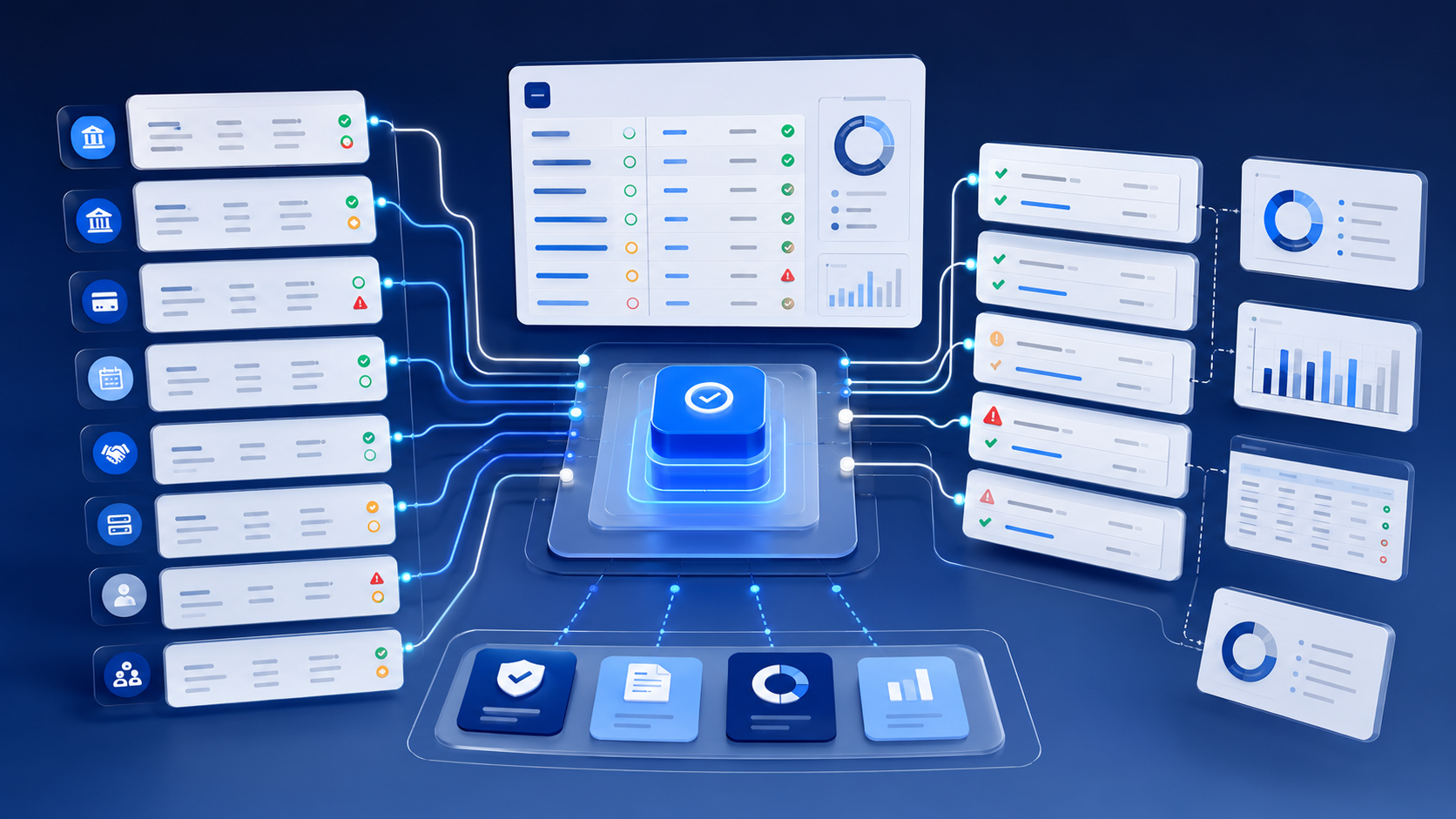
Modern debt collection software can help change the equation. With better workflows, agencies can reduce repetitive manual work. With automation, teams can handle more follow-up without hiring at the same pace. With integrated payments, consumer portals, and better communication tools, agencies can reduce friction for debtors. With real-time reporting, managers can spend less time chasing data and more time improving performance.
Clean Financials Make the Tech Story More Believable
If you claim your software improved efficiency, buyers will want to see it in the numbers. That means your financial and tax documents need to be organized before the sale process starts.
Buyers may want to review financial statements, cash flow, tax returns, loan agreements, existing defaults, liens, and other records that show the true condition of the business. If the agency has improved EBITDA by reducing unnecessary labor or making collectors more productive, clean financials help prove it.
Modern software helps the story. Clean books make the story credible.
Reporting Is a Buyer Confidence Tool
Reporting is where software problems become obvious fast.
During due diligence, buyers may ask for reports on revenue, placements, liquidation, client performance, payment activity, collector productivity, disputes, complaint trends, promise-to-pay activity, payment plan performance, settlement performance, compliance exceptions, and client concentration.
They may also want to slice performance by client, portfolio, account age, placement date, balance size, collector, or debt type.
If your team can pull those reports quickly, cleanly, and consistently, the buyer feels more confident.
If every report requires manual exports, spreadsheet cleanup, and a manager saying, “Give me a few days,” confidence drops.
That is why reporting is more than an internal management tool. In a sale process, reporting becomes proof that the business is organized, measurable, and easier to diligence.
One of the fastest ways to build buyer confidence is the ability to produce accurate, customizable reporting on demand. Agencies that can pull portfolio, client, collector, and compliance-level reports in real time tend to move through diligence faster and with fewer price adjustments than those that require days of manual data preparation to answer basic questions.
Compliance Risk Becomes Buyer Risk
Debt collection is not a casual industry. Buyers know that.
They care about the Fair Debt Collection Practices Act, Regulation F, TCPA consent, state-level rules, audit trails, time-zone controls, opt-outs, disputes, call records, message history, and documentation. They also care about litigation risk.
If your agency handles consumer debt, personal loan accounts, auto loans, payday loans, student loans, medical balances, credit card balances, or other unsecured debt, buyers will want to understand how your workflows reduce risk.
Modern software does not replace legal counsel. It does not eliminate compliance risk. But it can help agencies build more consistent, repeatable processes. Buyers do not want to inherit a compliance mystery. They want logs, controls, documentation, and workflows they can trust.
Legal Exposure Is Not Separate From Software
Legal and liability issues are a major part of sale readiness. For a debt collection agency, legal exposure often connects directly to communication practices, documentation, account notes, dispute handling, consent records, and audit trails.
If there are pending lawsuits, threatened claims, consumer complaints, regulatory inquiries, or any issue that could create material penalties, buyers will want to know. They will also want to know whether the underlying cause has been fixed.
Modern software will not erase past issues. But it can help show buyers that the agency is operating with better discipline now.
Client Data Matters as Much as Collection Data
Buyers are going to care about your customer base. They will want to understand who your clients are, how long they have been with you, what contract terms look like, and whether any major clients have been lost.
This matters because not all revenue is equally durable. A buyer may ask who the top clients are, how concentrated revenue is, whether contracts are assignable after a sale, and what reporting clients receive.
Modern client reporting can help. If clients have access to better dashboards, account statuses, performance reports, and compliance visibility, the relationship feels more systematized. That reduces the risk that client trust depends entirely on the owner or one long-time employee.
Show Buyers You Can Grow Without Headcount Bloat
Buyers may review your org chart, supervisory structure, employee count, and headcount history. That is not just an HR exercise. It tells a story about scalability.
If revenue growth required constant hiring, the buyer may wonder whether margins can hold up. If the agency needs more collectors, more supervisors, and more back-office staff every time placements increase, growth becomes expensive.
Modern software can improve that story. Automation, better workflows, integrated payments, and cleaner reporting can help teams manage more volume without adding headcount at the same pace.
Document Your Systems, Custom Tools, and Workflow Logic
Before going to market, document what your agency actually uses to operate.
- Core collection software
- Payment tools
- Dialers
- SMS and email tools
- Letter vendors
- Credit bureau integrations
- Client reporting tools
- Consumer portals
- Custom scripts
- Vendor contracts and user licenses
Buyers want to know what is owned, what is licensed, what is vendor-dependent, and what may break if a key employee leaves. The less mystery, the better.
Build the Right Sale Team Early
Software is important. But it is not the only thing you need to prepare.
Agency owners should also build the right sale team early. That may include an M&A advisor, business broker, attorney, CPA, and personal financial planner. A strong advisory team can help you prepare before buyers start asking hard questions.
And if your advisor understands the ARM industry, even better. A debt collection agency has different risk, compliance, client, and operational dynamics than a general small business.
Debt Type Affects What Buyers Scrutinize
Not all agencies look the same to buyers.
An agency focused on commercial debt may be evaluated differently than one focused on consumer debt. A firm collecting personal loan balances, auto loans, payday loans, student loans, credit card balances, or other unsecured debt may face different documentation, compliance, and communication expectations.
That matters during diligence.
Buyers may want to know whether accounts are tied to collateral, whether principal balances are clearly documented, how payment plans and debt settlement arrangements are tracked, how bankruptcy accounts are handled, and how disputes are documented.
They may also look at how debtor behavior is shifting. For example, consumers juggling debt consolidation, credit repair, credit score pressure, higher interest rates, or outstanding loans may require different communication and repayment workflows than commercial accounts.
The point is not that every debt type needs a different software stack.
The point is that buyers want to see whether your system can document the details that matter for the accounts you collect. If your agency cannot clearly show account history, communication history, payment status, dispute status, settlement terms, and compliance activity, the buyer has to work harder to understand the risk.
Why Aktos Fits This Moment
Aktos is modern, AI-powered debt collection software built for agencies that want to operate with more speed, clarity, and control.
For an owner preparing for a sale, that matters because Aktos supports the things buyers care about: cleaner workflows, better reporting, more automation, stronger audit trails, integrated communication, modern payment workflows, configurable processes, scalable infrastructure, and less reliance on manual workarounds.
This is not about chasing shiny software for its own sake. It is about making the agency easier to understand, easier to operate, and easier to scale.
Final Takeaway: Buyers Pay for Confidence
When a debt collection agency is for sale, buyers are not only buying current revenue. They are buying confidence.
Confidence that the agency can keep collecting. Confidence that reports are accurate. Confidence that workflows are repeatable. Confidence that compliance controls are documented. Confidence that clients will stay. Confidence that the business can scale after close.
Legacy software weakens that confidence. Modern software strengthens it.
If you are planning to sell your agency, do not wait for a buyer to discover the operational mess during diligence. Fix the tech stack before the sale. Improve the story before buyers ask harder questions. Remove the objection before it affects the deal conversation.
Preparing your debt collection agency for sale? Aktos helps agencies modernize workflows, improve reporting, strengthen compliance visibility, and build a cleaner operating foundation before buyers begin diligence.
Corporate Advisory Solutions works with debt collection agency owners to prepare for and execute M&A transactions. With over 80 years of M&A experience in the ARM industry, CAS understands what buyers will scrutinize, address it before you go to market, and run a process designed to maximize value. Contact Us.