For collection agencies, access control best practices are essential to protecting sensitive data across daily operations. Consumer information, personally identifiable information (PII), payment data, creditor files, dispute records, and internal workflows all require clear rules for who can view, edit, export, or approve specific actions. When access control is weak, agencies increase their exposure to unauthorized access, data breaches, insider threats, compliance issues, and avoidable operational disruption.
For collection agencies, access control is a foundational component of cybersecurity, data security, compliance, and risk management. A modern access control system must enforce authentication, authorization, user permissions, identity and access management (IAM), audit logs, access logs, and continuous access reviews.
The purpose of access control is to ensure that authorized users have appropriate access to systems, applications, and data while preventing unauthorized users from accessing sensitive information. Effective access control policies reduce risk, improve compliance posture, and strengthen overall security.
Start With Role-Based Access Control (RBAC)
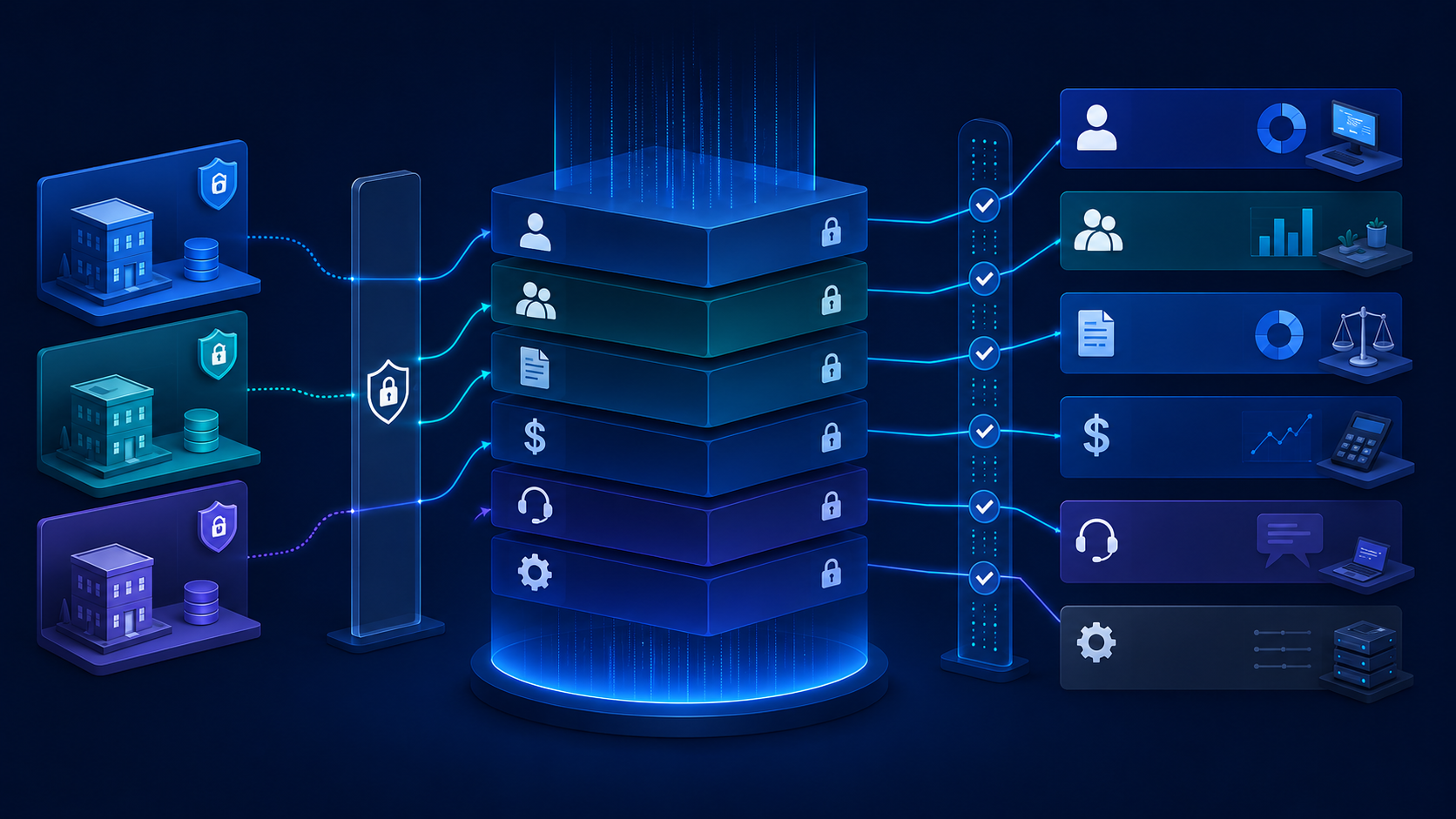
Role-based access control (RBAC) is one of the most widely used access control models and a core access control best practice. RBAC assigns permissions based on predefined user roles rather than individual users, making access management scalable, consistent, and easier to audit.
In a collection agency, common RBAC roles include:
- Collectors
- Supervisors
- Compliance officers
- Finance teams
- Administrators
- Client services teams
- Client portal users
Each role should have clearly defined access rights and user permissions. For example, collectors may access assigned accounts and communication tools, while compliance users may access audit logs, access logs, dispute records, and reporting dashboards.
RBAC simplifies access control management, reduces administrative overhead, and supports least privilege access by limiting unnecessary permissions.
Apply The Principle Of Least Privilege
Least privilege access is a fundamental access control best practice that ensures users only have the minimum level of access required to perform their job functions. This principle is essential for reducing security risks and protecting sensitive data.
Applying least privilege reduces the risk of:
- Data breaches
- Insider threats
- Unauthorized access
- Accidental data exposure
In collection agencies, least privilege should apply to:
- Account-level access
- Sensitive data fields
- Payment processing systems
- Reporting and exports
- Workflow configuration
- API access and integrations
For example, a collector should not have access to all portfolios, and a client user should not have visibility into internal notes, compliance data, or sensitive financial information.
Use Identity And Access Management (IAM) And MFA
Identity and access management (IAM) is a critical component of access control systems. IAM governs how users authenticate, how identities are managed, and how access is granted or revoked.
IAM includes authentication, authorization, user provisioning, and access lifecycle management. Multi-factor authentication (MFA) is a key IAM control that adds an additional layer of security beyond passwords.
Strong IAM and MFA practices include:
- Unique user accounts
- Strong password policies
- Multi-factor authentication (MFA)
- Session management
- Account lockout policies
- Secure onboarding and offboarding
- Continuous monitoring of user access
The FTC’s Start with Security guidance emphasizes limiting access to sensitive data and implementing strong authentication and access control measures.
Implement Attribute-Based And Rule-Based Access Control
While RBAC is foundational, advanced access control systems often incorporate attribute-based access control (ABAC) and rule-based access control to provide more granular control.
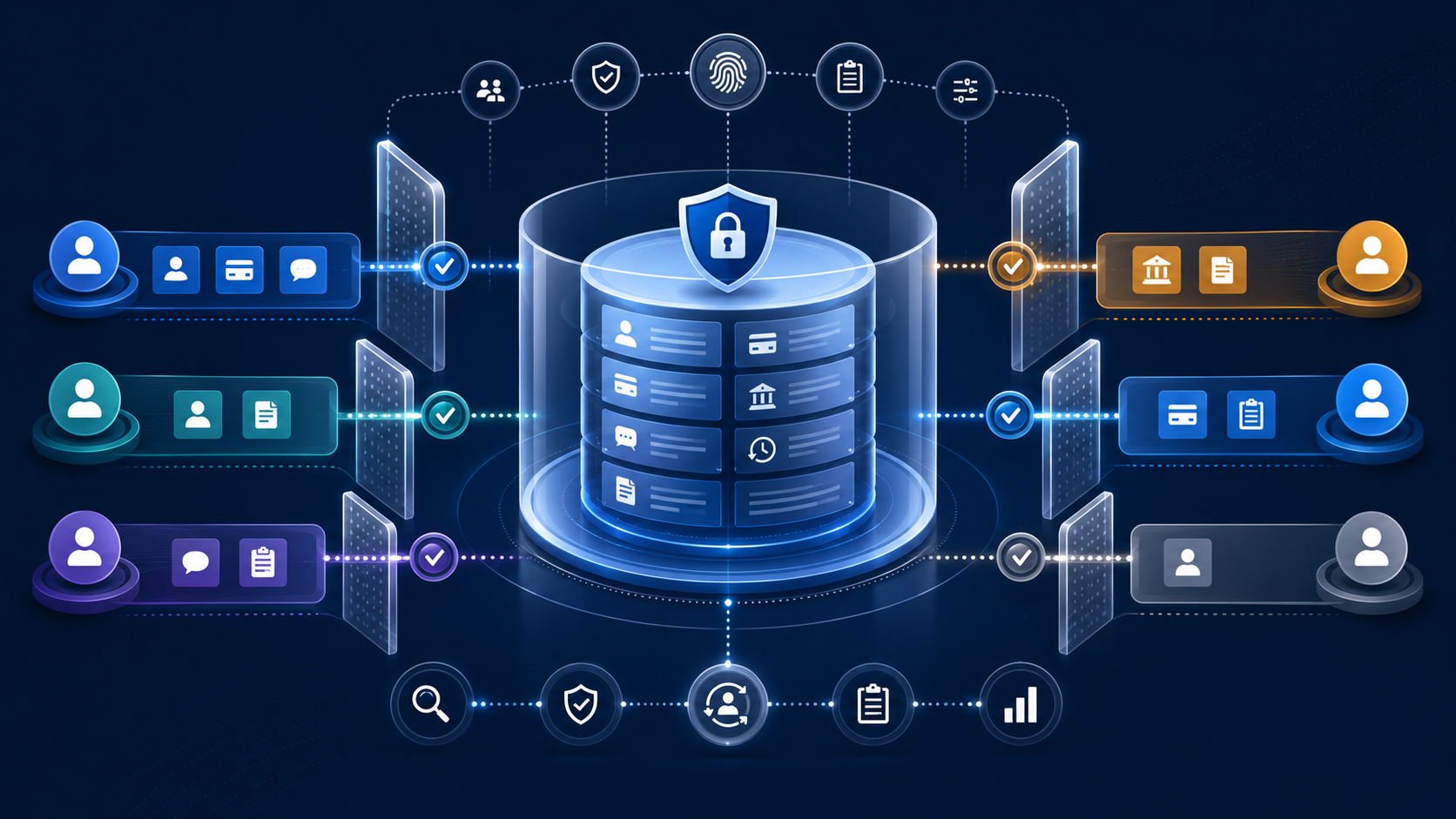
ABAC uses attributes such as user role, department, location, client, portfolio, account status, or risk level to determine access. Rule-based access control enforces predefined policies such as time-based restrictions, approval workflows, or conditional access rules.
Examples include:
- Restricting access based on client or portfolio
- Blocking exports outside business hours
- Requiring supervisor approval for high-risk actions
- Limiting access based on geographic location or device
Combining RBAC, ABAC, and rule-based access control strengthens access control systems and improves overall security posture.
Understand Additional Access Control Models
Collection agencies may encounter multiple access control models when evaluating systems or designing policies. These include:
- Mandatory access control (MAC): centrally enforced policies with strict controls
- Discretionary access control (DAC): user-controlled permissions
- Access control lists (ACLs): detailed lists defining access rights
While RBAC remains the most practical and widely used model, combining RBAC with ABAC, MAC, DAC, and rule-based access control creates a comprehensive access control framework.
Control Sensitive Data And Ensure Compliance
Access control must protect sensitive data across all systems and workflows. This includes:
- Personally identifiable information (PII)
- Payment card data
- Bank account details
- Protected health information (PHI)
- Legal and dispute records
For a deeper look at how agencies can structure permissions around sensitive fields and account data, Aktos’s guide to data permissioning in debt collection software explains how access can be limited by role, client, portfolio, and workflow.
Collection agencies must align access control practices with relevant compliance frameworks and regulations, including:
- HIPAA for healthcare-related data
- PCI DSS for payment data
The HHS HIPAA Security Rule outlines safeguards for protecting health information and emphasizes access control, authentication, and audit controls.
Separate High-Risk Permissions And Enforce Segregation Of Duties
High-risk permissions require additional access control measures and segregation of duties. These permissions include:
- Bulk data exports
- Payment refunds and reversals
- Settlement overrides
- Workflow changes
- Permission changes
- API key creation
Segregation of duties ensures that no single user has full control over sensitive processes. This reduces the risk of fraud, errors, and compliance violations while strengthening internal controls.
Include Physical, Network, And Application Access Control
Access control extends beyond software systems to include multiple layers of security:
- Physical access control (offices, devices, servers)
- Network access control (VPNs, firewalls, endpoints)
- Application access control (software, databases, APIs)
A comprehensive access control strategy must address all layers to prevent unauthorized access and protect sensitive data.
The OWASP Application Security Verification Standard provides guidance on implementing secure application access control and authentication mechanisms.
Monitor Access Logs And Conduct Security Audits
Access logs and audit logs are essential components of access control systems. They provide visibility into user activity and help detect unauthorized access or suspicious behavior.
Access logs should capture:
- Login activity
- Data access
- Changes to records
- Export activity
- Permission changes
Regular security audits and access reviews are critical for maintaining strong access control. These reviews help identify excessive permissions, inactive accounts, and potential vulnerabilities.
Continuous monitoring of access logs and audit trails improves incident response and strengthens compliance. For collection-specific examples, Aktos’s article on audit trails for debt collection compliance shows why searchable logs matter for audits, client reporting, and incident reviews.
Secure Client Portals And Third-Party Integrations
Client portals and third-party integrations must follow the same access control best practices as internal systems. Access should be restricted based on user roles, client relationships, and data requirements.
API access should be:
- Permissioned
- Logged
- Monitored
- Regularly reviewed
Third-party vendors should only have access to the data necessary for their function. Limiting third-party access reduces the risk of data breaches and unauthorized access.
Agencies evaluating connected systems can also use Aktos’s guide to debt collection software integrations to assess how APIs, vendors, and third-party tools should be permissioned and monitored.
How Aktos Supports Access Control
Aktos provides modern debt collection software with built-in access control features, including RBAC, ABAC, IAM, MFA, audit logs, access logs, and secure integrations.
By combining access control with workflow automation, reporting, and compliance tools, Aktos helps collection agencies protect sensitive data, enforce user permissions, and maintain strong security and compliance standards.
FAQs
Q: What are access control best practices?
A: Access control best practices include RBAC, ABAC, MAC, DAC, least privilege access, IAM, MFA, audit logs, access logs, access reviews, and segregation of duties.
Q: Why is access control important for collection agencies?
A: Access control protects sensitive data, prevents unauthorized access, supports compliance, and reduces cybersecurity risks.
Q: What is the difference between authentication and authorization?
A: Authentication verifies a user’s identity, while authorization determines what systems, data, and resources that user can access.
Q: What access control model is best?
A: RBAC is the most common model, often combined with ABAC, MAC, DAC, and rule-based access control to create a comprehensive access control system.