
AI Call Summaries for Debt Collection
AI call summaries in debt collection are not just a convenience feature. Used correctly, they turn messy conversation data into structured operational evidence: what the consumer said, what the collector or AI agent said, what outcome was reached, which disclosures were delivered, whether a dispute surfaced, and what should happen next.
That matters because phone conversations still carry a large share of collection activity. A single call can create a promise-to-pay, a payment plan, a dispute, a cease communication request, a wrong-party contact, a language preference, or a need for escalation. If those details live only in a recording or a short manual note, managers have to dig. AI summaries make the call record easier to search, review, and act on.
What AI Call Summaries Actually Do
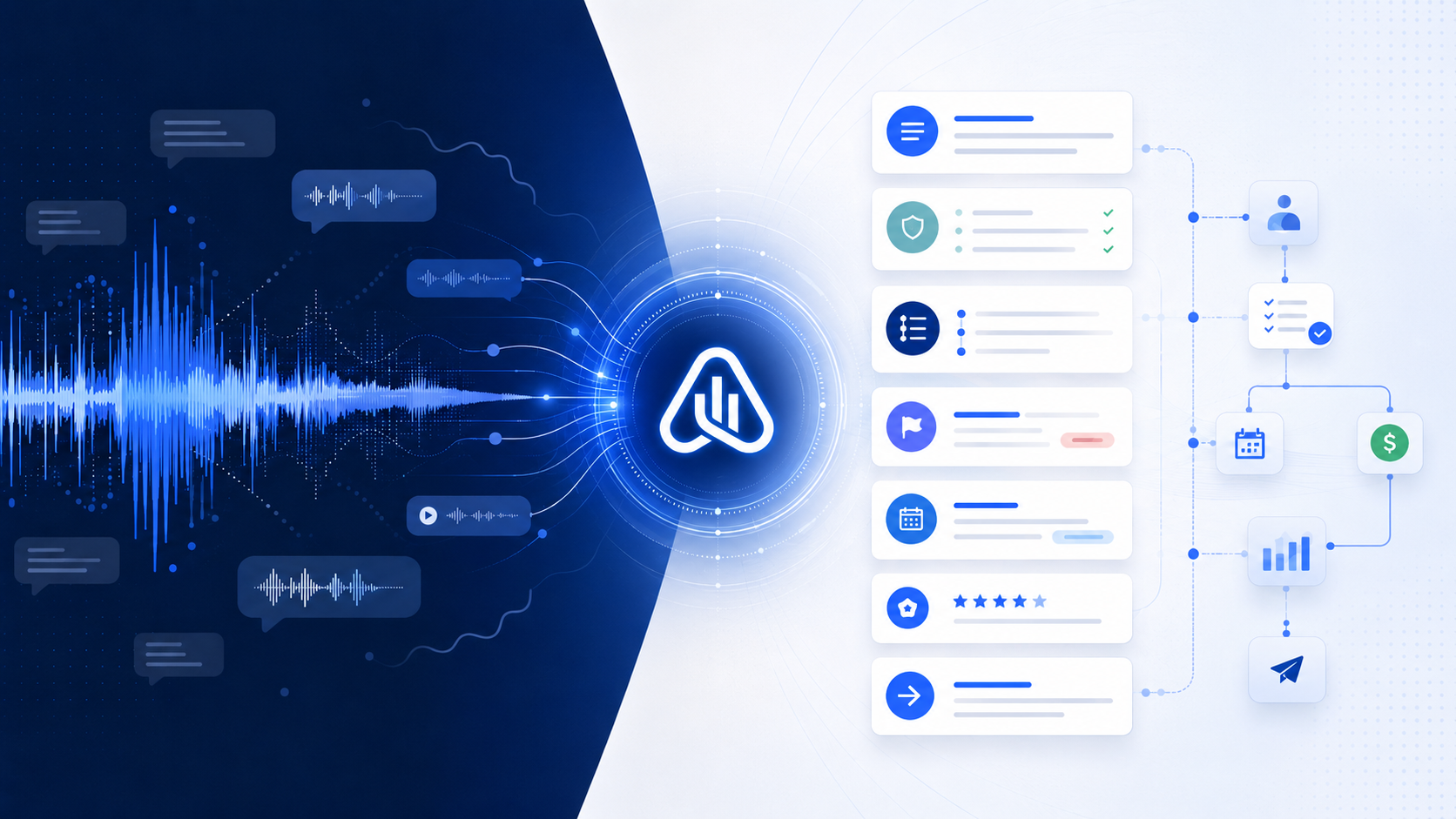
A strong AI call summary converts a conversation into a structured record. Instead of leaving a collector to type a vague note like "consumer will call back," the system can capture key facts in a consistent format.
A useful summary may include:
- call reason and account context
- consumer identity verification status
- disclosures or required statements delivered
- payment intent, promise-to-pay, or payment plan discussion
- dispute, hardship, bankruptcy, attorney representation, or cease communication signals
- sentiment or escalation markers
- next best action and follow-up timing
- transcript link and call recording reference
The goal is not to replace every review process. It is to make the evidence easier to find and easier to use.
Why Manual Call Notes Are Not Enough
Manual notes vary by collector. Some are detailed. Some are rushed. Some use internal shorthand that only one person understands. During high-volume periods, notes can become thin exactly when the agency needs precision most.
That inconsistency creates problems for supervisors, QA teams, compliance leaders, and client services teams. If a consumer later disputes what happened, someone may have to listen to a full recording, compare timestamps, review account notes, and determine whether the next workflow step was correct. AI call summaries reduce the search burden by creating a structured starting point.
They also help managers spot patterns. If a certain portfolio produces more disputes, if a script is creating confusion, or if a specific payment plan question keeps appearing, summaries can turn call center noise into useful operational data.
From Conversation Data To Compliance Evidence
Debt collection is documentation-heavy because the details matter. Agencies need records of contact attempts, consumer requests, disclosures, payment arrangements, disputes, and follow-up activity. Federal frameworks like Regulation F and the FDCPA make process discipline essential, though agencies should work with counsel on legal interpretation.
AI call summaries can support that discipline by turning call activity into searchable evidence. For example, if a consumer says they dispute the debt, the summary can flag the dispute and route the account into the correct workflow. If the consumer asks for communication by a specific channel, the summary can capture that preference for review. If an AI voice agent completes a payment arrangement, the summary can document the agreement terms and the next step.
The most important point: the summary should connect to the workflow. A summary that sits outside the collection platform is useful, but limited. A summary that updates account records, triggers review tasks, and supports audit trails is much more powerful.
How AI Summaries Improve QA And Manager Review
Quality assurance teams cannot listen to every call in full. They need a way to prioritize. AI summaries can help by surfacing calls with risk signals: angry sentiment, repeated confusion, potential dispute language, requests for validation, settlement exceptions, or possible consent issues.
Managers can then review the calls that need human attention instead of randomly sampling from a giant call pool. That does not eliminate human QA. It makes human QA more targeted.
AI-assisted QA can also improve coaching. If the summary shows that collectors frequently miss a required workflow step, supervisors can train on that specific issue. If summaries show that consumers are asking the same payment plan question, the agency can improve scripts, templates, or portal content.
Why Real-Time Data Matters For AI Accuracy
A summary is only useful if the underlying account context is current. If the AI system does not know that a payment was posted, a dispute was logged, consent was changed, or an account was moved to a different workflow, the summary may miss the operational meaning of the call.
This is why AI tools should be integrated with the collection platform. Real-time access to payment history, account status, communication preferences, and workflow state helps the AI interpret the conversation correctly. Without that context, the AI can still produce nice text, but the agency may still need manual cleanup.
In collections, AI should not operate like a detached note-taker. It should function as part of the collections workflow.
What To Look For In AI Call Summary Software
Not all AI summaries are built for debt collection. A generic call center summary may miss the industry-specific details that matter most.
Look for features such as:
- summaries tied directly to debtor and account records
- searchable transcripts and call outcomes
- configurable summary fields for disputes, payment plans, disclosures, and escalation
- audit logs showing when summaries were generated and edited
- permission controls for recordings and transcripts
- support for human collector calls and AI voice agent calls
- workflow triggers based on summary content
- manager review queues for high-risk conversations
The software should also make it clear when a summary is AI-generated and when a human edited it. That distinction matters for accountability.
How Aktos Fits The AI Summary Workflow
Aktos approaches AI as part of a broader collection operating system. AI phone agents, omnichannel workflows, account data, payment activity, and audit trails should work together rather than live in disconnected tools. That is especially important for call summaries because the summary often becomes the bridge between a conversation and the next operational action.
When call outcomes connect to workflows, agencies can move faster without losing control. A payment promise can trigger a reminder sequence. A dispute can trigger a review queue. A complex call can route to a human agent with context already attached.
Learn more: How an Aktos AI Phone Agent Transformed Collections
The Details AI Call Summaries Should Capture
AI call summaries should do more than recap a conversation. They should turn phone calls and debt collection calls into structured automation that supports follow-ups, payment reminders, payment plans, repayment updates, promise-to-pay tracking, due date changes, disclosures, FDCPA notes, TCPA-sensitive channel signals, and escalation. That is where AI-powered summaries move from convenience to operational evidence.
For AI debt collection, the best use cases combine artificial intelligence with real-time account context. AI agents, conversational AI, AI voice agents, voicebots, chatbots, and human agents all need access to the same workflow facts: current balance, consent, outreach history, SMS activity, CRM notes, dispute status, payment history, and next action. Natural language processing, NLP, machine learning, AI models, and sentiment analysis can help interpret calls, but those AI systems still need guardrails, audit trails, and APIs that connect summaries back to dashboards and account records.
The business case is not just prettier notes. Agencies use AI summaries to optimize quality assurance, streamline the collection process, lower costs, reduce operational costs, cut human error, and improve scalability during high-volume periods. In financial services, healthcare, and other complex cases, summaries can help collections teams find compliance risks quickly, identify customer experience friction, and route sensitive issues to a call center manager or compliance reviewer. That is especially important when collection agencies use AI platforms or AI tools across omnichannel outreach.
A practical evaluation question is: can the agency use AI solutions to improve recovery rates and debt recovery without losing control? If the answer depends on manual copy-paste, the system is incomplete. If the platform can use AI to summarize, score, route, and document calls in real-time workflows, then the summary becomes part of a scalable operating model rather than another disconnected note.
AI-driven QA should report metrics through an API when possible, so summaries can flag repetitive tasks, coaching needs, and compliance risks inside the same operational system.
Final Thoughts: Better Notes Are Only The Beginning
AI call summaries are valuable because they make conversation data operational. The win is not just cleaner notes. The win is faster QA, better dispute research, stronger audit trails, and more consistent follow-up. For agencies adopting AI, summaries should be treated as part of compliance-aware workflow design, not as a standalone transcription feature.
FAQ
Q: Are AI Call Summaries A Replacement For Call Recordings?
A: No. Summaries make calls easier to review and search, but recordings and transcripts may still be needed for detailed QA, disputes, or compliance review.
Q: Can AI Summaries Help With Disputes?
A: Yes, when they accurately capture dispute language, consumer concerns, and next steps. Agencies should still have human review for sensitive or complex disputes.
Q: Do AI Call Summaries Require Integration With Collection Software?
A: They are much more useful when integrated. Without real-time account data, summaries can miss important context such as payments, consent changes, or workflow status.