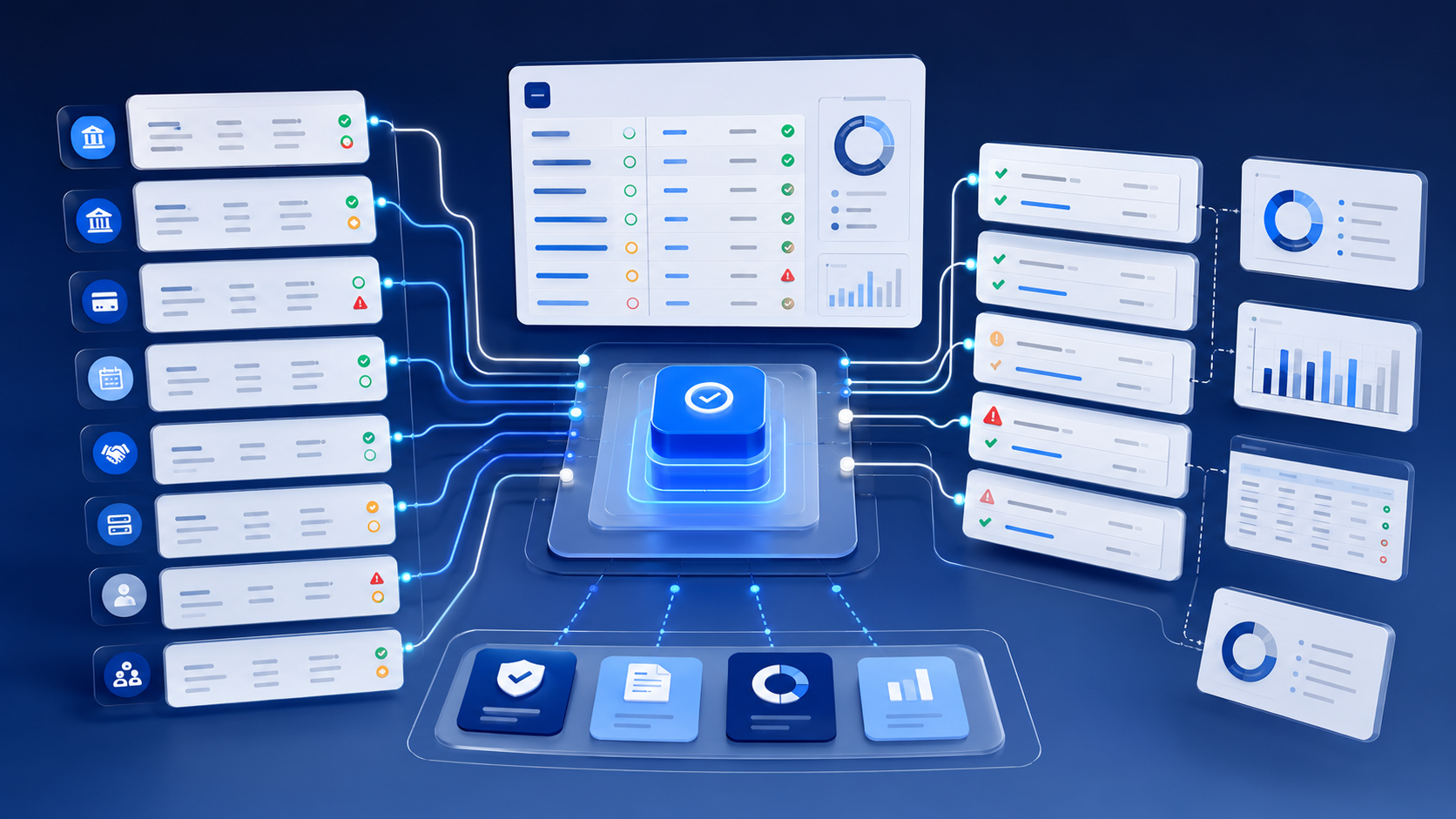
A failed payment does not always mean a consumer has abandoned an arrangement. It may reflect insufficient funds on the wrong day, expired cards, a replaced bank account, an authorization mismatch, or technical issues between systems. The agency’s response often determines whether that temporary interruption becomes a broken promise and lost revenue.
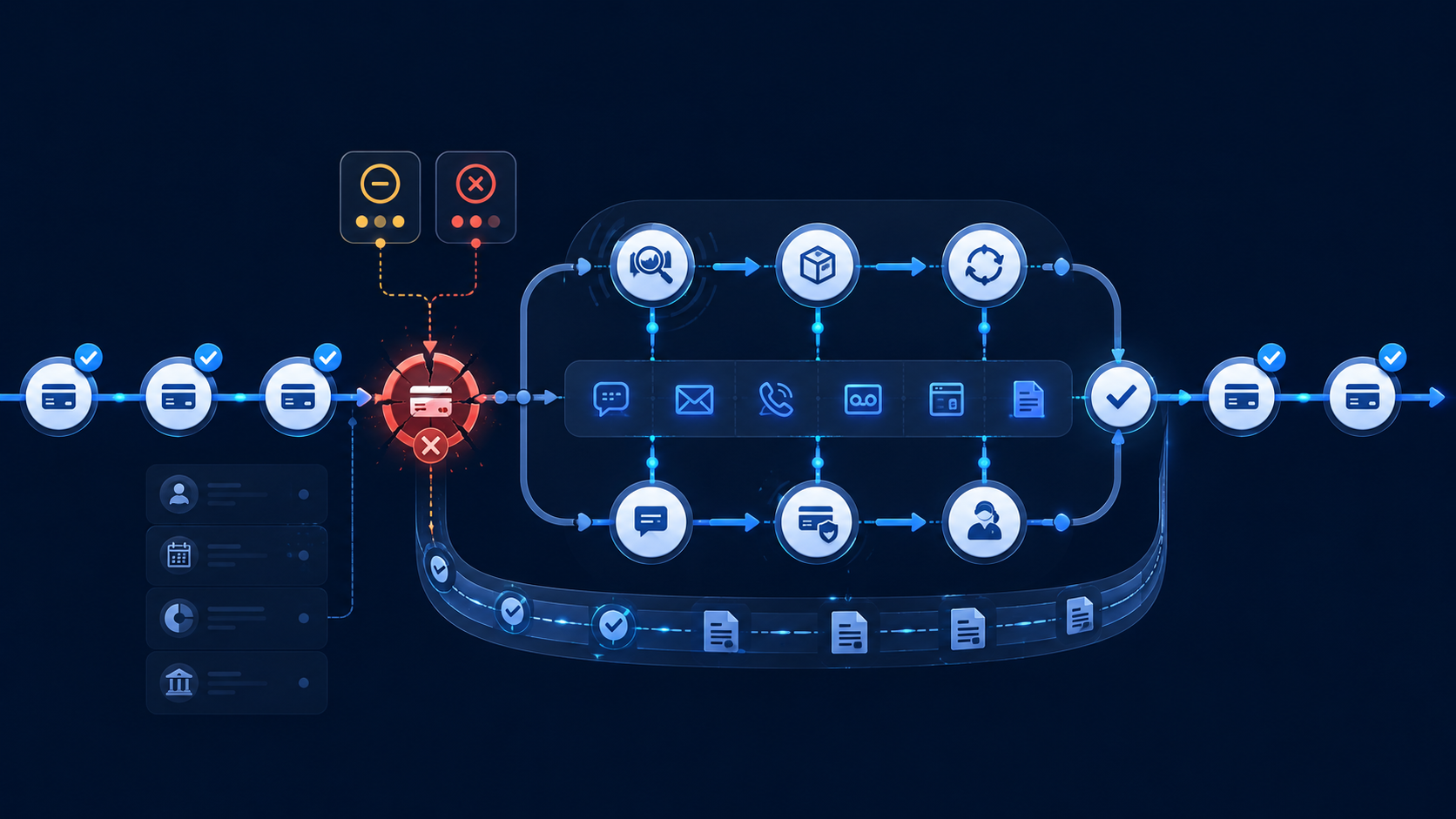
Effective failed payment recovery connects payment data, automation, compliant communication, secure self-service, and collector judgment. Instead of treating every failure alike, agencies need a workflow that identifies what happened, protects the existing arrangement, and selects the next reasonable action.
Why Does Recovering a Failed Payment Mean?
Failed payment recovery is the process of detecting, classifying, and resolving unsuccessful ACH, card, or scheduled payments. The goal is not simply to run the transaction again. It is to determine whether the event is:
- A single unsuccessful transaction
- A payment arrangement that is now at risk
- A canceled or revoked authorization
- A sign that the consumer’s circumstances have changed
Those conditions require different treatment. A soft decline may support a controlled retry. Hard declines usually require new payment information or human review. A revoked authorization should stop further attempts under that authorization. Longer-term hardship may require a trained collector to discuss a realistic cure.
Why Collection Payments Fail
Temporary Balance Problems
Insufficient funds can create soft declines that may resolve after a deposit or pay cycle. Agencies should not assume that every temporary balance problem equals refusal. Still, smart retries must follow processor rules, client requirements, authorization status, and applicable guidance, not guesswork.
Outdated or Invalid Payment Methods
Expired cards, expired credit cards, replaced cards, and closed bank accounts can turn a valid arrangement into a failed transaction. A card account updater or network tokenization may refresh eligible credentials in some payment environments, but the agency still needs a secure method-update path when the payment method cannot be repaired automatically.
Authorization, Processor, and Fraud Controls
The payment processor may return decline codes for invalid details, limits, suspected fraud, or unavailable systems. Agencies should preserve the original code instead of reducing every response to “failed.” A current guide to card decline codes illustrates why response detail matters: some failures are retryable, while others call for consumer action or review.
Fraud protection and fraud prevention controls may also block a transaction appropriately. That event should not automatically trigger repeated attempts.
Changed Consumer Circumstances
Payment failures can signal hardship, a new pay date, or a competing essential expense. Repeating the same charge will not solve that problem. Route the account to a collector who can diagnose the situation before negotiating new terms.
Build a Broken Payment Plan Recovery Workflow
1. Detect the Failure Immediately
Capture the failure date, amount, method, processor response, arrangement status, and prior attempt history. Update the account before another scheduled task or recurring charge creates duplicate activity.
Accurate detection also depends on connecting payment events to the agency’s financial records. A structured payment reconciliation process for debt collection agencies helps teams identify mismatched transactions, confirm payment status, and prevent processor data from becoming disconnected from the consumer account.
2. Classify the Reason
Use consistent categories: soft declines, hard declines, invalid payment information, authorization issues, consumer cancellation, processor errors, and unknown failures requiring review. Classification should determine whether the next step is an automated retry, method update, reminder, or collector task.
3. Protect the Existing Arrangement
Do not let one failed installment create contradictory statuses. Preserve the original terms and payment history, then mark the arrangement as active, at risk, paused, or broken. This gives collectors and managers one source of truth.
4. Apply Controlled Retry Rules
Automated payment retries should be limited and reason-based. Retry soft declines when appropriate, but treat hard declines as a sign that updated payment information is needed. Use documented retry strategies, record every attempt, and prevent duplicate or unauthorized charges. Blind retrying can increase fees, complaints, and revenue loss without improving the recovery rate.
5. Send a Compliant Reminder
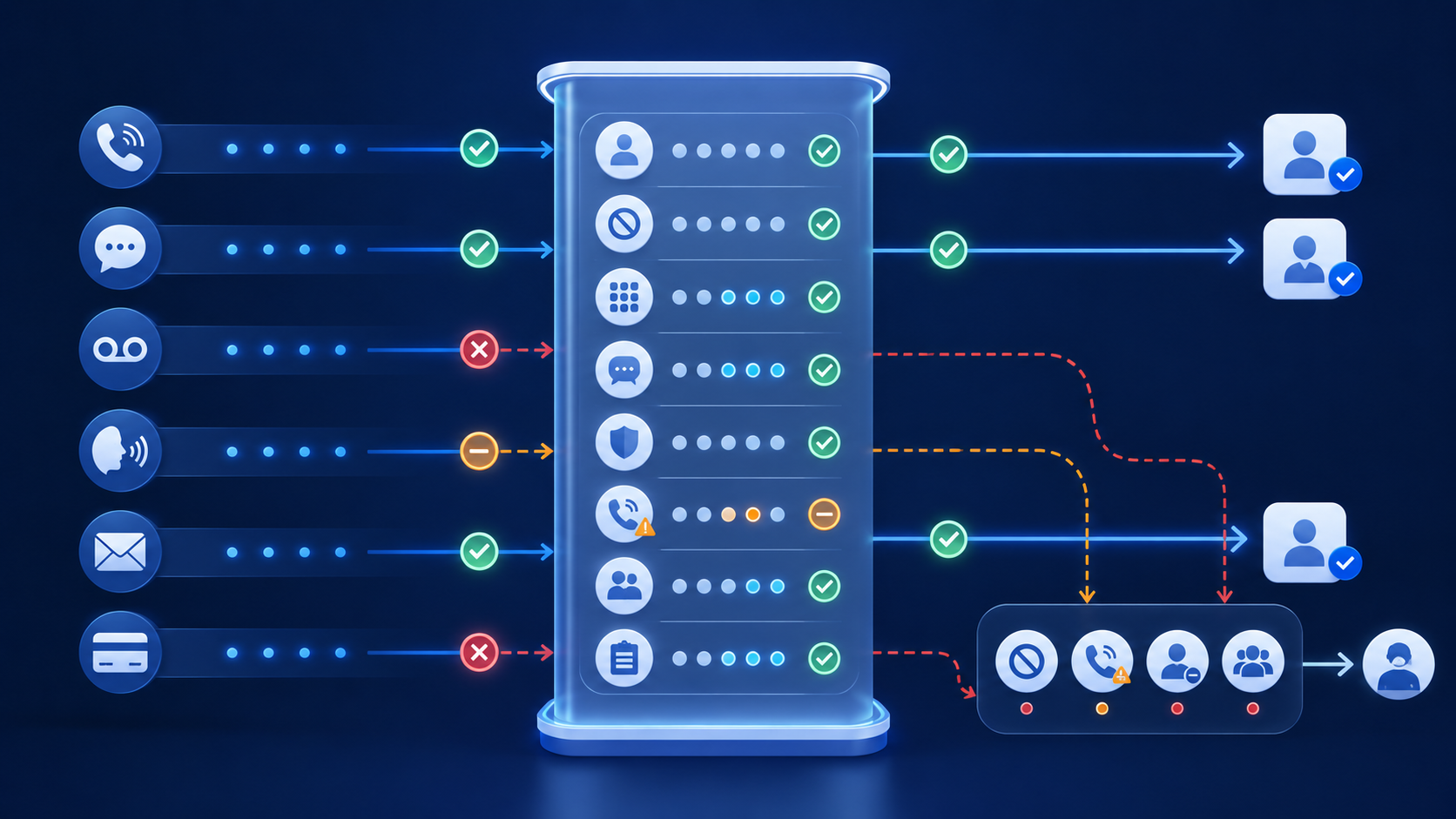
A reminder should be clear, neutral, and focused on resolving the transaction. Coordinate SMS, email, phone, voicemail, letters, and portal notices so multiple channels do not collide. The workflow should respect consent, opt-outs, time zones, and communication-frequency controls under Regulation F and other applicable requirements.
Agencies evaluating automated reminders should also consider the operational questions covered in this guide to TCPA compliance software for collection agencies, including how systems track consent, revocation, communication channels, and account-level activity. Agencies should consult qualified counsel on their specific practices.
6. Offer Secure Self-Service
Let the consumer replace a card or bank account, make a one-time payment, reschedule, request help, and review the remaining balance through a verified flow. Avoid collecting sensitive payment data through unsecured messages. PCI Security Standards provide a baseline for protecting payment account data across the payment lifecycle.
7. Route Exceptions to Collectors
Prioritize human follow-up when multiple payments fail, hardship is reported, authorization is unclear, a dispute or complaint is involved, or automated recovery does not work. High-value and time-sensitive arrangements may also need faster review.
How Collectors Should Cure Broken Arrangements
Collectors should review the full history before contacting the consumer: successful payments, failure reasons, prior messages, original terms, and any method updates. Then diagnose whether the issue is temporary, technical, or financial.
Reasonable cure options may include reattempting the missed payment, moving the date, replacing the payment method, spreading the missed amount across later installments, or creating a revised arrangement within approved parameters. The collector should confirm new dates, amounts, method, and remaining balance in writing through an approved channel, then document notes and follow-up tasks.
What Agencies Can Borrow From Subscription Billing
Subscription businesses use dunning to recover recurring charges after payment failures. Their billing stack may combine a billing system, dunning emails, dunning sequences, smart retries, machine learning, and account-update tools. Dunning combines targeted emails, retry logic, and payment-method repair to recover failed payments.
That model offers useful vocabulary, but agencies should adapt it carefully. Subscription billing teams measure involuntary churn, passive churn, customer churn, customer retention, MRR, monthly recurring revenue, LTV, and revenue saved. Collection agencies care more about arrangement cure, dollars recovered, and sustained payment performance.
In other words, dunning can inspire workflow discipline, but agency dunning must remain connected to authorization, client rules, account history, and debt-collection communication controls. Recurly-style smart retries should never be copied without that context.
Failed Payment Recovery Metrics to Track
Track both immediate revenue recovery and whether the repaired arrangement stays healthy:
- Failed-payment rate and recovery rate by reason
- Arrangement cure rate and first-retry success
- Time from failure to cure
- Dollars recovered and lost revenue avoided
- Payment-method update completion rate
- Collector touches per cured arrangement
- Percentage of arrangements that fail again
- Performance by communication sequence, client, and portfolio
These measures should appear in accessible operational dashboards rather than isolated processor reports. Modern debt collection reporting software can help agencies compare recovery results across clients, portfolios, collectors, failure reasons, and communication sequences.
For subscription businesses, the same analysis may focus on MRR retention or involuntary churn. For agencies, the better question is whether the cure produced durable payments without unnecessary consumer friction.
What Changes at Higher Account Volume?
Scale introduces multiple processors, client-specific rules, portfolio-specific retry strategies, role-based permissions, exception routing, and client-facing reporting. The platform must normalize decline codes, prevent duplicate attempts, preserve arrangement history, and show which workflows produce the best revenue recovery results.
A modern system should also connect payment events to collector queues, omnichannel reminders, audit history, and reporting. That turns failed payment recovery from a scattered alert into an operational process.
Final Thoughts: Treat Failure as Recoverable
The first failure is a signal, not a verdict. Agencies that detect it quickly, classify it correctly, and respond with controlled options are more likely to restore the arrangement.
Aktos connects payment processing, account workflows, consumer communication, collector tasks, and recovery reporting in one modern collection platform. Book a demo to see how a structured workflow can replace disconnected alerts and manual follow-up.
FAQs
Q: How soon should an agency respond to a failed payment?
A: Detect and record the event promptly. The timing of a retry or reminder should reflect the failure reason, processor guidance, client requirements, authorization status, and applicable law.
Q: Should every failed ACH or card payment be retried?
A: No. Temporary soft declines may be eligible for a controlled retry, while hard declines, revoked authorization, invalid details, and certain fraud signals require a different action.
Q: What is an arrangement cure rate?
A: It is the percentage of failed or broken arrangements restored within a defined measurement period. Agencies should also track whether those arrangements fail again.
Q: Can consumers update payment methods without calling?
A: Yes. A secure self-service portal can support method replacement, one-time payments, rescheduling, and help requests without exposing sensitive information in email or SMS.