
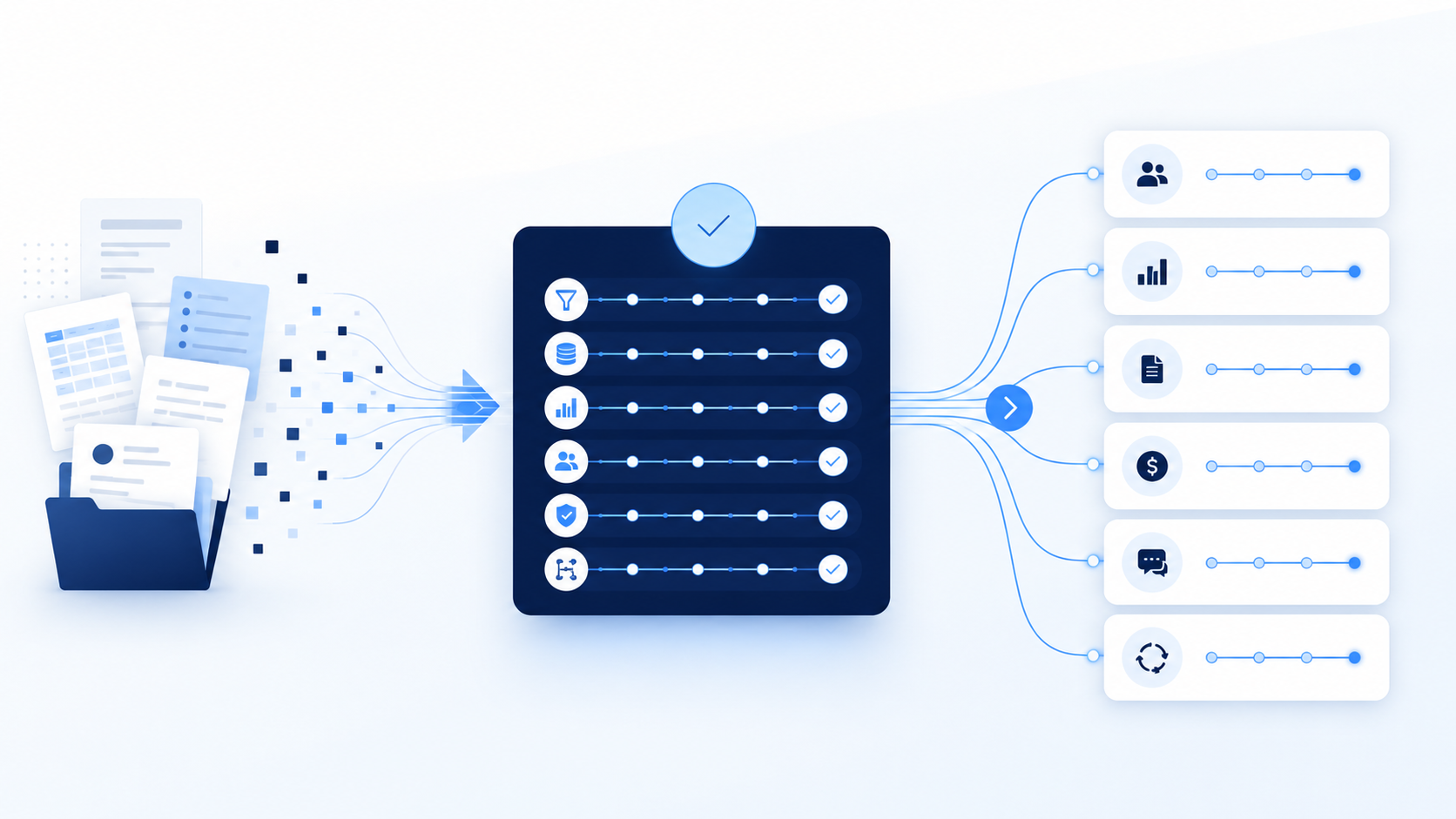
Client onboarding is where an enterprise creditor finds out whether your operation is as strong as your sales pitch.
A creditor may choose a collection agency for its experience, pricing, references, or debt recovery strategy. But the onboarding process is where the relationship becomes real. Can your team turn placement rules into workflows? Can you map data cleanly? Can you give the client reporting without building a manual reporting factory? Can you keep account handling consistent once work begins?
For enterprise relationships, client onboarding is not paperwork. It is the first operational test. In high-stakes debt collection, a weak kickoff can create delayed placements, unclear expectations, missed status updates, and friction between the client, operations, and risk teams.
Why Client Onboarding Matters at Enterprise Scale
Enterprise clients bring more than account volume. They bring placement rules, documentation standards, reporting preferences, user access needs, and stakeholders who want visibility.
If the onboarding process is loose, the relationship starts with noise: data files need rework, client services chase answers, and the first performance review becomes a discussion about setup problems instead of results.
A stronger onboarding process gives both sides a shared operating model before accounts go live. It defines how the collection process should work, what data must be exchanged, which exceptions need review, and how the agency will prove rules are being followed. That clarity protects client trust and helps support cash flow.
Start With Placement Rules
The best onboarding process starts by asking how the creditor wants accounts handled. Enterprise placements may vary by balance, age, debt type, consumer status, dispute history, jurisdiction, prior recovery stage, or internal policy.
Your team should capture which accounts are eligible for outreach, which accounts require special handling, when accounts should move between queues, what documentation is required, which channels are allowed, and what metrics the client expects.
These rules should not sit in a static PDF that someone interprets later. They should become queue logic, workflow triggers, reporting fields, permissions, and audit trails inside the system.
For more on evaluating whether your system can support that level of configuration, see Aktos’ software evaluation guide.
Map Data Before Accounts Go Live
Enterprise onboarding usually involves data moving from a creditor system into the agency’s platform. That data may include consumer contact information, balances, payment history, charge history, dispute flags, documents, placement metadata, and client-specific statuses.
Before launch, agencies should define required fields, status definitions, portfolio identifiers, update frequency, exception handling, and ownership for rejected records. Modern integrations reduce file corrections, delayed placements, and stale updates.
For enterprise creditors, data flow is not just an IT concern. It affects debt recovery, dispute handling, client confidence, and cash flow.
Build Client-Specific Workflows
No two enterprise clients operate the same way. One client may require approval before settlement offers. Another may need documentation before work resumes after a dispute. Another may want certain accounts routed to a specialized debt collector or supervisor before outbound communication begins.
A modern system should let your team configure those workflows without long development cycles. Useful client onboarding workflows include placement intake, segmentation, payment reminders, dispute routing, legal escalation gates, client review queues, and closure workflows.
When workflows are configurable, the agency can adapt to the client instead of forcing the client into a rigid process. That flexibility matters in high-stakes debt collection because small process gaps get expensive once volume increases.
Make Compliance Operational
Client onboarding should define how required documentation will be captured, stored, and shared. For agency teams, that may include validation notice workflows, call and message logs, consent and revocation records, dispute notes, payment plan terms, communication history, and state-specific rule handling.
The FTC’s FDCPA and CFPB Regulation F are useful starting points for federal requirements. This article is not legal advice, and agencies should work with qualified counsel.
Operationally, the point is simple: if a compliance rule matters, the system should help enforce and document it. Manual tracking creates room for mistakes. Strong client onboarding turns client rules into repeatable workflow steps, permission controls, and audit-ready records.
For compliance planning by state, Aktos’ state-law guide is a useful companion resource.
Set Up Client Reporting Early
Enterprise clients do not want to wait until month-end to understand what is happening. Reporting should be part of the onboarding process, not a follow-up project after the first placement is active.
Before go-live, align on placement volume, account status, payment activity, dispute volume, promise-to-pay status, communication outcomes, portfolio performance, and exceptions requiring client review. A modern client portal can reduce status emails and one-off report requests. For broader consumer issue monitoring, teams can also reference the CFPB’s Consumer Complaint Database.
What Weak Onboarding Looks Like
Weak onboarding usually relies on long email threads, static requirement documents, disconnected tools, and custom fixes that only one person understands.
Common warning signs include manually interpreted client rules, reporting built after launch, repeat data mapping issues, routine workflow changes requiring development tickets, scattered records, and no clear account workflow view.
One quick clarification for search intent: this article is about agency-client setup, not trash collection, the gathering of money in a general business sense, or the collection of taxes by a government entity. The focus is the operational setup behind enterprise collection activities.
How Aktos Helps Agencies Improve Onboarding
Aktos helps agencies bring workflows, reporting, client portals, debtor self-service, audit trails, and integrations into one modern platform. During client onboarding, that matters because enterprise creditors need more than a place to store accounts. They need proof that requirements can become live operating rules.
Aktos supports client-specific configuration, real-time dashboards, role-based access, API connectivity, omnichannel communication, and audit-ready activity tracking. That helps teams move from kickoff to go-live with fewer handoffs.
For agencies moving off older systems, the CUBS migration guide explains what to look for in a modern platform. Aktos’ AI guide explains how automation and real-time workflows can support scalable operations.
Final Thoughts
Onboarding is not just implementation. It is retention work.
The faster your agency can turn placement rules into workflows, dashboards, documentation, and reporting, the more confidence clients have in your operation. Strong onboarding helps teams start with clarity instead of cleanup.
In enterprise collections, complexity is unavoidable. Chaos is optional.
Ready to modernize enterprise onboarding? Book a demo with Aktos.
FAQs
Q: What is client onboarding for agencies?
A: Client onboarding is the process of turning a new creditor relationship into a live operating model. It usually includes data mapping, placement rules, reporting setup, workflow configuration, permissions, required documentation, and go-live planning.
Q: Why is the onboarding process important for enterprise clients?
A: Enterprise clients bring higher account volume, more stakeholders, and specific handling requirements. A clear onboarding process defines expectations before accounts are worked, reducing rework and reporting gaps.
Q: What should be included in a client onboarding checklist?
A: A checklist should include placement rules, required data fields, communication permissions, escalation paths, dispute handling, payment plan rules, reporting expectations, client portal access, and launch owners.
Q: How can software improve client onboarding?
A: Modern software can turn client requirements into workflows, dashboards, permissions, audit trails, and automated reporting. That reduces manual handoffs and keeps account work consistent.