Enterprise teams do not reject automation because they dislike efficiency. They reject it when they cannot understand, control, test, or verify what the system is doing.
Debt collection automation can improve collector productivity, reduce operational costs, and support stronger recovery rates. But speed without governance can also scale stale data, misrouted accounts, and unresolved exceptions.
Trustworthy automation combines clean data, clear ownership, defined limits, visible actions, and reliable human escalation.
What Debt Collection Automation Actually Includes
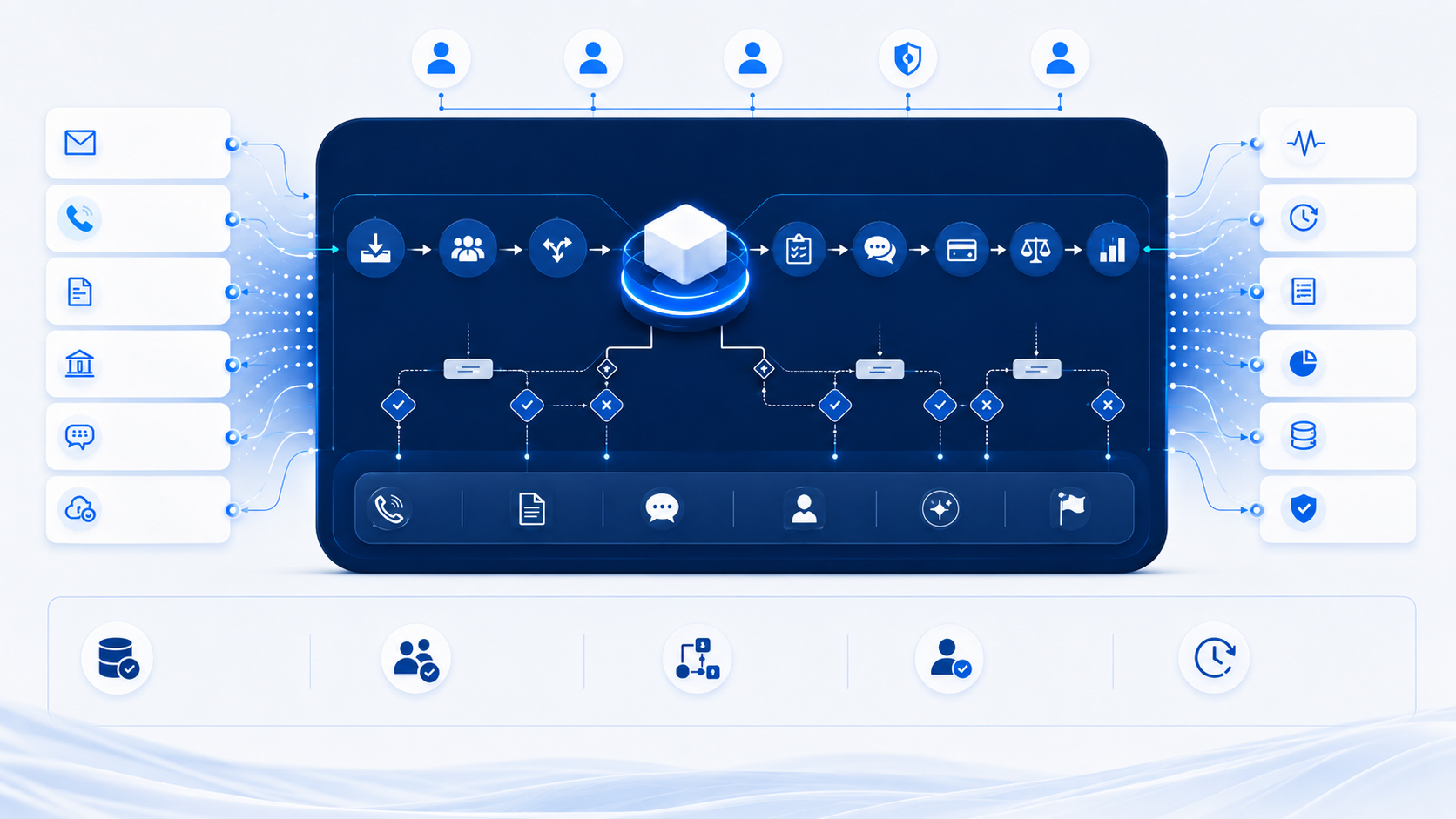
Debt collection automation extends beyond a dialer or scheduled dunning emails. A coordinated system supports placement intake, segmentation, account routing, collector tasks, communications, payments, dispute management, reporting, and AI-assisted interactions.
A dialer moves through call lists. An IVR routes callers. Payment gateways accept transactions. A self-service portal supports payments. The larger opportunity is connecting these functions so one account update changes the next approved action everywhere.
Unlike scattered AR automation or generic credit management software, automated debt collection software coordinates the debt recovery process across clients, portfolios, users, channels, and exceptions.
The Five Foundations of Trustworthy Automation
1. Clean and Current Data
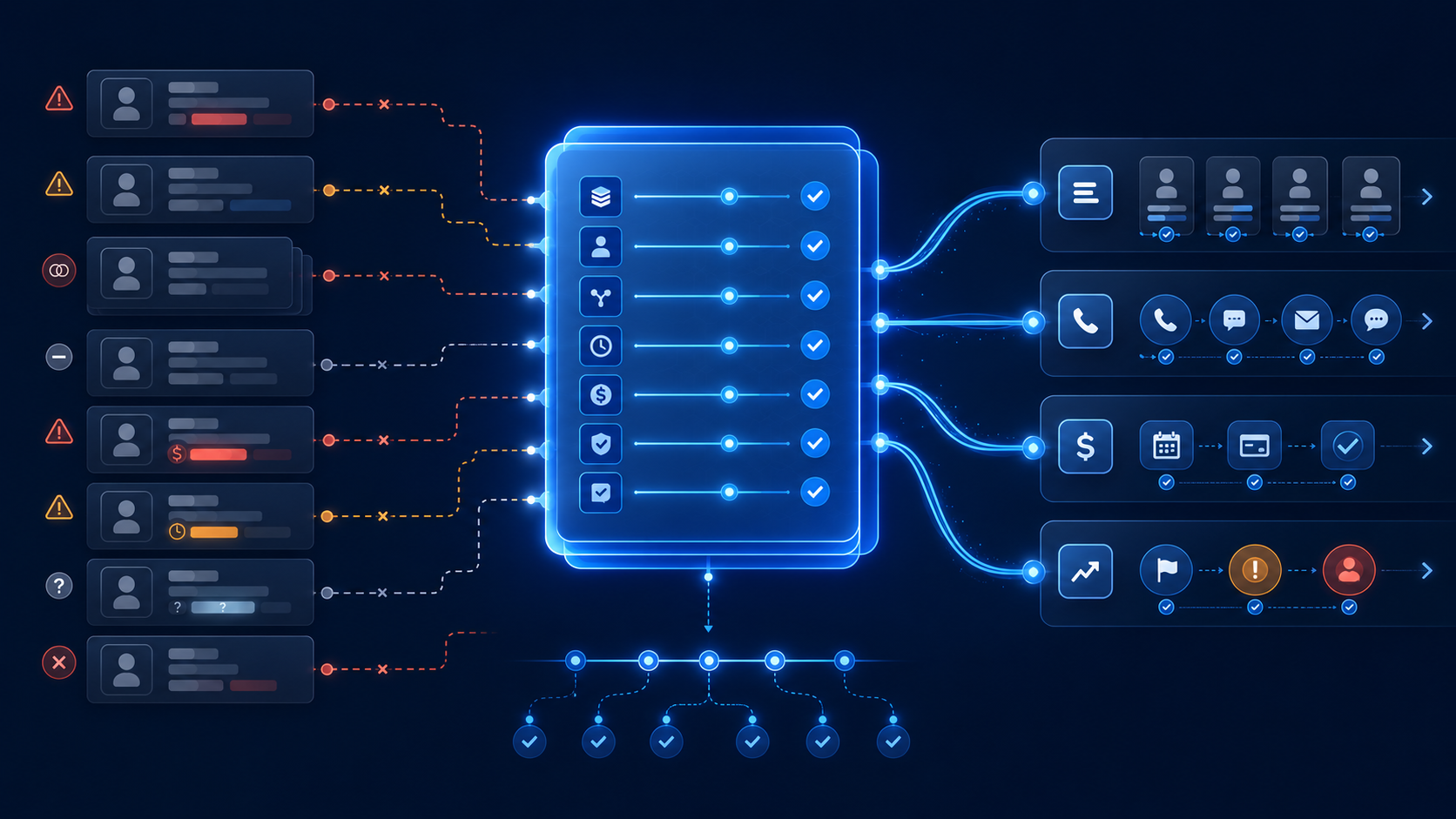
Automation should not begin until placement files and required fields are validated. Balances, payment activity, disputes, consent, charge-off status, and account ownership must remain synchronized.
Missing or contradictory information should pause the workflow until an owner resolves it, especially when payment processors, client systems, and an ERP integration update records at different speeds.
As Aktos explains in How Clean Data Improves Debt Collection AI, AI can only act safely when it has current account context. Stale records turn fast automation into fast mistakes.
2. Permissioned Access
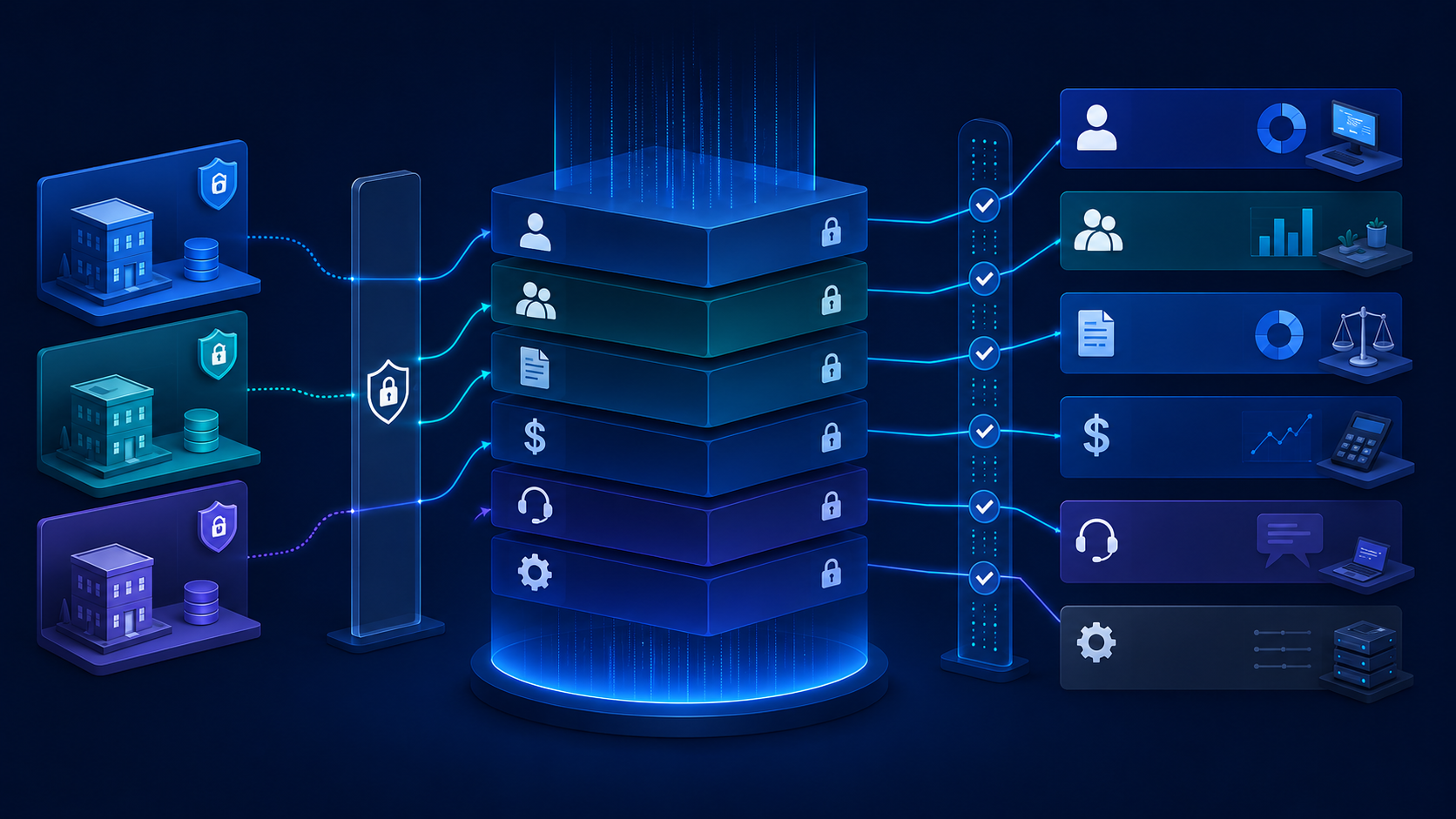
Employees, integrations, and AI systems should receive only the access required for their task. Collectors need account history; supervisors need exception controls; compliance leaders need the complete audit trail.
Permissions should vary by client, portfolio, role, and workflow, supporting practical compliance management. An AI agent that summarizes calls should not automatically change settlement terms or close delinquent accounts.
For a deeper operating model, see Data Permissioning in Debt Collection Software.
3. Defined Business Rules
Every automated action should trace back to an explainable rule. Agencies may need different rules by client, account type, balance, jurisdiction, communication preference, bad debt age, or dispute status.
A workflow might route high-balance accounts for review, use risk scoring to prioritize work, and prevent communication when documentation is missing. Defined rules make automated workflows testable.
If operations cannot describe the trigger, conditions, owner, and stop point, the workflow is not production-ready.
4. Human Escalation
Human-in-the-loop design identifies where judgment is required. Routine reminders, queue movement, standard assignments, reports, summaries, and low-risk status updates can often be automated.
Settlement changes, legal referrals, unusual arrangements, account closure, high-risk communications, and incomplete data may require approval. The human should receive the full context and reason for the handoff.
This is where conversational AI should outperform traditional IVR, not by pretending every situation is routine, but by recognizing intent and transferring the consumer with context.
5. Real-Time Records
Log every automated decision, communication, payment update, approval, and escalation in real time to support reviews, client reporting, dispute resolution, and regulatory compliance.
The FDCPA text from the FTC and the CFPB’s current Regulation F resources provide the federal baseline that agencies must translate into operational controls. Agencies should work with qualified counsel to determine how federal, state, client, and portfolio requirements apply.
Where AI Fits Into Debt Collection Automation
AI is most useful when it operates inside governed workflows. Appropriate use cases include inbound call handling, conversation summaries, document extraction, payment-plan assistance, task routing, account prioritization, and predictive analytics.
Machine learning and predictive analytics can improve collection performance through payment patterns and risk signals. Natural language processing can interpret requests, while NLP summarizes conversations and flags disputes. AI-driven automation can prioritize bad debt portfolios.
AI should follow the same permissions, business rules, and approval paths as human users. Powerful Agentic AI Guardrails for Collection Agencies explains how data boundaries, workflow limits, and human approvals create a safer operating lane.
For outbound AI voice, the FCC has confirmed that AI-generated human voices fall within TCPA restrictions on artificial or prerecorded voices. Review the FCC declaratory ruling with counsel and verify consent records.
How Enterprise Teams Should Roll Out Automation
Step 1: Map the Existing Process
Document current work, including exceptions, client requirements, and handoffs among the platform, payment processors, and client systems.
Step 2: Define the Desired Outcome
Choose one measurable problem: delayed first action, slow inbound response, excessive queue administration, incomplete payment follow-up, or rising days sales outstanding. DSO is usually creditor-side, but clients may use DSO when evaluating responsiveness.
Step 3: Establish Rules and Owners
Assign owners for configuration, testing, regulatory review, client approval, and activation. Separate builders from approvers when risk warrants it.
Step 4: Pilot a Controlled Portfolio
Start with a limited client, account segment, or workflow. Include ordinary scenarios, edge cases, conflicting data, disputes, and failed payment events.
Step 5: Validate the Results
Review routing, duplicated communication, missing context, unresolved exceptions, and audit trail completeness. Confirm the system stops when required information is unavailable.
Step 6: Expand Gradually
Scale only after the workflow performs reliably and employees know how to pause, override, and escalate it.
Metrics That Demonstrate Automation Is Working
Track time from placement to first assigned action, manual-intervention rate, collector administrative time, payment follow-up completion, exception-resolution time, inbound containment and escalation, workflow error rate, client reporting turnaround, and unresolved queues.
Measure recovery rates, recovery rate by segment, and operating costs. When clients care about days sales outstanding, report DSO alongside placement age and liquidation. Automation should improve the debt recovery process without hiding risk.
Warning Signs the System Cannot Be Trusted
Warning signs include unexplained actions, workflows that cannot be paused, batch-only records, exceptions continuing through standard sequences, broad AI access, disconnected systems, inflexible debt management rules, and long development cycles.
Questions Enterprise Buyers Should Ask
- How does the platform restrict AI and automation access?
- Can every automated action be traced to a rule?
- How are human approvals configured?
- What context is passed during escalation?
- Can workflows be tested before production?
- How does the platform prevent stale-data actions?
- Can rules vary across clients and portfolios?
- Who can change, approve, or activate automation?
Final Thoughts: Control Creates Confidence
Trustworthy debt collection automation makes oversight visible, repeatable, and scalable.
Aktos brings account data, automated workflows, AI, permissions, reporting, and human escalation into one controlled platform so sensitive decisions remain explainable and accountable.
See how Aktos can coordinate AI, automation, and human teams inside governed collection workflows.
FAQs
Q: What is debt collection automation?
A: Debt collection automation uses software to complete, route, document, or assist with repetitive collection processes according to predefined rules.
Q: Is debt collection automation the same as AI?
A: No. Automation follows defined workflows, while AI may interpret information, identify patterns, or generate responses within those workflows.
Q: Should every collection process be automated?
A: No. Sensitive, unusual, disputed, or high-risk situations may require human review.
Q: How can agencies prevent automation errors?
A: Use current data, restricted permissions, controlled testing, approval requirements, exception handling, and complete audit trails.