
Debt collection software implementation is the moment a strong buying decision turns into real operational value, or becomes another painful system change.
A demo can make any platform look clean. The real test is whether the vendor can move accounts, configure workflows, connect vendors, train users, and launch without slowing collections. For collection agencies, implementation quality affects recovery, DSO, compliance management, client reporting, and collector confidence from day one.
The goal is to launch debt collection software that supports placements, payment processing, multi-channel outreach, dispute resolution, audit trails, and regulatory compliance in one operating model.
Why Implementation Quality Determines ROI
Agencies are not moving static records. They are moving active portfolios, delinquent accounts, payment plans, consumer debt records, notes, documents, communication history, client rules, user permissions, and reporting logic. This is account-level execution, not broad national debt advice.
When implementation is weak, collectors lose context, managers question reports, finance teams chase reconciliation gaps, and compliance teams cannot prove what happened. A strong rollout should define what data migrates, which automated workflows go live first, which integrations are day-one requirements, how FDCPA, TCPA, state rules, permissions, and audit trails will be configured, and how each role will be trained.
Aktos treats implementation as an operating-model project, not a generic software install. Modern debt collection software should reduce workarounds, not recreate them inside a newer interface.
Start With Data Migration And Validation
Data conversion is one of the highest-risk parts of debt collection software implementation. Your platform may hold balances, account statuses, payment history, dispute notes, credit rating details, skip tracing results, documents, and client-specific codes.
Before launch, ask how the vendor maps fields, handles rejected records, reconciles balances, and validates test imports. Can the agency confirm that interest rates migrated correctly, interest rates display consistently, repayment plan terms are preserved, payment plans are visible, and disputed accounts keep their dispute resolution history?
This is also the time to decide what does not need to be migrated. Moving years of messy, unused data can slow the project.
Configure Workflows Before Training Users
Training users on unfinished workflows is like handing collectors a map while the roads are still being built. Before training starts, the agency and vendor should agree on the core workflows that must be configured.
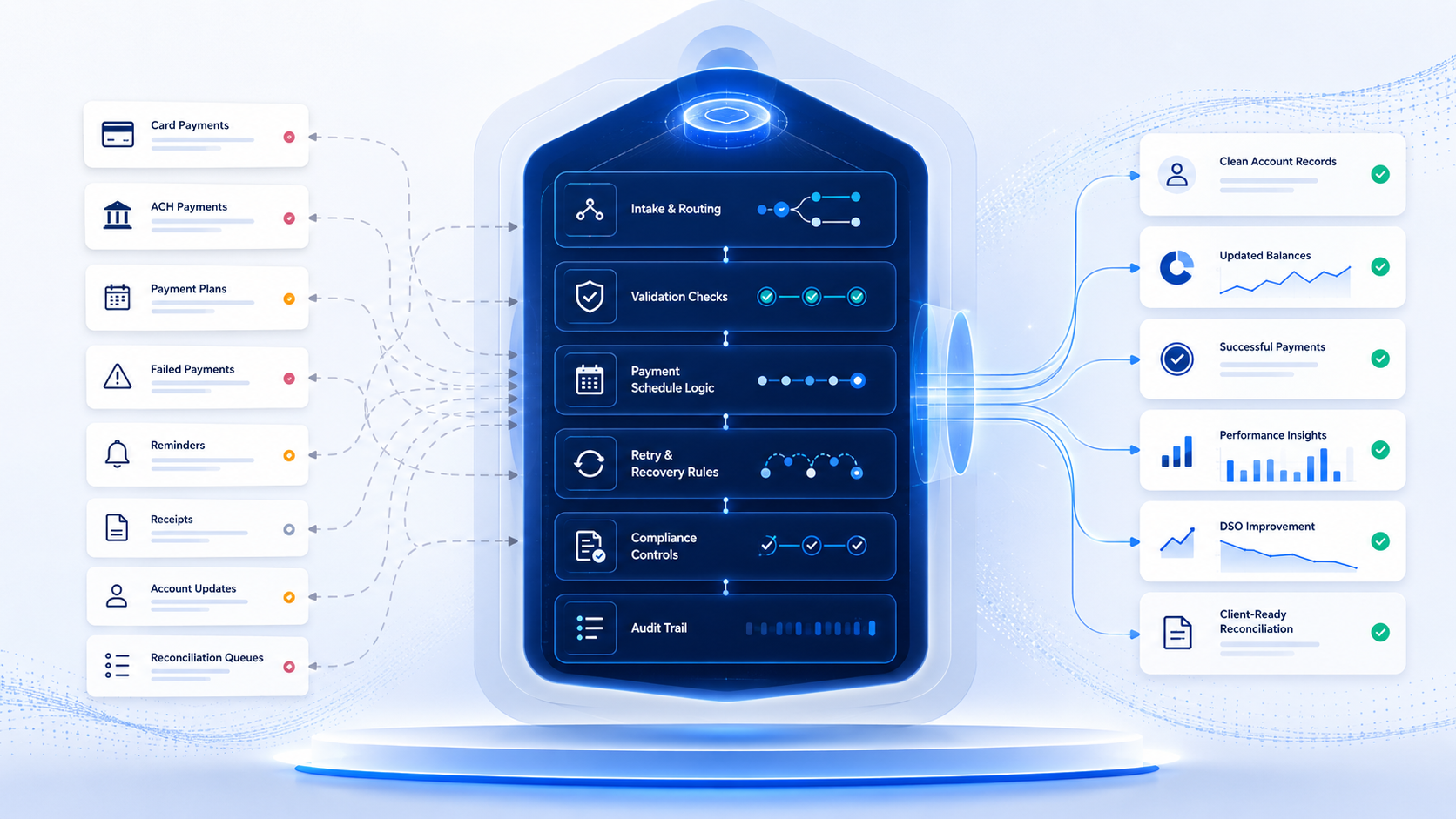
That usually includes placement intake, segmentation, collector queues, automated reminders, settlement approvals, payment follow-up, validation notices, consumer preferences, dunning emails, client reporting, and escalations.
This is where automated debt collection software can create leverage. Predictive analytics and machine learning may help prioritize accounts, recommend timing, or route exceptions, but only when the underlying workflow is clean.
Treat Integrations As Launch Dependencies
Integrations should not be pushed into a later phase if they are required for daily work. Agencies may need connections to dialers, letter vendors, payment processors, credit bureaus, self-service portals, client portals, data warehouses, accounting systems, and other creditor or vendor systems.
The implementation plan should define what data moves between systems, how often it syncs, who monitors the connection, and what happens when a sync fails. If payment activity, account status, dispute updates, or client reporting depends on an integration, those handoffs need to be tested before go-live. Otherwise, the agency risks launching with gaps that create manual cleanup, reporting delays, and avoidable operational friction.
Good testing uses real scenarios: a payment plan, a failed card, an opt-out, a dispute, a credit bureau update, and a file with missing fields. The point is operational continuity.
For more on connected payment operations, see Aktos’ guide to debt collection payment automation.
Build Compliance And Security Into The Rollout
Compliance should be configured during implementation, not cleaned up after launch. Agencies should account for CFPB expectations, the Fair Debt Collection Practices Act, FDCPA workflows, Regulation F, TCPA consent considerations, state rules, client policies, and internal review paths. This article is not legal advice; agencies should involve qualified counsel for legal interpretation.
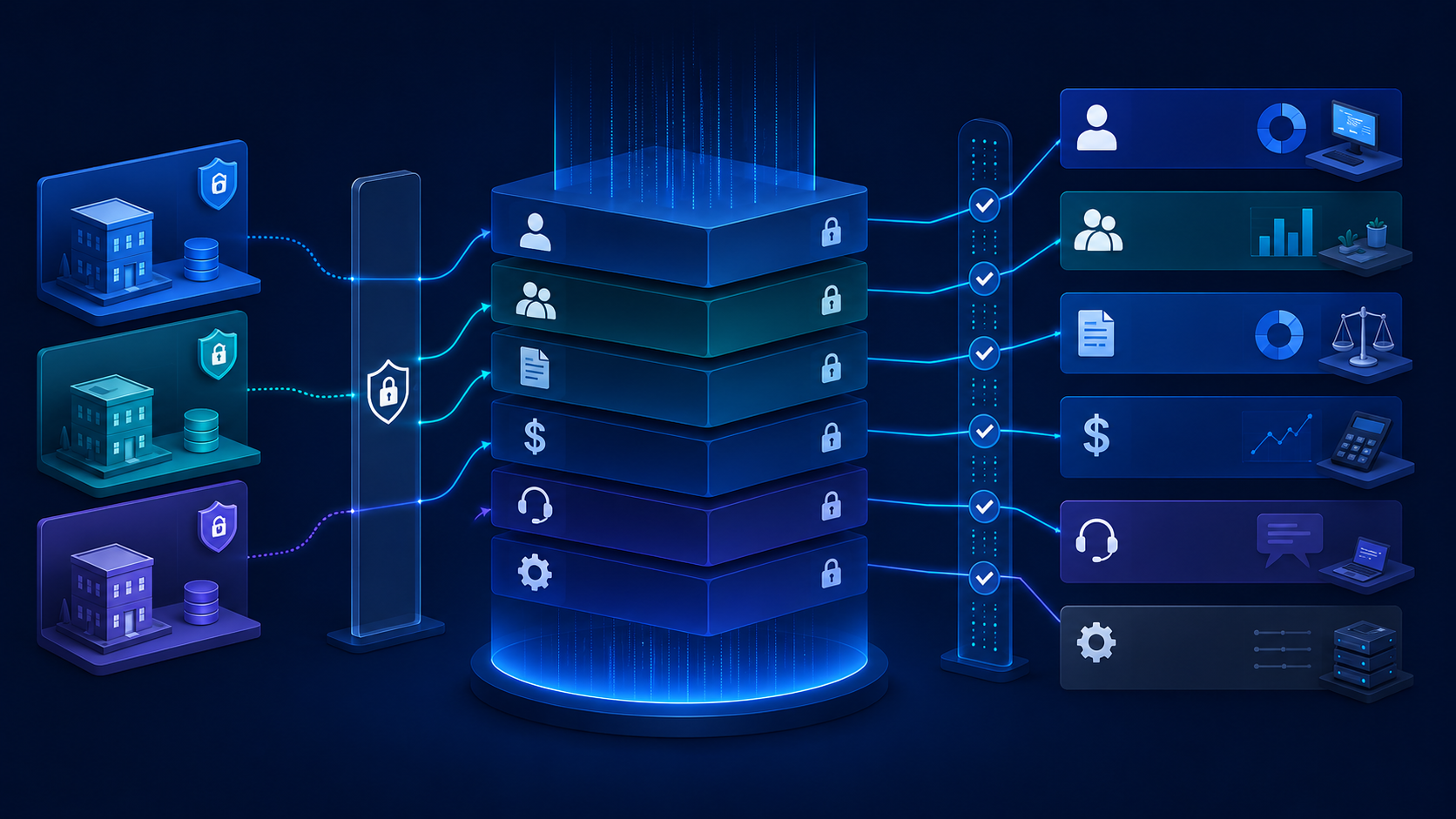
From a software perspective, regulatory compliance depends on practical controls: approved templates, contact-frequency logic, time-zone rules, consent tracking, dispute holds, role-based access controls, and audit trails. If a supervisor changes a repayment plan, if a collector sends a message, or if an admin edits an automated workflow, the platform should preserve the evidence.
Security belongs in implementation too. Ask about SOC 2 reports or security reviews, data encryption, authentication, user provisioning, export controls, and incident escalation. The FTC’s Start with Security guidance is useful, and the AICPA explains the broader SOC suite of services used in vendor assurance.
For more on access governance, see Aktos’ guides to data permissioning in debt collection software and proven audit trails for debt collection compliance.
Train By Role, Then Support The First Month
One generic walkthrough is not enough. Collectors, supervisors, compliance users, finance users, client services, IT admins, and executives all need different training.
Collectors should practice account review, payment plan setup, dispute handling, promise documentation, and self-service portal guidance. Supervisors should practice queue management and approvals. Compliance teams should test audit trails, consent history, FDCPA workflows, TCPA controls, and dispute resolution. Finance should verify payment processing, reversals, remittance, fees, and reconciliation.
The first month after go-live should include structured support for questions, workflow gaps, report issues, data exceptions, and user friction.
Measure The Implementation After Go-Live
Go-live is not the finish line. It is the first moment the new platform is tested under real volume.
Agencies should monitor DSO, collector activity, payment conversion, failed payments, portal adoption, dispute queues, report accuracy, and client-facing response times. Are automated reminders reducing missed follow-up? Are clients seeing cleaner reporting?
This is where flexibility matters. A creditor may have unusual interest rules. A reporting file may need a different field. A reconciliation process may require a new report. Modern debt collection software should make those changes controlled, traceable, and easy to manage without creating another workaround.
Final Thoughts: Buy The Rollout, Not Just The Software
The right platform matters, but the rollout determines whether the platform creates value.
Before choosing debt collection software, buyers should evaluate implementation as carefully as features and pricing. Data migration, automated workflows, integrations, compliance management, audit trails, security, training, and post-launch support determine whether the agency gets a cleaner operating model or another system full of workarounds.
Aktos is built for agencies that want modern debt collection software with configurable workflows, AI automation, open integrations, real-time reporting, payment tools, portals, and implementation support designed around collection operations. For agencies replacing on-premise systems, that discipline can be the difference between a software switch and a true operating upgrade.
FAQs
Q: What should collection agencies evaluate before debt collection software implementation?
A: Agencies should evaluate data migration, workflows, integrations, payment processing, compliance controls, audit trails, security, training, reporting, and post-launch support.
Q: How long does debt collection software implementation take?
A: Timelines depend on data complexity, integration requirements, training needs, and the number of workflows being configured. Projects involving multiple portfolios, complex payment workflows, client-specific reporting, external vendor connections, or custom data requirements typically need more planning before go-live.
Q: Why do implementations fail?
A: Most failures come from poor data mapping, unfinished workflows, under-tested integrations, weak user training, unclear ownership, or treating compliance as a late-stage task.
Q: Should automated debt collection software replace collectors?
A: No. The best automated debt collection software removes repetitive work so collectors can focus on conversations, exceptions, negotiation, and judgment-heavy accounts. Automation should improve the customer experience without erasing human oversight.
Q: How does implementation affect DSO?
A: Implementation can affect DSO by changing how quickly accounts are worked, how easily consumers can enter payment plans, how reliably automated reminders go out, and how fast payments are posted and reported.
Disclaimer: This article is for informational purposes only and does not constitute legal advice. Debt collection agencies should consult with legal counsel to ensure compliance with all applicable federal and state regulations.