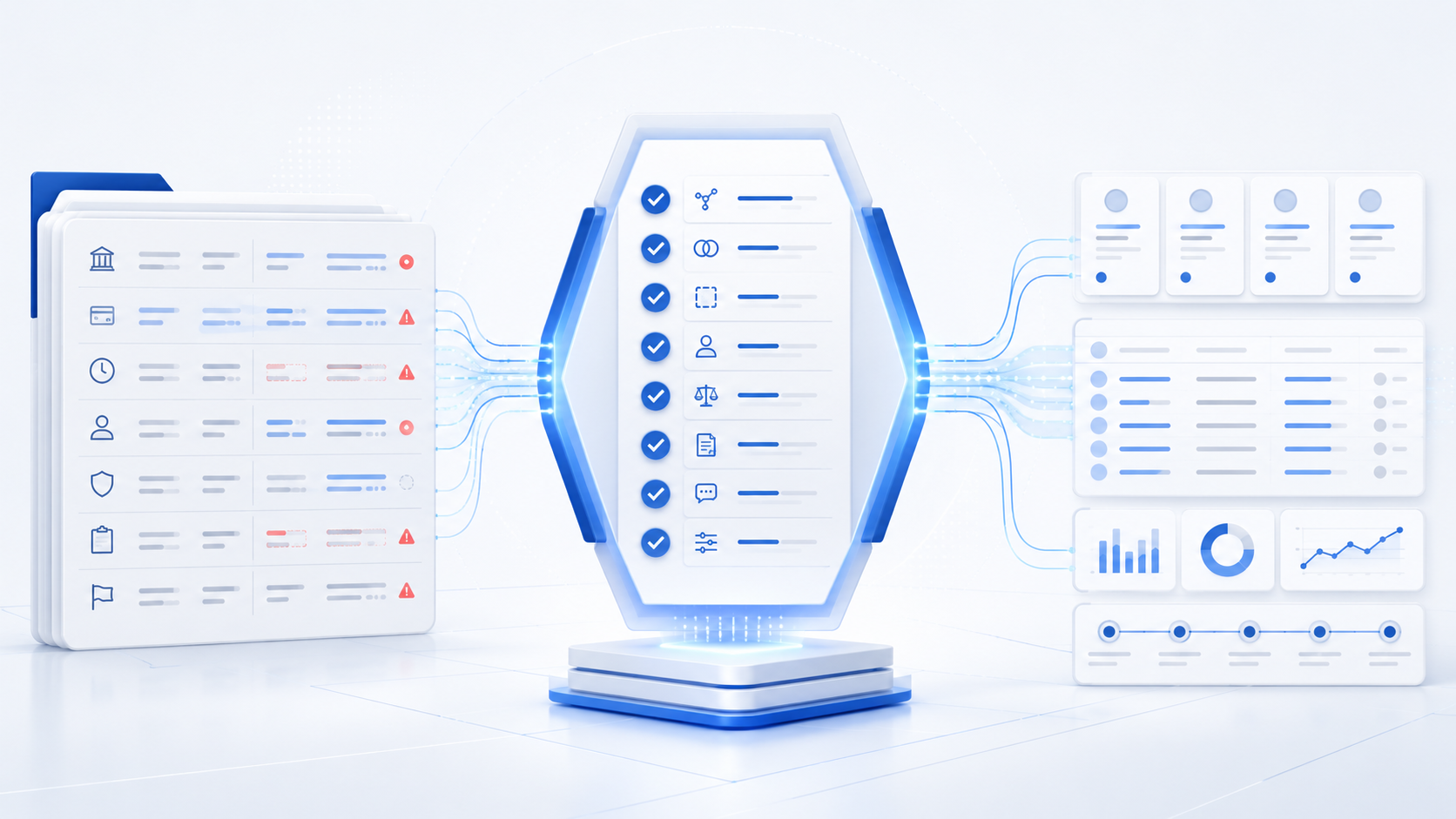
Duplicate records become operational problems when they create conflicting balances, split communication history, duplicate queue assignments, repeated outreach, or distorted client reporting.
That is why data deduplication software matters during collection agency intake. The goal is not to delete repeated rows. It is to determine when two data records represent the same consumer, the same debt, or the same underlying account, then route that match through a controlled process without destroying useful source history.
For agencies managing many creditor clients and high-volume placement files, data deduplication should happen before questionable records become active collection work.
What Is Data Deduplication in Collection Operations?
Data deduplication identifies duplicate data and helps a team decide whether records should be merged, linked, quarantined, updated, or preserved separately. A master data matching process can use standardization, bucketing, and record comparison to determine whether multiple records represent the same entity.
In collections, a match can affect balances, ownership, communication history, disputes, consent, payment plans, and audit trails. Deduplication logic therefore needs to be explainable and tied to workflow controls.
Common causes include repeated placements, corrected files, integration retries, and migrations that import historical and active versions of the same debt.
Account Duplicates and Consumer Duplicates Are Different
Two records can refer to the same person without representing the same debt. That distinction is the foundation of safe dedupe design.
Account-level deduplication may compare creditor account number, client reference ID, owner, balance components, placement date, charge-off date, and other debt-specific identifiers.
Consumer matching uses different evidence such as name, address, phone, email, date of birth, partial Social Security number where appropriate, and client identifiers. Multiple valid debts can share one consumer history without being merged.
The U.S. Census Bureau's work on record linkage illustrates how multiple data elements can be used to connect or remove duplicate records. In collections, entity matching must remain separate from debt identity.
Why Exact-Match Rules Are Not Enough
Real placement data is messy: names vary, addresses change, phone formats differ, account IDs gain suffixes, and legacy systems may truncate fields.
Good data deduplication uses a hierarchy of evidence. High-confidence rules can auto-link or update records; conflicting balances, partial identifiers, disputes, or payment plans should trigger review.
The system should record why it flagged a match. Black-box dedupe logic makes audit and client conversations harder.
Do Not Confuse Record Deduplication With Storage Deduplication
The phrase data deduplication is also widely used in infrastructure and data storage, where deduplication techniques reduce duplicate files or repeated data blocks to improve storage utilization and lower storage costs.
That storage problem is different from collection-record deduplication. Storage products may use source deduplication, target deduplication, inline deduplication, post-process deduplication, or block-level deduplication. They may compare a hash value at the file system or block level, work alongside compression algorithms, and reduce bandwidth used by data backup. They can be relevant to a storage system, storage device, NAS, cloud storage, ZFS environment, storage capacity planning, virtual machines, or other virtual environments.
A collection agency is solving a different problem. It needs to dedupe customer data without collapsing legitimate account history. The objective is data quality and accurate workflow state, not merely smaller data storage. That distinction matters when evaluating a data deduplication solution for account intake.
Where Duplicate Records Enter the Workflow
Recurring files are a common source. New accounts, updates, recalls, and corrections may arrive in one feed, so stable source IDs and update rules must distinguish a new placement from a revised record.
Migrations also deserve special attention. Historical systems may contain duplicate consumer profiles, archived notes, old account IDs, and prior merge decisions. Our guide to placement file validation emphasizes catching duplicate and conflicting records before they enter collector queues.
Finally, data integration can create duplicate records when retries, idempotency, or source identifiers are weak. Whether data arrives from a creditor system, a CRM, Salesforce, HubSpot, a payment vendor, or another upstream service, the collection platform should have a controlled way to recognize repeated events and records.
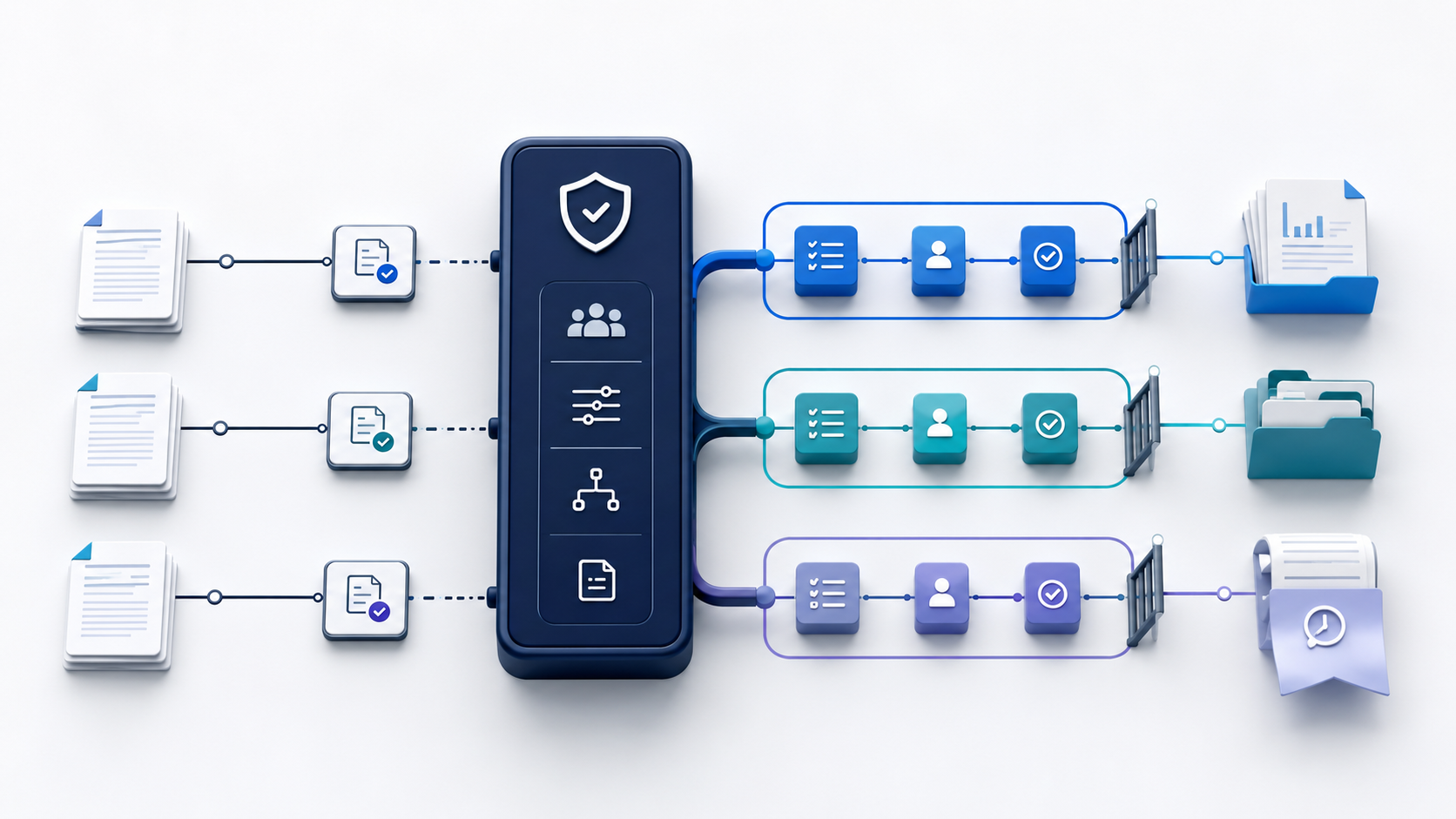
Build a Controlled Deduplication Workflow
1. Preserve and Normalize Source Data
Keep the source file, import timestamp, client identifiers, and original values. Then normalize predictable differences such as whitespace, phone formats, punctuation, dates, and account-number conventions without erasing provenance.
2. Match by Entity Type
Use different rules for consumer records, account records, payments, and documents. A consumer match does not automatically mean two debts should merge.
3. Route Ambiguous Matches to Exceptions
When balances, identifiers, disputes, or payment history conflict, quarantine the records rather than merging automatically. Reviewers should see why the software flagged the match and which fields differ.
4. Define Merge, Link, and Update Rules
Sometimes the right action is a merge, sometimes a link, and sometimes an update to the existing account. Preserve a defensible master record without losing source lineage.
5. Record Every Decision
Leave an audit trail showing the match rule, reviewer when applicable, decision, and resulting links so operations, compliance, IT, and clients can reconstruct what happened.
What Data Deduplication Software Should Prevent
Cleaner intake reduces repeated outreach, conflicting balances, fragmented consumer history, inflated account counts, and automation running against duplicate data. Two copies of one debt can overstate placed balance, outstanding balance, and queue volume.
Our guide to collection software integrations makes the same point from the integration side: moving data is not enough. The receiving system needs reliable record handling and workflow updates after the data arrives.
What Changes at Enterprise Scale
As client count and placement volume grow, deduplication becomes a governance issue. One creditor may resend a full portfolio nightly, another may send incremental files, and another may use APIs for placements but batches for recalls.
Agencies need configurable logic without creating a separate operating model for every client. Our guidance on multi-client governance shows why client-specific rules, permissions, exception ownership, and audit history matter more as operational complexity grows.
How Aktos Supports Cleaner Account Intake
At Aktos, we keep placement intake connected to downstream collection workflows. Records can be mapped, validated, routed, and reviewed before exceptions spread into collector queues, payments, communications, or client reporting. Deduplication becomes part of the operating system that determines whether an account is ready to work.
Final Thoughts
Data deduplication software should help collection agencies create a cleaner, more reliable account history before collection activity begins. The strongest approach combines normalization, transparent matching logic, source preservation, exception review, controlled merge rules, and audit trails.
For modern agencies, deduplication is not just database hygiene. It protects collector context, consumer communication, payment accuracy, client reporting, and every automated workflow that depends on the account record being right.
FAQs
Q: What is the difference between dedupe and data deduplication?
A: In everyday use, dedupe is shorthand for deduplication. In collection operations, both terms usually refer to identifying and controlling duplicate consumer or account records rather than storage-level duplicate blocks.
Q: Should suspected duplicate accounts be merged automatically?
A: Only when the agency has a high-confidence rule and the merge cannot erase meaningful differences. Conflicting balances, dispute status, payment history, or identifiers are good reasons to route a suspected match for review.
Q: Can one consumer have multiple legitimate accounts?
A: Yes. Consumer matching should connect the person's history without merging separate debts. Account matching and consumer matching need different rules.
Q: Where should deduplication happen in the intake process?
A: Ideally before the account becomes active collection work. Catching duplicate data during placement validation reduces the chance that duplicate records reach outreach, payment, reporting, or automation workflows.