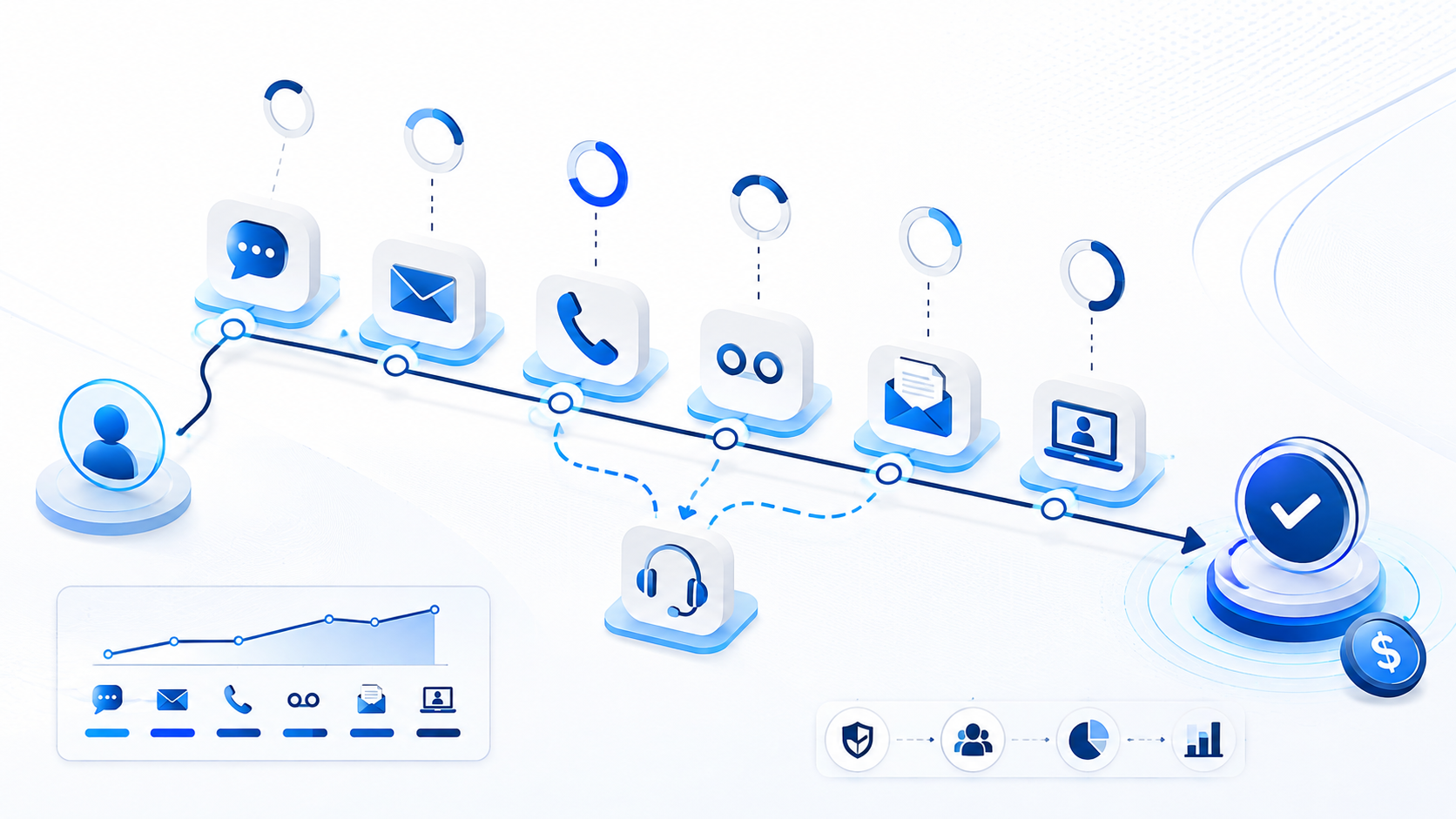
A consumer opens an email, ignores a voicemail, taps an SMS link on one of their mobile devices, visits a payment page, and later completes a payment plan during a phone call. Which interaction caused the resolution?
Last-touch reporting gives all the credit to the call. Yet the email may have created awareness, the text message may have prompted action, and the self-service portal may have removed a barrier. Omnichannel collections attribution evaluates the complete journey so agencies can identify sequences that improve consumer engagement, recovery rates, time to resolution, and customer experience.
Why Is It Important to Measure Attribution?
Omnichannel debt collection attribution assigns value to the communication channels and account interactions that contribute to an approved outcome. Outcomes may include a payment, first payment, arrangement enrollment, kept promise, dispute resolution, portal registration, consumer response, or account closure.
Basic reporting shows how many text messages were delivered or how many phone calls reached a consumer. Attribution connects those events to the debt recovery path and asks how each touch supported the result.
A complete omnichannel debt collection view may include email, SMS, voicemail, letters, inbound and outbound calls, self-service portals, collector notes, payments, and disputes. Agencies may also record web chat, chatbots, QR codes on letters, mobile apps, or approved social media interactions. The goal is not to add more digital channels. It is to tie every event to one account history.
Why Attribution Is Difficult in Debt Collection
Consumer behavior is rarely linear. An email can introduce the issue, payment reminders can create urgency, and a live agent can resolve a question that blocked payment.
Data fragmentation makes this harder. Dialers, SMS vendors, payment processors, web chat, and portals often record events differently. A multichannel stack may send outreach through many systems but still lack an omnichannel approach because the events never become one measurable journey.
Causation is also difficult. A payment after an SMS does not prove the message caused it. Correlation shows that events occurred near each other. Attribution applies a rule for sharing credit. Incremental impact asks whether the outcome would have happened without the touch. Account balance, age, portfolio, placement quality, and prior contact history further complicate raw recovery rates across segments.
Build the Data Foundation First
Every account-level event should capture an account identifier, client and portfolio, channel, event type, timestamp, delivery result, response, collector involvement, portal activity, payment or arrangement event, dispute or complaint event, consent and opt-out status, workflow and automation version, and measurable cost.
Consistent timestamps preserve sequence order. Consistent definitions ensure “delivered,” “engaged,” “resolved,” and “assisted” mean the same thing across vendors. Modern collection agency reporting dashboards should connect customer data, outreach, payments, and operational outcomes instead of presenting conflicting reports.
Next, define the resolution event. One client may prioritize recovered dollars. Another may value payment plans, kept arrangements, self-service completion, lower cost per resolution, or faster dispute handling. An omnichannel collections strategy should not use one success definition for every portfolio.
Omnichannel Attribution Models Agencies Can Use
First-Touch and Last-Touch Attribution
First-touch attribution credits the first recorded interaction. It helps identify which engagement strategies initiate a journey but ignores later actions.
Last-touch attribution credits the final interaction before resolution. It is simple, but it often overcredits a payment page, self-service portal, or final collector call. Earlier digital collections activity may look unproductive even when it created momentum.
Linear, Position-Based, and Time-Decay Attribution
Linear attribution divides credit evenly across recorded touches. Position-based attribution weights the first and final touches more heavily. Time-decay gives more credit to interactions closer to the outcome. Google Analytics defines an attribution model as rules or a data-driven algorithm that assigns credit to touchpoints.
These models are useful starting points, not proof. An early email may be decisive, while repeated phone calls near the end may add little incremental value.
Rules-Based Attribution and Controlled Tests
Rules-based attribution weights verified delivery, consumer response, sequence position, and collector involvement. It can reflect operational knowledge, but assumptions should be documented and versioned.
Controlled tests compare similar account groups receiving different sequences. One group might receive email followed by SMS; another receives SMS followed by email. Holdout groups can estimate whether personalized outreach or automation created lift beyond what would have happened naturally.
Change one major variable at a time, use comparable accounts, and set a clear measurement window. Preserve FDCPA, Regulation F, client requirements, time-zone rules, consent, and opt-outs in every test. The CFPB’s Regulation F resource covers communications, prohibited conduct, validation information, disputes, and record retention. Agencies should consult qualified counsel when designing experiments.
Analyze Complete Paths and the Right Metrics
Useful paths include:
- Email → portal visit → ACH payment
- SMS → payment page → arrangement
- Voicemail → inbound call → collector payment
- Outbound call → text message → kept promise.
For each path, measure frequency, resolution rate, recovered dollars, time to first payment, time to resolution, and cost per resolved account. Add right-party contact, SMS response, portal visits, inbound call rate, and self-service completion.
Efficiency metrics should include collector touches per resolution, manual work avoided, average handling time, and the share resolved through self-service portals. Risk and customer experience metrics should include opt-outs, disputes, complaints, wrong-party responses, failed delivery, and abandoned payment sessions. The FTC’s FDCPA text is a useful federal reference for communication and conduct requirements.
Segment results by client, portfolio, account age, balance range, debt type, prior payment history, geography, and collector-assisted versus self-service outcomes. An omnichannel approach that works in early collections may underperform on older placements.
Turn Attribution Into Operational Decisions
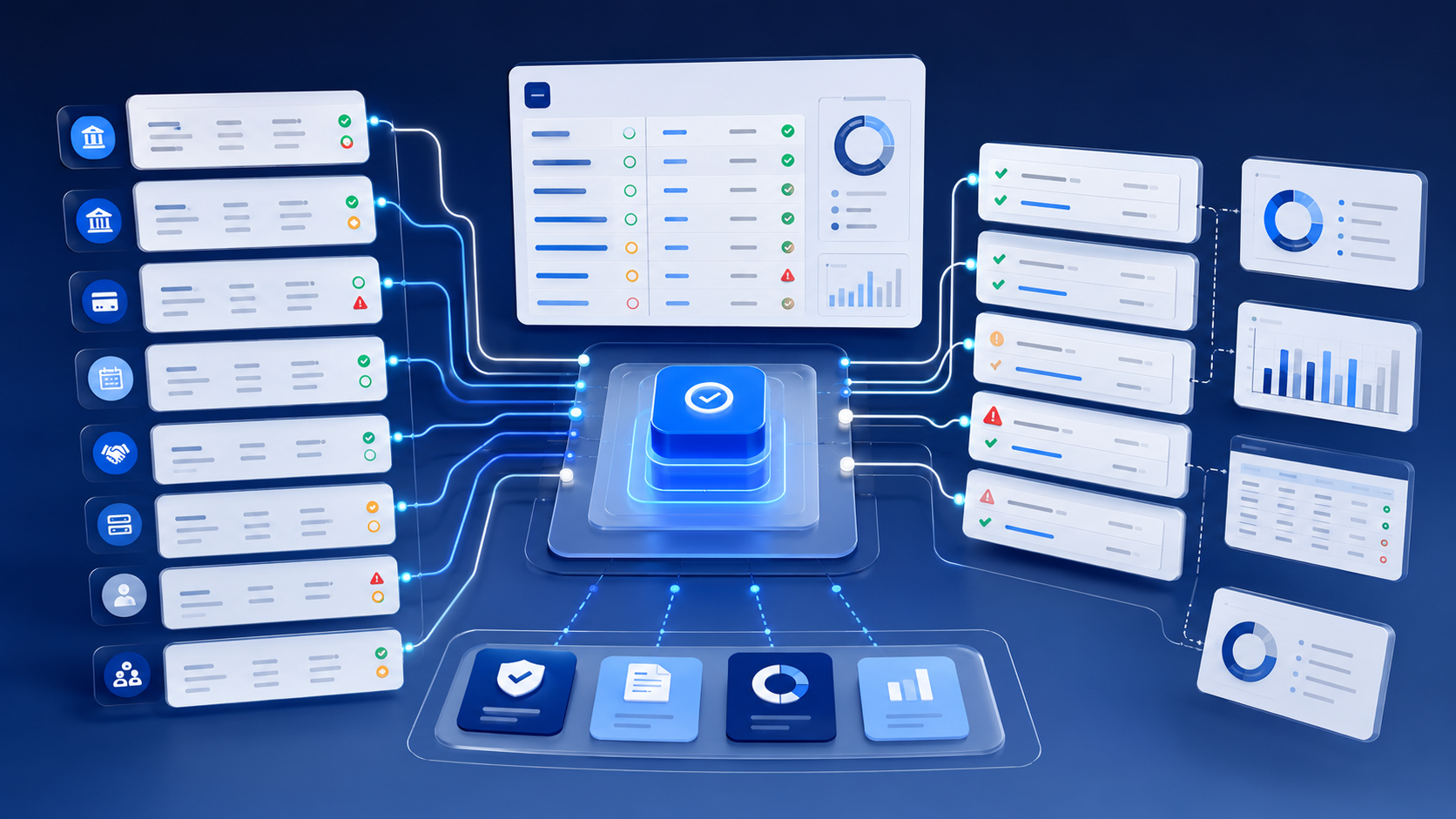
A useful dashboard should show resolution by sequence, assisted outcomes by channel, common paths to payment, time between touches, sequence cost, recovered dollars, complaints, disputes, and current versus prior workflow versions.
Use those findings to decide which communication channel starts a sequence, when automation should create a collector task, which messages should route consumers to self-service portals, and where repeated outreach adds little value. The same reporting should show when a contact center needs a human handoff.
At enterprise scale, an omnichannel collections strategy requires unified event histories, consistent vendor identifiers, APIs, role-based access, sequence version control, exports, client-specific models, and audit-ready records. Multi-client governance software helps preserve client-specific rules, while disciplined payment reconciliation prevents completed payments from being counted twice or followed by stale outreach.
Common Attribution Mistakes
Avoid counting sends instead of outcomes, crediting only the final channel, ignoring failed delivery, combining every client into one benchmark, double-counting a payment, and measuring payment initiation without completion. Do not treat a multichannel activity report as omnichannel debt collection attribution. Most importantly, do not optimize debt collection recovery while ignoring regulatory compliance, disputes, complaints, and consumer preference.
Final Thoughts: Measure Sequences, Not Isolated Channels
Consumers rarely resolve accounts through one disconnected interaction. A practical omnichannel approach measures how communication channels work together, where human support matters, and which sequences create incremental value.
Aktos unifies communications, account histories, workflows, portal activity, payment events, segmentation, and reporting so agencies can evaluate complete paths to resolution. Book a demo to see how a modern platform can support measurable omnichannel debt collection and a stronger omnichannel collections strategy.
FAQs
Q: What is omnichannel collections attribution?
A: It connects consumer, collector, portal, and payment interactions to account outcomes so agencies can evaluate complete resolution paths.
Q: Is last-touch attribution accurate for debt collection?
A: It is simple, but it often overvalues the final call or payment page and misses earlier influences from email, SMS, or self-service activity.
Q: Which attribution model should an agency use?
A: Choose the model based on the decision, document its assumptions, and validate it with controlled testing when feasible.
Q: How can an agency measure whether SMS improves recovery?
A: Compare similar segments, verify delivery, use a consistent window, track downstream outcomes, and include a holdout group when appropriate.
Q: Should disputes and complaints be included?
A: Yes. Omnichannel debt collection should evaluate payments alongside risk and consumer experience signals.