ACH payments can make it easier for consumers to resolve accounts through a one-time debit or a recurring payment arrangement. The transaction, however, is only one part of the workflow. A collection agency also needs to know what the consumer authorized, when the authorization was obtained, which bank account and payment schedule it applies to, whether it was changed or revoked, and what happened after the debit was attempted.
That is why ACH authorization should live inside the collection payment workflow rather than in a disconnected note, PDF folder, or processor portal. This article focuses on operational design, not legal advice. Agencies should confirm their specific ACH compliance requirements with qualified counsel and payment partners.
What ACH Authorization Means
At a practical level, ACH authorization is permission to initiate an electronic fund transfer through the automated clearing house network under defined terms. The ACH network supports electronic credit and debit transfers, including transactions such as direct deposit and consumer bill payments.
For collection agencies, the most common concern is the ACH debit: an entry that pulls an authorized payment from a consumer's checking or savings account. That is different from ACH credit entries, such as many direct deposit transactions, where funds are pushed into an account.
The workflow should also distinguish a one-time ACH debit from recurring payment activity. A single payment ends after one authorized transaction. A recurring arrangement creates an ongoing relationship among the ACH authorization, payment schedule, account status, and future debit entries.
The Rules and Records Behind ACH Payments
Two frameworks matter operationally. The CFPB's current Regulation E rule on preauthorized transfers addresses recurring electronic fund transfers under U.S. law, including written authorization or similarly authenticated authorization. Nacha rules govern entries moving through the ACH network.
Nacha's ACH guidance explains that an originator must be able to prove authorization when required. The Nacha Operating Rules vary by entry type and channel, so agencies should coordinate with their processor or originating financial institution. Some timing requirements are measured in calendar or business days, depending on the rule involved.
A strong ACH authorization record may include the consumer and account identifiers, date and time of authorization, authorization channel, whether the payment is one-time or recurring, the authorized amount or calculation method, payment dates, processor reference, and evidence of the terms provided to the consumer.
Agencies should avoid storing unnecessary raw bank information. When bank details such as routing numbers or account numbers are required, secure tokenization and processor references can reduce exposure while preserving the operational record. Some legacy processes may request a voided check, but agencies should follow their payment provider's current procedures rather than treating a voided check as a universal requirement..
How to Build an ACH Authorization Workflow
1. Capture Authorization in Structured Fields
A free-text note that says “approved ACH” is not enough. The system should know which consumer, account, bank account, amount, date, and terms the authorization covers.
A structured ACH authorization form or digital equivalent can make those details explicit. A digital ACH authorization form may support similarly authenticated consent where applicable. Operationally, the agency needs a clear record of what was authorized and how it connects to the relevant ACH transaction..
2. Keep Authorization and Scheduling Connected
A recurring payment should not continue independently of the authorization that supports it. If the amount, payment date, or bank account changes, record the update and apply it to future ACH debits..
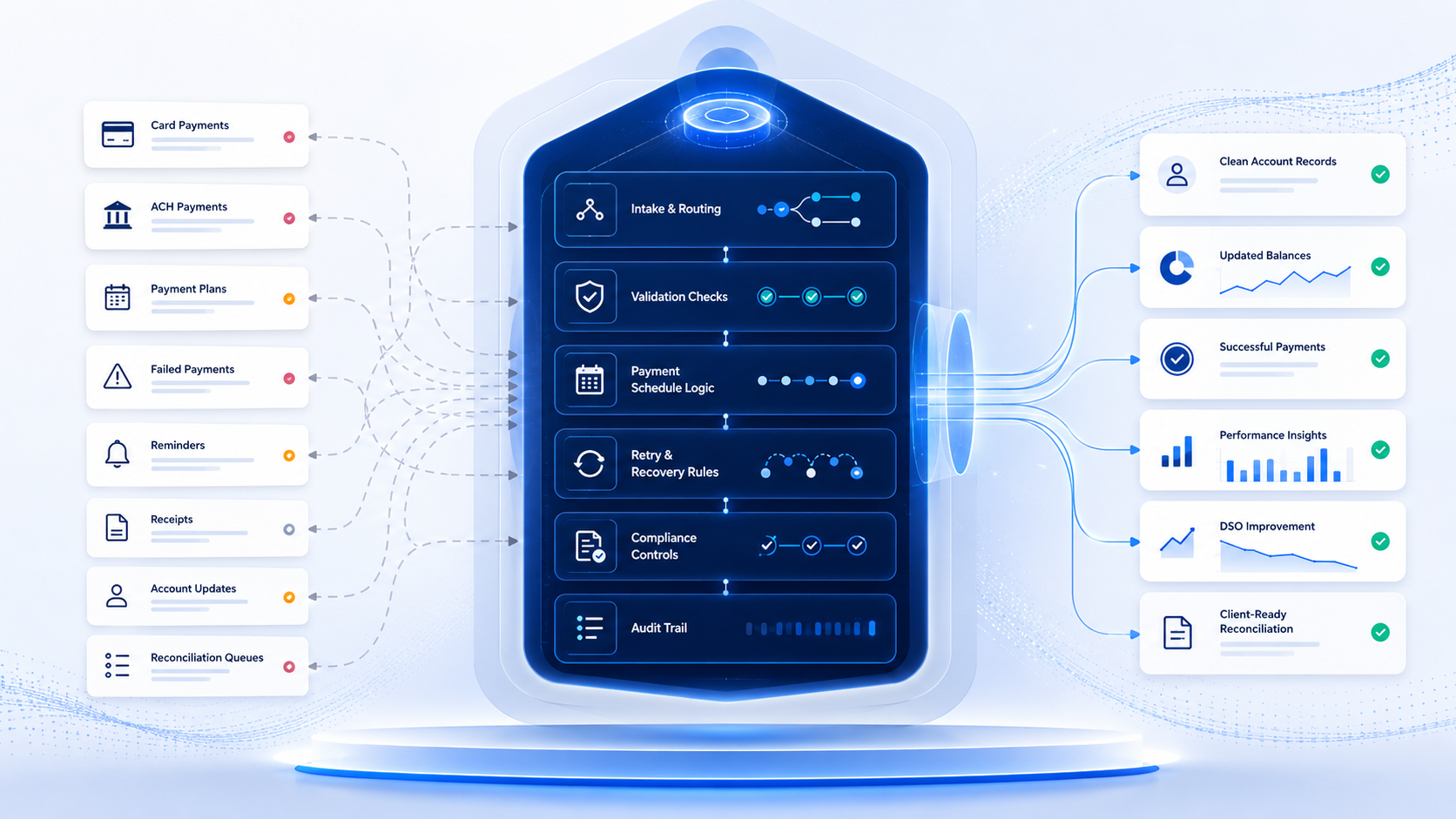
This is where connected collection software helps. Use debt collection payment automation to keep payment plans, reminders, failed transactions, account updates, and reconciliation connected within the same workflow.
3. Treat Cancellation and Revocation as Workflow Events
A cancellation or revocation should immediately affect future scheduled activity. The system should record when the request was received, what authorization it applied to, who handled it, and which future payments were stopped or changed.
When a change requires written notice under the applicable rules or payment arrangement, preserve that notice with the account history. This makes it easier to answer questions later without reconstructing events from emails, notes, and processor logs..
4. Record the ACH Transaction Outcome
Authorization allows an attempt; it does not guarantee that money moves successfully. The agency should capture the processor response, amount, date, and status for each of its ACH transactions.
An ACH transfer can fail or return for different reasons. The account workflow should preserve the authorization context while determining what happens next. A failed debit does not automatically mean the consumer has abandoned a payment arrangement.
5. Reconcile the Result Back to the Account
Once funds settle, the account balance, payment plan, collector queue, portal, client report, and financial records should reflect the same outcome. If a payment returns later, the update needs to flow back through those same systems.
Use payment posting architecture and payment reconciliation to keep processor results, account balances, client reporting, and financial records aligned after a payment is processed.
ACH Network Terms Agencies Should Understand
The ACH network uses specific roles and entry types. The originator is the party that initiates an ACH entry under an authorization. Financial institutions and ACH operators then move those entries through the network.
That structure supports both ACH credit and ACH debit activity. Direct deposit is a familiar example of an ACH credit, while collection payments generally involve debit entries. The exact rules depend on the transaction type, channel, and account involved.
Nacha updates its rules over time. Collectors do not need to become payments experts, but operations teams should know who owns ACH compliance and how rule changes reach production workflows.
What to Look for in Collection Software Supporting ACH
Useful software should support one-time and recurring workflows, structured ACH authorization records, tokenization, permissions, revocation logging, failed-payment routing, audit history, payment posting, and client reporting.
For high-volume agencies, integration failures should surface as visible exceptions. Missing processor events, duplicate attempts, or delayed status changes should not remain silent gaps..
Where Aktos Fits
At Aktos, we connect payments to the same account context used for workflows, communications, reporting, and client visibility. Agencies can work with integrated or bring-your-own payment providers while keeping ACH payment events tied to the collection record.
That makes it easier to design controlled workflows around ACH authorization status, recurring payment plans, failed transactions, posting, and reconciliation rather than managing each step in a separate system.
Final Thoughts: Treat Authorization as Account History
ACH authorization is not just the step before a debit. It is part of the account's payment history. Collection agencies need a process that connects authorization evidence, future ACH debits, cancellation or revocation, processor outcomes, and account updates.
A well-designed workflow should always answer three questions: what was authorized, what ACH transaction was attempted, and what happened next.
FAQs
Q: Does every ACH payment require the same type of authorization?
A: No. Authorization requirements can depend on the payment channel, whether the transaction is one-time or recurring, and the applicable ACH rules. Agencies should work with counsel and their payment provider on the process that applies to each payment type.
Q: What bank information should an agency retain for ACH payments?
A: Agencies should retain only what they need for operations and recordkeeping. Sensitive details such as a routing number or bank account number are often better handled through secure processor tokens than stored broadly inside the collection platform.
Q: What is the difference between ACH debit and ACH credit entries?
A: An ACH debit pulls funds from an authorized account, while an ACH credit pushes funds to an account. Direct deposit is a common ACH credit example; consumer collection payments are more commonly ACH debit entries.
Q: How long should ACH authorization records be kept?
A: Retention can depend on Regulation E, Nacha rules, processor requirements, and the payment program. Agencies should set a documented policy with qualified counsel and payment partners.