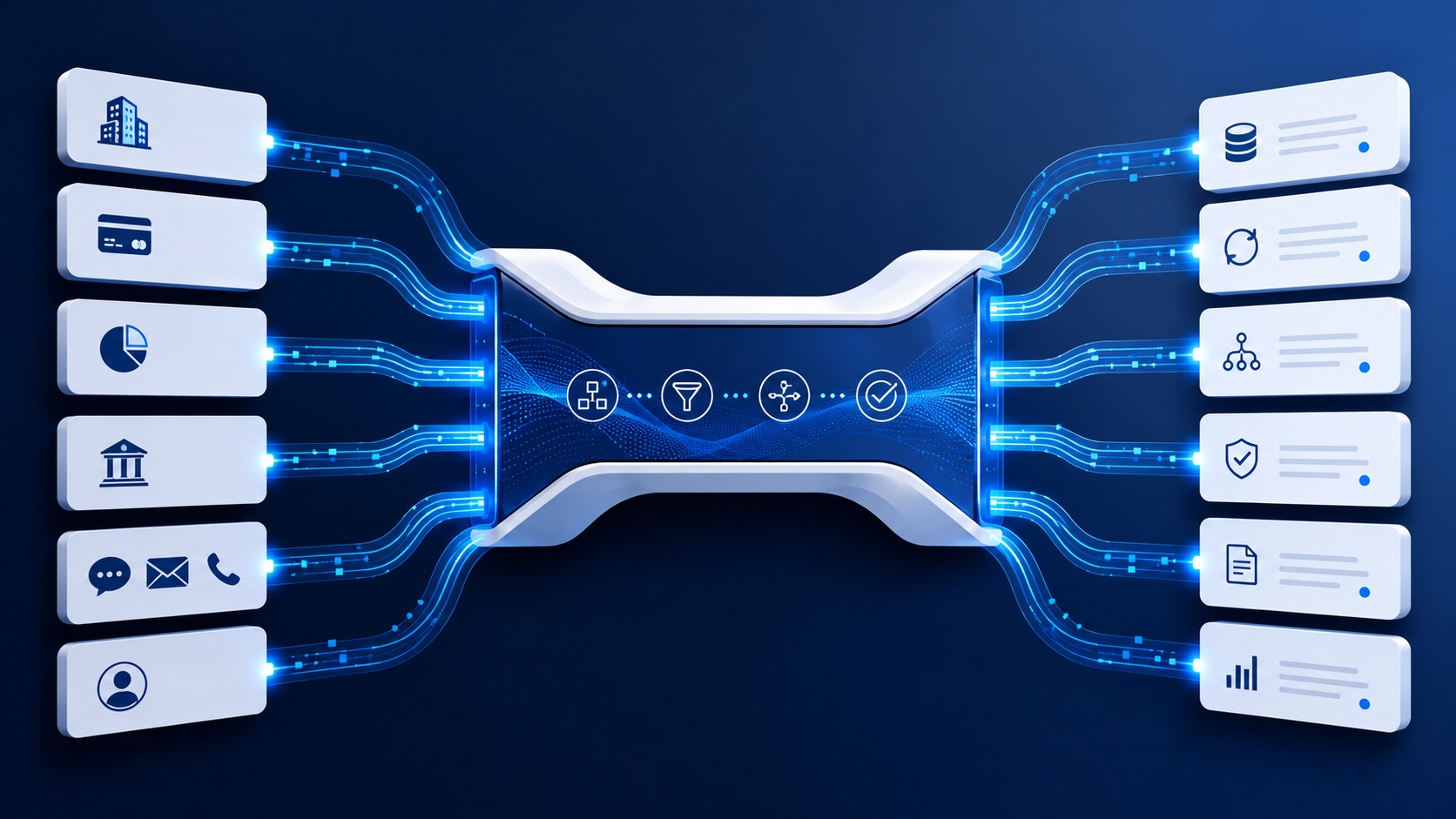

A collection strategy can only be as reliable as the contact data behind it. If a placement arrives with an old mobile number, malformed email address, incomplete mailing address, or conflicting consumer information, the problem can affect routing, outreach, payment follow-up, and reporting.
Contact data enrichment helps agencies improve that information before an account enters active collection workflows. Done well, contact enrichment is not about building the biggest possible contact database. It is about improving data accuracy while preserving where each value came from, when it was checked, how confident the match is, and how the collection CRM should use it.
What Contact Data Enrichment Means in Collections
Contact data enrichment is the process of validating, correcting, or supplementing phone numbers, email addresses, mailing addresses, and related contact attributes using trusted data providers, internal history, and connected systems.
An agency might confirm mobile numbers, standardize an address, perform email verification, compare match rates, or flag conflicting results for review. Real-time enrichment can happen through an API when an account reaches a certain workflow stage, while bulk enrichment can refresh a placement file or defined portfolio. Agencies with several providers may also use waterfall enrichment, where one source is queried after another until the workflow finds an acceptable result.
This is related to skip tracing, but it is broader. Skip tracing often begins when existing information is insufficient to locate a consumer. Contact data enrichment can happen earlier during intake, identity resolution, CRM enrichment, and ongoing data-quality management. A strong process starts with placement file validation so clean source data is established before enrichment changes the record.
Preserve CRM Records Before Adding New Data
Good enrichment begins by preserving the creditor-provided record. If a provider returns a different phone number or email address, the agency should avoid blindly overwriting the original CRM records.
Store the enriched value with its source, timestamp, validation status, and confidence information. The CRM should show which data came from the creditor, which came from a data provider, and whether an older value produced a wrong-party result or hard bounce.
That history matters because data decay is unavoidable. Phone numbers change, email addresses stop working, and mailing information becomes outdated. A healthy contact database should distinguish newly verified information from older values. CRM enrichment should add context, not erase it.
What to Enrich Before Outreach
Phone Numbers, Mobile Numbers, and Direct Dials
Mobile numbers can be disconnected, ported, or reassigned, while direct dials can be entered incorrectly or linked to the wrong person. Evaluate data providers on recency, identity matching, source quality, and match rates, not simply the number of records returned. Because number reassignment can affect electronic communication workflows, newly enriched phone data should carry a clear source and validation date before automation treats it as current.
Verified Emails and Email Verification
Email verification can show whether an address appears deliverable, but verified emails are not automatically verified identities. Track source, last-verified date, bounce rates, hard bounces, and wrong-recipient feedback. Repeated failures should update the contact database and CRM so the same address does not keep cycling through email sequences.
Mailing Addresses
Address enrichment can standardize formatting, identify missing elements, and improve the consistency of mailing data. Using established address quality practices can help agencies validate and clean address information, but updated addresses should still be stored without erasing the original creditor-provided value.
Why B2B Data Enrichment Looks Different
Most online discussion of data enrichment is aimed at sales and marketing teams. B2B tools append firmographic data, job titles, technographic data, and intent signals to support prospecting, lead scoring, segmentation, and account-based marketing.
Collection agencies solve a different problem: improving consumer information tied to an existing creditor account. Identity resolution, provenance, suppression history, and account-level controls matter more than prospecting volume.
Contactability Is Not Permission to Contact
Finding a newer phone number or email address does not automatically make that channel appropriate for outreach. Enriched data still has to be evaluated alongside account status, communication preferences, consent records, opt-outs, cease requests, disputes, bankruptcy indicators, client requirements, and other applicable controls.
The FDCPA provides a core federal framework for third-party debt collection, while Regulation F implements the FDCPA and provides more detailed communication requirements. If applicable, the CCPA may also affect how a business or service provider handles personal data. Agencies should ask how vendors support CCPA-related data handling and work with qualified counsel on their own requirements.
The operational principle is simple: enrichment should feed a decision layer, not an automatic outreach blast.
Build a Controlled Enrichment Workflow
Start by normalizing the creditor file so formatting problems are not mistaken for missing data. Preserve the original CRM record, then decide which accounts need contact enrichment.
Next, choose the method. An API or multiple APIs can support real-time enrichment for individual events, while bulk enrichment may fit scheduled portfolio maintenance. Waterfall enrichment can improve coverage by querying multiple sources, but agencies still need deduplication, source tracking, and error handling.
Once enrichment data comes back, compare its recency, match quality, accuracy, and account history before deciding whether to use it. Bounces, wrong-party contacts, disconnected numbers, returned mail, and consumer corrections should all feed back into the CRM so future decisions improve over time.
At scale, the tech stack also needs to handle provider outages, API errors, retries, permissions, and client-specific configurations. If AI agents rely on enriched data, workflows should clearly distinguish verified information from values that still need review. That is especially important because clean data directly affects the quality of debt collection AI.
How to Evaluate Data Enrichment Tools and Providers
Do not choose a provider by record volume alone. Evaluate whether it documents each result, refreshes its sources regularly, protects sensitive data, and offers a reliable correction process. The provider should also integrate directly with the collection CRM so records do not drift between systems.
Final Thoughts: Better Data Before Better Outreach
Contact data enrichment is valuable when it makes the account record more reliable without erasing its history. The strongest processes add usable evidence and retain enough context for controlled outreach.
At Aktos, we support an open integration model and configurable workflows that keep enriched information tied to the account record. This helps agencies use better data within a controlled collection process.
FAQs
Q: Is contact data enrichment the same as skip tracing?
A: No. Skip tracing focuses on locating a consumer; contact data enrichment also covers validation, email verification, identity resolution, and CRM enrichment.
Q: How does contact enrichment differ from B2B data enrichment?
A: B2B data enrichment often adds firmographic data, job titles, intent data, technographic data, and B2B contact data for lead enrichment. Collection-focused enrichment improves an existing consumer account.
Q: Should enriched data overwrite creditor-provided information?
A: Usually no. Preserve the original record and store enriched data with its source, timestamp, confidence, and validation status.
Q: What should agencies look for in contact data enrichment tools?
A: Prioritize reliable provenance, recent validation, match quality, security, and direct collection-CRM integration.