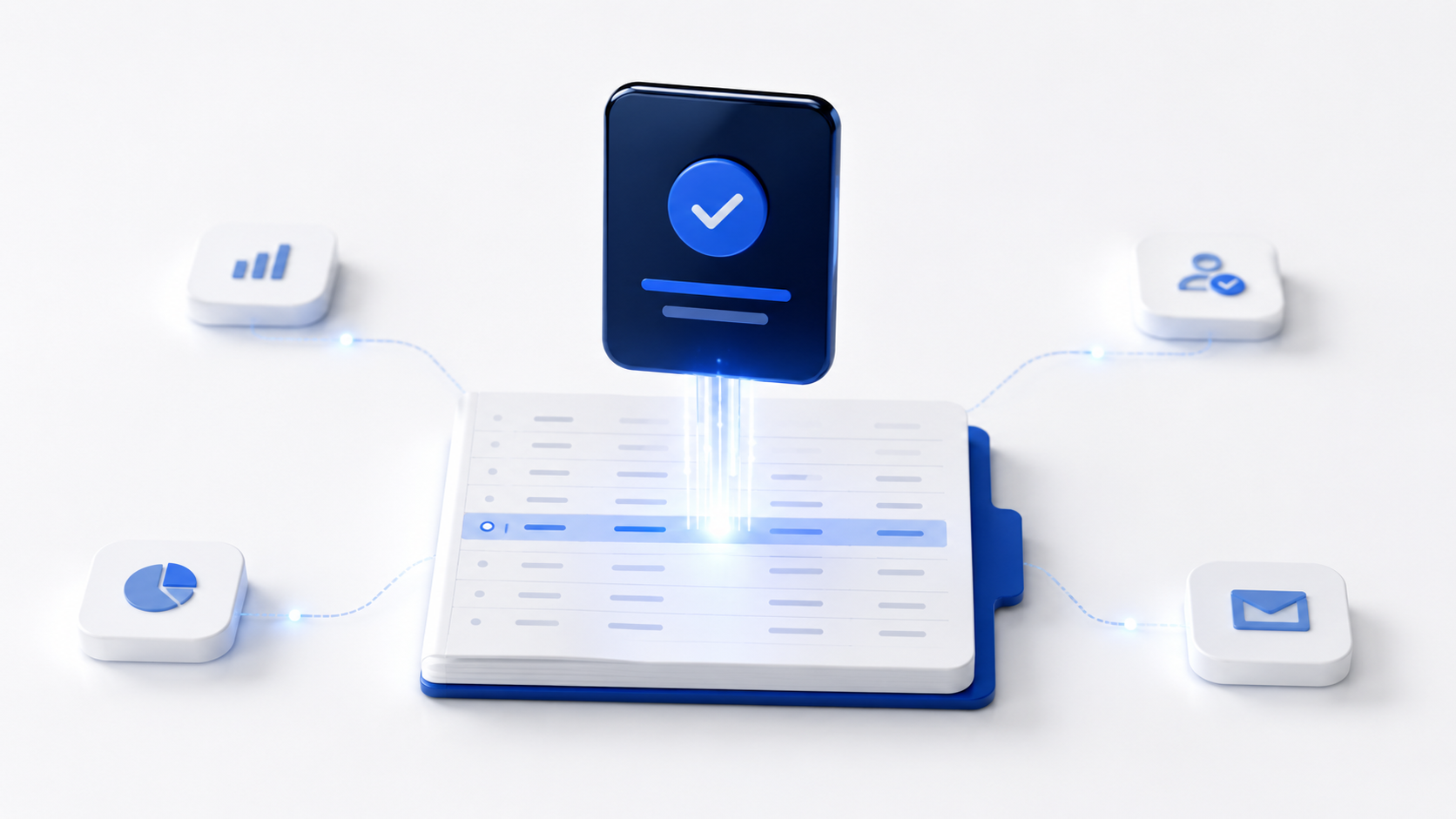
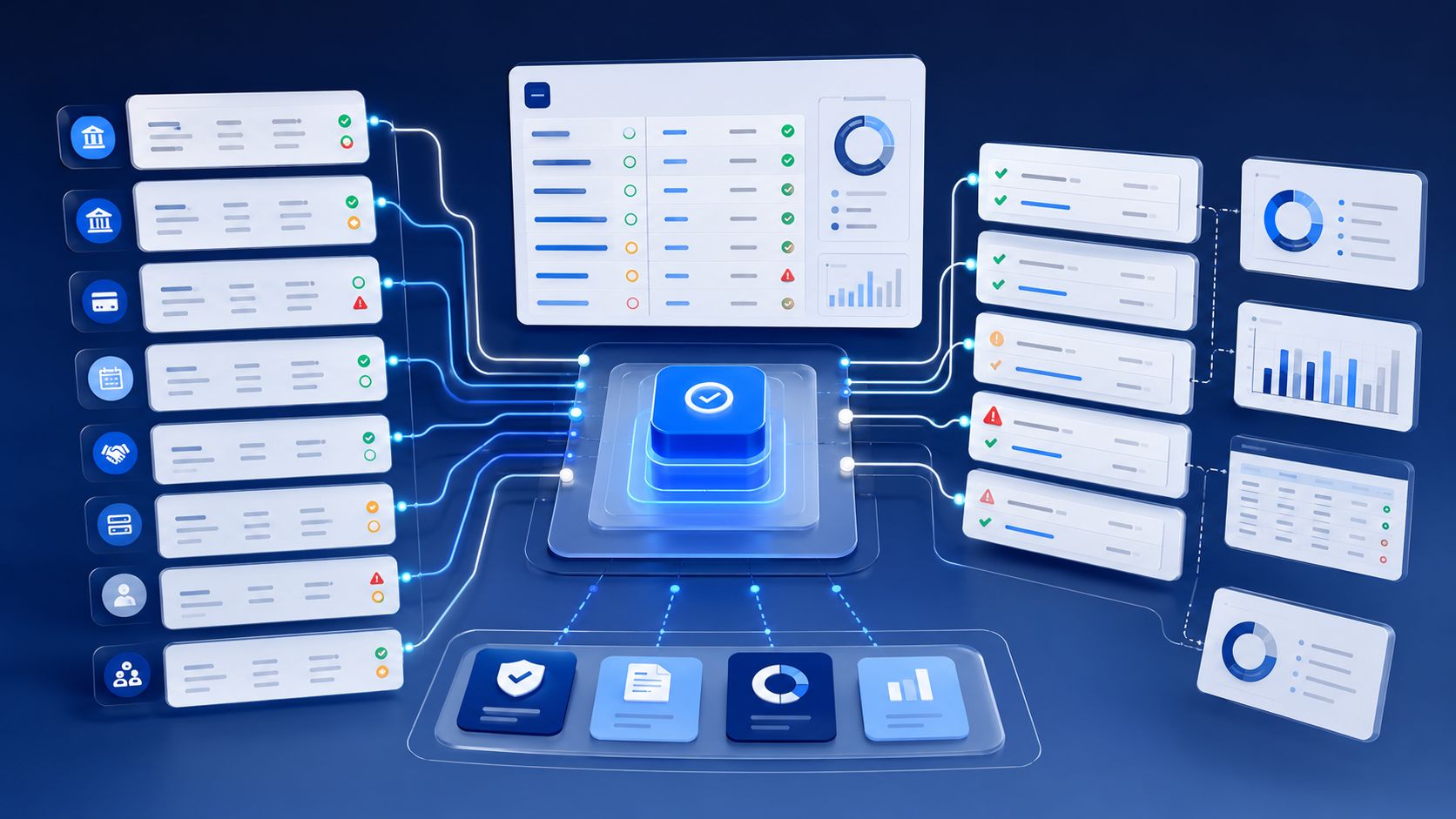
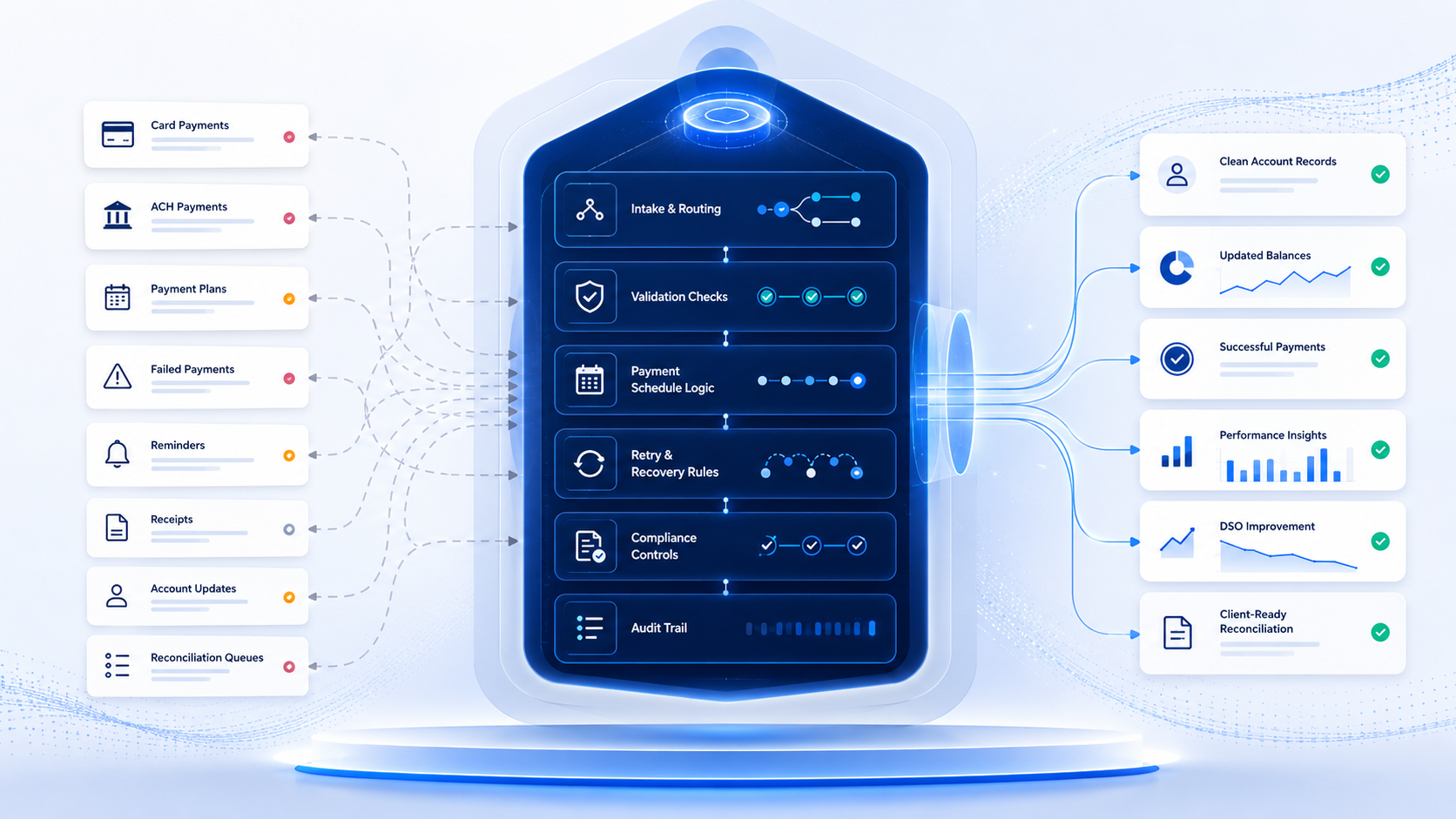
A consumer payment is not the end of a collection workflow. It is the start of a financial update that needs to reach the right account, balance, payment plan, collector queue, client report, and accounting record.
Cash application automation moves payment data into the correct account and downstream workflows with less manual work, updating balances, arrangements, and the next operational step.
This is related to reconciliation, but it is not the same thing. Cash application answers, "Where should this payment be applied?" Reconciliation asks, "Do the processor, bank, agency, and accounting records agree?"
What Is Cash Application Automation?
Cash application is the process of identifying incoming payments and applying them to the correct receivable or account. In a collection agency, automated cash applications can match processor transactions to consumer accounts, update balances, advance payment arrangements, create cash posting records, and trigger the next workflow.
In accounts receivable, cash application often means matching payments to invoices, clearing open invoices, updating an accounting system or general ledger, and helping finance teams understand cash flow. Collection agencies use the same matching principle, but the record may be a consumer account, creditor placement, settlement, or payment plan rather than a conventional invoice.
Our guide to payment posting architecture for collection agencies shows why posting should update more than a balance. Cash application automation is one part of that broader payment architecture.
Cash Application vs. Payment Reconciliation
Cash application determines where payment data belongs. Payment reconciliation checks whether the resulting records agree across systems.
An ACH payment may arrive with a transaction reference, consumer identifier, and amount. Cash application uses those payment references and matching rules to identify the account and apply the funds. Reconciliation then compares processor data, bank records, and the collection ledger to confirm agreement.
The Cash Application Workflow in a Collection Agency
1. Payment Is Received
Payments may come from a consumer portal, phone payment, text-to-pay, recurring arrangement, AI-assisted call, ACH, credit card, or wire transfers. Agencies may also receive bank files, bank feeds, or lockbox information tied to client remittance data.
2. The Transaction Is Matched
The system compares available identifiers against the collection account. Matching may use account IDs, consumer information, payment-plan data, transaction IDs, invoice numbers supplied by a creditor, or remittance details.
In broader order-to-cash operations, AR teams focus on invoice matching and matching payments to invoices. Collection agencies may instead match a transaction to an account ID, arrangement, settlement, or client-specific reference.
Higher match rates mean fewer transactions need manual review. Automated cash application software should apply clear matching rules and route ambiguous transactions to exception handling rather than guessing.
3. The Payment Is Applied
Once matched, the payment can update the outstanding balance and relevant balance categories. Partial payments, short payments, or a short-pay should follow defined logic rather than being treated like a full resolution. Deductions or adjustments may also require client-specific handling.
The system should preserve the original transaction and show how it changed the account. That makes later exception handling easier if a payment is returned, reversed, duplicated, or disputed.
4. Account Status and Workflows Update
The next step is operational. A successful payment may pause reminders, change a collector queue, advance an arrangement, update dashboards, refresh client reporting, or close an account when appropriate.
This is why debt collection payment automation should connect payment events to the entire account workflow rather than treating processing as an isolated finance task.
Where Manual Cash Application Creates Work
Manual cash application can force staff to search processor portals, payment portals, bank statements, or remittance advice, then key the same information into collection and accounting records. That raises error risk and delays cash posting.
Multiple payment methods, clients, and processors add complexity. Partial payments, short-pay or short payments, deductions, reversals, missing invoice numbers, and weak remittance details can all create unapplied cash.
Automation reduces those handoffs by centralizing matching rules, application logic, and exception routing.
How Broader AR Automation Relates to Collections
Cash application automation is also central to enterprise accounts receivable automation. In a typical accounts receivable process, an ERP system such as NetSuite may support Automated Cash Application, using bank data and matching logic to suggest customer payments against invoices. That context matters when agencies exchange payment data with creditor finance systems.
Enterprise workflows may combine ERP integration, OCR, EDI files, remittance advice, bank feeds, artificial intelligence, machine learning, predictive analytics, or AI agents. The goal is straight-through processing for predictable transactions and clear exception routing for ambiguous ones.
Those tools are useful context, but collection agencies should not force their operations into a generic order-to-cash model. A collection platform has to connect cash applications with consumer status, payment plans, disputes, collector activity, client rules, and communication workflows.
Exceptions That Still Need Human Review
Automated cash application software should make exceptions easier to identify, not hide them. Common exceptions include unidentified payments, duplicate transactions, partial payments, short-pay activity, reversals, failed ACH, conflicting account status, and remittance data that does not match expected identifiers.
ACH reversals and returns also need controlled treatment. Nacha's current guidance on ACH reversals explains that reversals are limited to specific types of errors and are different from returns. Agencies should align their payment workflows with processor guidance and applicable network rules.
Exception handling should preserve evidence: original payment, matching attempt, applied amount, adjustment, user or system action, and final resolution. That supports both operations and auditability.
Why Cash Application Automation Matters at Scale
As transaction volume grows, manual work can slow cash flow visibility and make the cash position harder to understand. Delayed posting may also affect DSO, days sales outstanding, client reporting, and cash flow forecasting.
Finance organizations may watch the order-to-cash cycle, days sales outstanding (DSO), cash flow forecasting, working capital, and treasury management. Agencies need related visibility, but also must connect each payment to collection status, client reporting, and consumer communication.
Good AR automation also improves cash flow visibility. Instead of waiting for batch cleanup, leaders can see payment status and unapplied cash sooner and route the remaining exceptions to the right person.
What to Look for in Cash Application Automation Software
A collection agency should evaluate whether software supports processor connectivity, automated account matching, real-time updates, configurable matching rules, exception queues, audit trails, client reporting, and multiple payment methods.
If the agency also connects to an ERP, the ERP integration should have clear ownership rules. The collection platform may remain the operational source of truth while the ERP receives the financial events needed for the general ledger, reporting, or broader finance workflows.
Security matters too. For credit card data, the PCI Security Standards Council publishes the PCI standards used across payment environments. Agencies should keep sensitive payment data within approved, controlled systems.
At Aktos, we support integrated payments, flexible processor options, workflow automation, and connected reporting, so payment activity can remain part of the collection record rather than a separate finance workflow.
Final Thoughts
Effective cash application automation should make routine transactions almost invisible operationally. Clear payments should match, post, and update the right downstream workflows without requiring staff to chase them across systems.
The best model is not automation for its own sake. It is an accurate automated cash application with strong exception handling, clear audit history, and tight connections between payments, accounts, client reporting, and accounting. That is how agencies improve cash flow without turning every transaction into back-office work.
FAQs
Q: What is cash application automation?
A: Cash application automation uses rules and connected payment data to identify incoming transactions, match them to the correct account, apply the payment, and trigger downstream updates with less manual work.
Q: What is the difference between cash application and reconciliation?
A: Cash application determines where a payment should be applied. Reconciliation checks whether the processor, bank, agency system, and accounting records agree after the payment is posted.
Q: Can cash application automation handle partial payments?
A: Yes, if the system supports configurable logic. Partial payments should reduce the appropriate balance while preserving the remaining account or payment-plan status.
Q: Why do payments become unapplied cash?
A: Unapplied cash usually appears when the available payment references, remittance details, or account identifiers are not sufficient to make a confident match.
Q: Does cash application automation replace finance teams?
A: No. It automates predictable matching and posting work so finance teams and AR teams can focus on exceptions, controls, client requirements, and higher-value review.