Most collection agencies already automate something. A dialer builds call lists. A payment processor runs recurring transactions. An SMS tool sends reminders. A report goes out on a schedule.
The better question is not, "What can we automate?" It is, "Where should automation live so the account keeps moving when its state changes?"
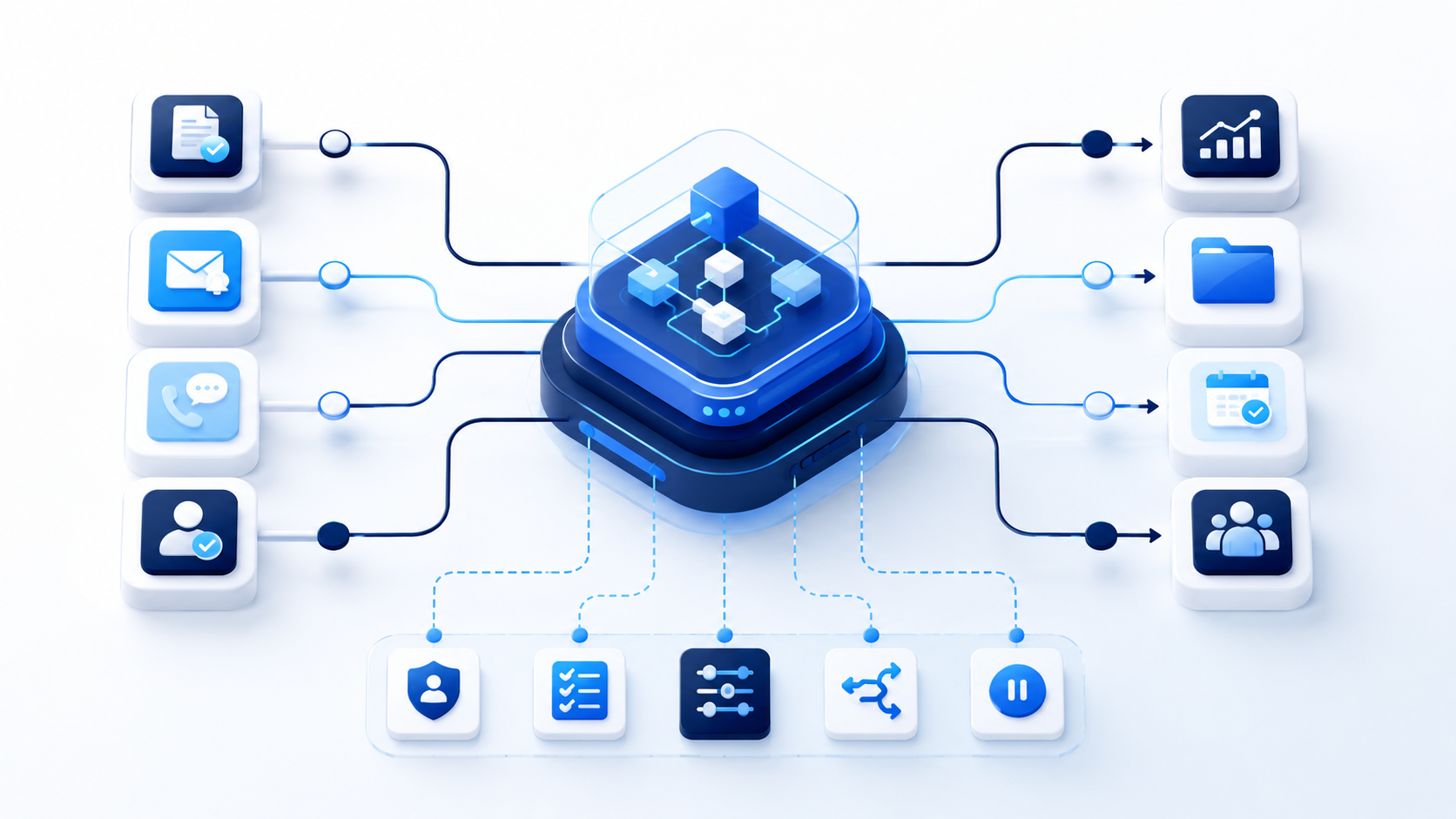
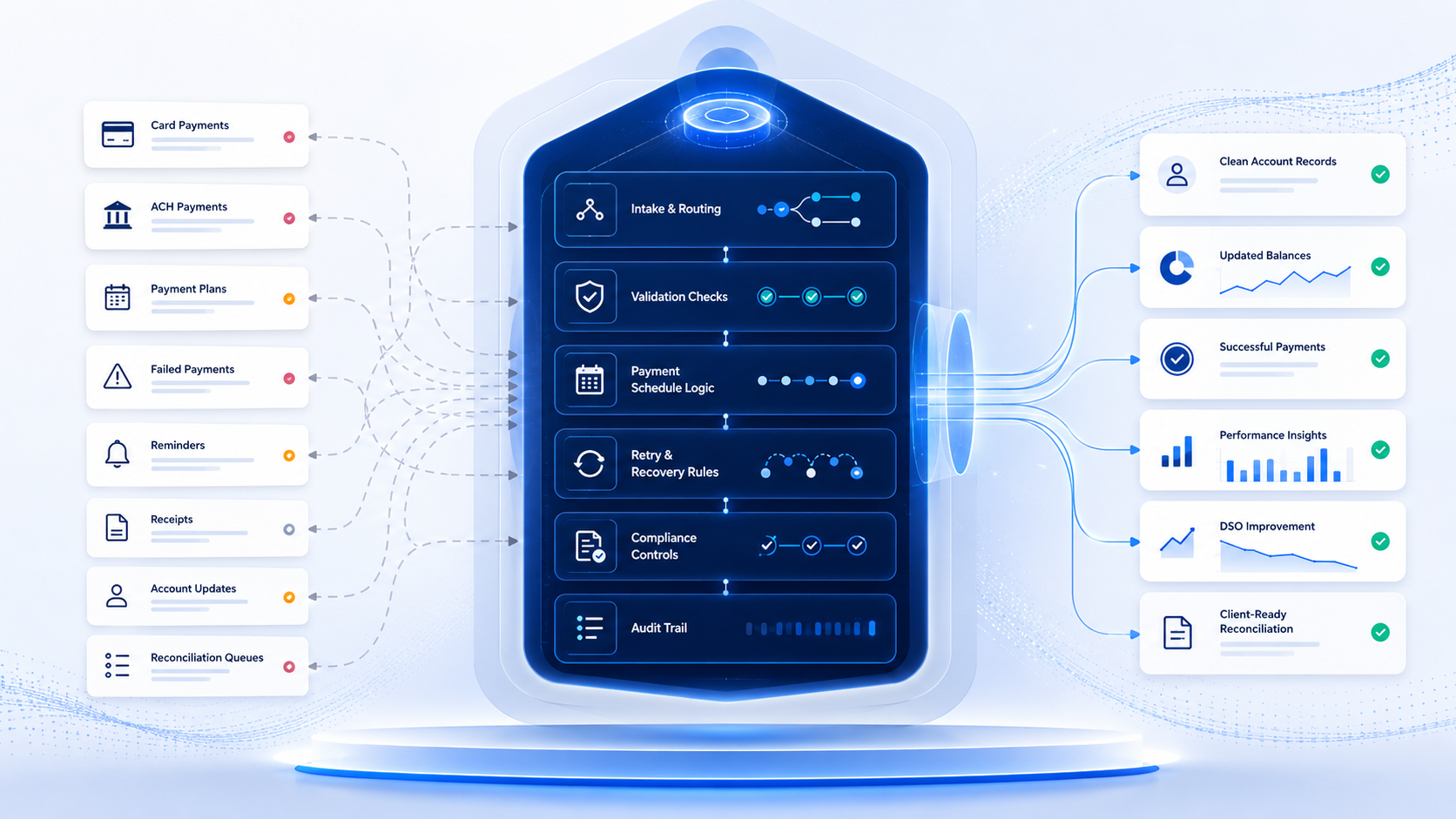
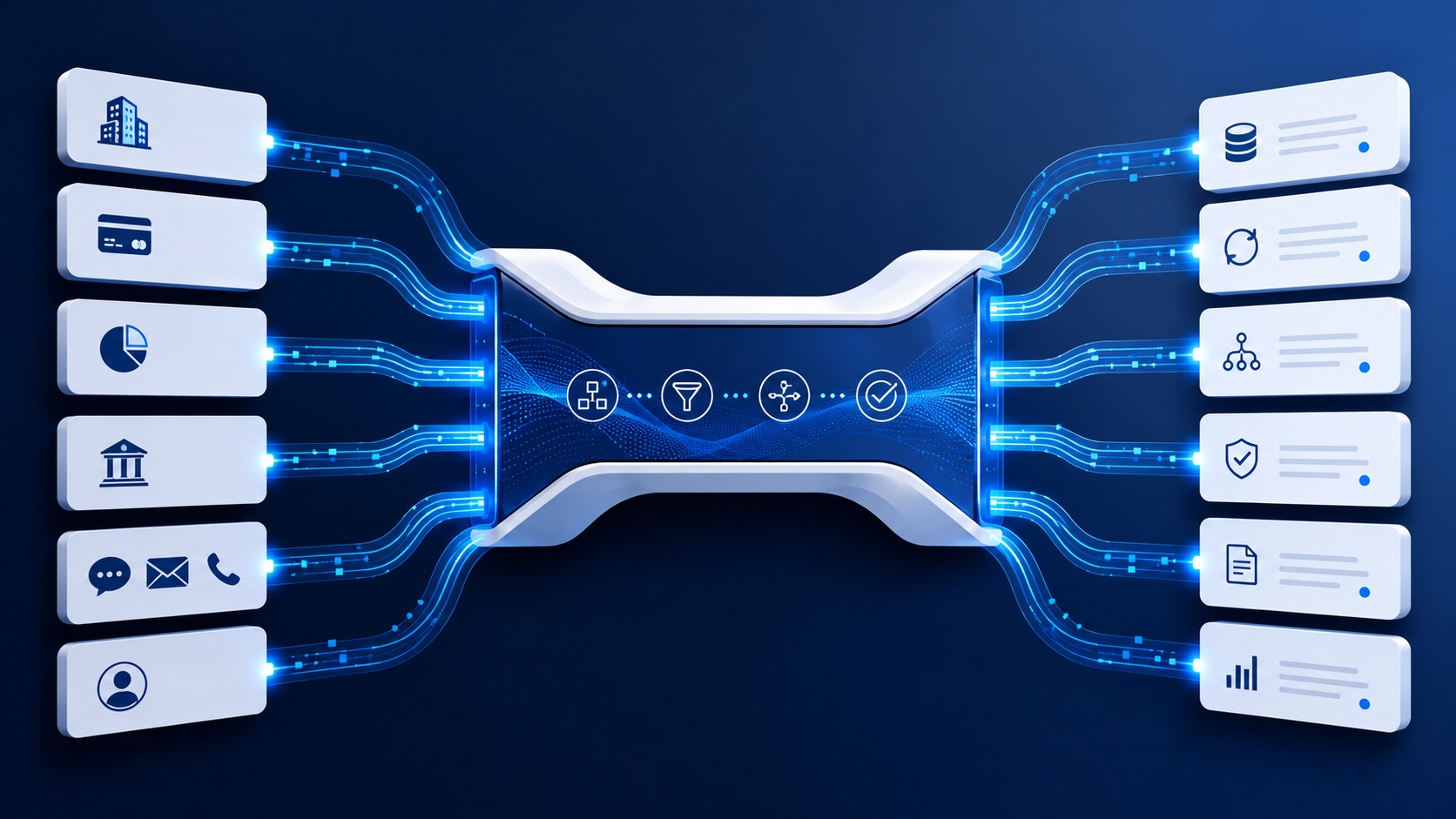
That is the real job of automated collections software. It should connect placement, communication, payment processing, dispute management, queue routing, and reporting so a meaningful account event can trigger the next approved action.
Automate State Changes, Not Random Tasks
Think of a collection account as moving through states. It arrives as a new placement, becomes eligible for outreach, receives a response, enters a payment plan, experiences a failed payment, opens a dispute, reaches an exception, or resolves.
If those decisions depend on a person noticing the event and coordinating five tools, the agency has automation islands, not automated workflows.
Our guide to automated debt collection software with enterprise guardrails describes the stronger model: software coordinates repeatable work while human judgment stays in the loop for sensitive or unusual cases.
Where Automated Collections Software Should Live
Placement and Intake
When an account arrives, collections software can validate required fields, apply client or portfolio tags, identify suspected duplicates, and route exceptions before the account becomes actionable.
That matters because bad intake data flows downstream. A missing dispute flag can affect outreach. A stale balance can affect payment processing. An incorrect client mapping can distort real-time dashboards. Reliable collection workflows start by deciding whether the account is ready for action.
Queue Routing and Prioritization
Once eligible, an account can move into a queue based on client, balance, account status, placement age, language, collector skill, contactability, risk scoring, or other approved collection strategies.
The routing should be dynamic. A payment should change what happens next. A dispute should remove the account from a standard outreach sequence. High-risk accounts may need supervisor review. Predictive analytics or machine learning can support prioritization, but the rules around eligibility and escalation should remain explicit.
Communication Follow-Up
Outreach automation works only when it uses current account state. A scheduled text, email, voicemail, or AI call should not continue simply because a campaign was created three days earlier.
The CFPB's Regulation F and the FTC's FDCPA resource are core federal references for covered debt collection activity. Agencies also need to account for state requirements, consent, client rules, disputes, and channel-specific restrictions with qualified counsel.
Payments and Cash Application
A successful payment should do more than lower a balance. Automated collections software may need to post the transaction, update the payment plan, generate a confirmation, pause unnecessary follow-up, update cash application records, change the collector queue, and feed client reporting.
A failed transaction creates a different state. The account may need a retry workflow, consumer notification, exception review, or a new follow-up date. Our debt collection payment automation guide shows why payment events should connect directly to the account lifecycle.
For credit card data, agencies should also evaluate applicable PCI Security Standards Council resources.
Disputes, Restrictions, and Exceptions
Disputes, cease requests, bankruptcy indicators, legal holds, client recalls, and other restrictions should change what the system permits.
Good collections automation software does not simply keep moving faster. It knows when work should stop, change, or wait. It can pause the relevant workflow, create a task, preserve supporting context, and route the account to the right person.
Event-Driven Automation Beats Stale Batch Logic
Batch processing still has valid uses, but many collection events happen in real time. A consumer pays at 2:14 p.m. The account should not receive a payment reminder at 2:20 because another system has not synchronized yet. A dispute entered through a customer portal should not wait until tomorrow to change outreach.
Event-driven collection workflows use current account changes to trigger the next action. That improves collections efficiency because teams spend less time reconciling what one system knew with what another system did.
This is also why integrations matter. Modern debt collection software may need to connect with creditor systems, payment processors, dialers, data providers, and ERP systems. Our guide to debt collection software integrations explains why reliable APIs and failure handling matter more than a long logo list.
Keep Humans at the Decisions That Need Judgment
A collector should not have to copy a payment result into the CRM, cancel three follow-ups, update a separate report, and message a supervisor so the account reflects reality. Those are coordination tasks.
AI agents and agentic AI can support that model when their permissions are bounded. Agentic AI is most useful when actions remain tied to explicit account states and approvals. They can summarize conversations, handle routine inbound questions, trigger approved next steps, or surface high-risk accounts. They should not improvise around policy simply because the underlying AI model is capable of generating an answer.
Collection Agency Automation Is Not the Same as Generic AR Automation
Searches for automated collections software often mix two different categories.
Creditor-side accounts receivable teams may focus on overdue invoices, invoice aging, working capital, cash flow, DSO, and days sales outstanding. Their AR automation may connect accounting software, ERP data, a customer portal, B2B payments, and reminder workflows designed to collect outstanding debts before or during internal collections.
AR teams evaluating AR solutions may also track creditworthiness and bad debt exposure, but those finance concerns are not the same as governing third-party collection workflows. Accounts receivable tools may optimize cash flow on outstanding debts; AR teams still need to distinguish that work from agency collections. A collection CRM or ERP needs different controls. A third-party collection agency needs debt recovery workflows built around placements, disputes, consent, client rules, payment plans, collector queues, audit trails, and agency reporting.
What to Ask Vendors to Demonstrate
Instead of asking for a feature checklist, ask the vendor to run a complete account journey. Show what happens when a placement fails validation. Show how a payment changes future outreach. Show how the self-service portal updates the account. Show what happens when a dispute opens, an integration fails, or a manager needs to override automation.
Also ask whether real-time dashboards show workflow health, whether administrators can change automated workflows without a long development cycle, whether SOC 2 reports or other security evidence are available for review, and whether every automated action is logged.
How Aktos Approaches Collection Automation
At Aktos, we keep automation close to the account record. Configurable workflows can respond to changes across placements, communications, payments, disputes, and other account events, while open APIs connect the external systems an agency already uses.
Final Thoughts: Automate the Operation, Not Just the Task
Automated collections software should be judged by how well it keeps the account lifecycle coordinated.
When a meaningful event happens, the system should update the account, apply approved rules, trigger the right next action, and involve a human when judgment is actually needed. That is the difference between automating isolated tasks and improving the entire debt recovery operation.
FAQs
Q: What is automated collections software?
A: It uses rules, integrations, and automation to coordinate account intake, routing, communication, payments, disputes, exceptions, and reporting as account state changes.
Q: How is collections automation software different from AR automation?
A: Accounts receivable automation focuses on creditor-side invoices, cash flow, DSO, cash application, and reminders. Agency software also needs placement governance, disputes, collector queues, audit trails, and client rules.
Q: Can automated collections software use machine learning?
A: Yes. Machine learning and predictive analytics can support segmentation, risk scoring, and prioritization, but the resulting actions should still operate inside approved workflow and compliance rules.
Q: Does a self-service portal replace collectors?
A: No. A self-service portal can handle routine balance review, payment links, payment plans, and other approved actions while collectors focus on cases that require conversation, negotiation, or judgment.