

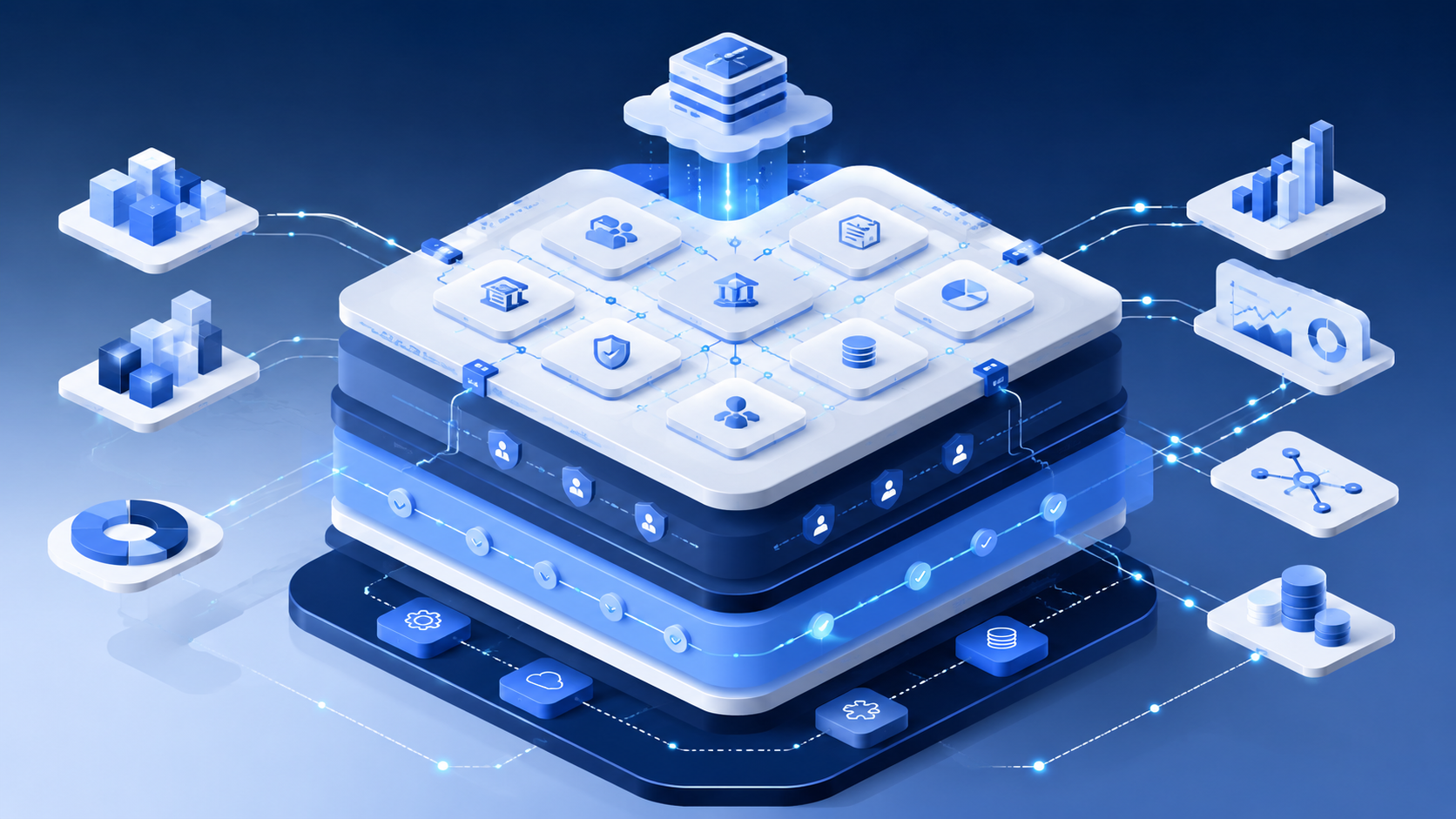
A debt collection platform built for enterprise-scale operations needs clear requirements before buyers compare vendors. At higher volume, vague feature claims are not enough. Agencies need to define how the platform should perform across accounts, users, clients, workflows, integrations, payments, permissions, reporting, and compliance documentation in day-to-day production.
Use this checklist as an operating standard. Each requirement should answer three practical questions: what must the platform do, what breaks if it cannot do it, and what proof should the vendor provide during the demo or technical review?
Requirement 1: Cloud Reliability and Performance
Requirement: The platform should deliver consistent speed, uptime, remote access, backups, monitoring, updates, and recovery planning without adding infrastructure burden to the agency.
Risk if missing: Slow searches, delayed imports, fragile reporting, downtime, and IT dependency can turn normal growth into operational drag.
Proof to request: Ask vendors to explain their hosting model, backup process, uptime monitoring, update cadence, redundancy, and performance testing under high account volume.
Requirement 2: Scalability Across Accounts, Users, and Clients
Requirement: The platform should scale across account volume, user count, client count, placement files, portfolio rules, segmentation, reporting, and automated workflows.
Risk if missing: The agency may be able to add accounts but still struggle with slow queues, delayed dashboards, manual segmentation, inconsistent client reporting, or automation that cannot keep up with volume.
Proof to request: Ask vendors to demonstrate segmentation, search, imports, reporting, and workflow automation using enterprise-scale examples rather than a small sample portfolio.
Requirement 3: Role-Based Access and Data Governance
Requirement: The platform should support role-based permissions by user type, client, portfolio, queue, function, report access, and export ability.
Risk if missing: Users may see or change information they should not access, creating unnecessary compliance risk, client trust issues, internal errors, and messy permission reviews as the agency grows.
Proof to request: Ask vendors to show how permissions work for collectors, supervisors, finance users, compliance teams, client services, IT, administrators, and client users.
Evaluate role-based permissions, client-specific data partitions, portfolio restrictions, approval workflows, export controls, and audit visibility into permission changes. For deeper context, read Aktos’ guide to data permissioning in debt collection software.
Requirement 4: Audit Logs and Compliance Visibility
Requirement: The platform should create a searchable record of account activity across users, communications, payments, disputes, consent changes, revocations, workflow edits, permission changes, and exports.
Risk if missing: Teams may have to reconstruct events from call notes, spreadsheets, vendor portals, or disconnected systems when a client, consumer, regulator, or internal reviewer asks what happened.
Proof to request: Ask the vendor to open an account record and show the full history of a payment update, communication attempt, dispute action, permission change, and workflow-triggered event.
Compliance visibility should also be reviewed against applicable federal and state requirements. The FDCPA and CFPB Regulation F create important federal requirements, and agencies should consult qualified counsel for legal interpretation.
For more on documentation, see proven audit trails for debt collection compliance.
Requirement 5: Real-Time Reporting for Operators and Clients
Requirement: Reporting should support live operational dashboards, client-facing dashboards, scheduled reports, exportable views, compliance documentation, and portfolio-level performance analysis.
Risk if missing: Client services and operations may still rely on manual exports, delayed reports, one-off spreadsheet rebuilds, or status emails that weaken client confidence.
Proof to request: Ask vendors to build or show reports for recovery performance, payment activity, disputes, collector productivity, compliance exceptions, SLA progress, and portfolio trends.
Real-time reporting also affects client trust. Large creditors often expect direct visibility into performance, account status, and reporting without waiting for manual updates. See Aktos’ article on why large creditors expect real-time collection dashboards.
Requirement 6: Integration Flexibility
Requirement: Integrations should support the actual systems your agency and clients depend on, including creditor systems, payment gateways, dialers, SMS and email tools, credit bureaus, legal systems, client portals, accounting platforms, BI tools, and document vendors.
Risk if missing: Teams may be forced into duplicate entry, delayed payment updates, broken consent syncs, unreliable placement imports, or vendor lock-in.
Proof to request: Ask whether integrations are real time or batch-based, how errors are surfaced, how retries work, how field mapping is handled, and whether integration activity is logged for audit review.
Good integrations should also support bidirectional sync, event triggers, error handling, field mapping, consent updates, payment status updates, and audit trails. For more detail, read debt collection software integrations: what agencies need.
Requirement 7: Workflow Automation Operations Can Control
Requirement: The platform should let operations teams build, adjust, and monitor workflows without relying on developers for every routing rule, client exception, or process change.
Risk if missing: Workflow updates may turn into ticket queues, manual workarounds, inconsistent collector behavior, and delayed responses to client or compliance changes.
Proof to request: Ask vendors to show how an operations user would create or update a workflow for dispute routing, payment reminders, account segmentation, revocation handling, or supervisor escalation.
No-code workflow automation lets teams update rules as clients, portfolios, laws, and internal processes change.
Requirement 8: Native Payments and Consumer Self-Service
Requirement: The platform should support ACH, cards, recurring plans, text-to-pay, payment portals, settlement workflows, payment arrangements, convenience fee handling, and real-time payment status sync.
Risk if missing: Payment activity may stay trapped in separate processors, causing delayed account updates, unnecessary calls, manual reconciliation, failed follow-up logic, and a weaker consumer experience.
Proof to request: Ask vendors to show how a consumer makes a payment, how the account updates, how receipts are logged, how failed payments are handled, and how payment activity appears in reporting and remittance workflows.
Payment workflows should also account for data security and PCI DSS when card data is involved. Native payments and self-service reduce call volume and keep records cleaner.
Requirement 9: Omnichannel Communication in One System
Requirement: The platform should coordinate phone, SMS, email, voicemail, letters, portals, and AI-assisted outreach from one connected account record.
Risk if missing: Communication history can become fragmented across tools, making it harder to honor opt-outs, track contact attempts, avoid duplicate outreach, prove compliance, and understand the full consumer journey.
Proof to request: Ask vendors to show how an SMS opt-out, portal response, voicemail, email, letter, payment, or dispute changes the next action on the account.
Omnichannel communications should not mean more messages. It should mean coordinated, logged, compliant communication across every channel. For more, read enterprise omnichannel outreach without compliance chaos.
How to Score a Debt Collection Platform During Evaluation
For each requirement, score four things: must-have capability, nice-to-have capability, risk if missing, and proof needed from the vendor.
Ask for real workflow demos, not generic feature tours. Use examples like placement intake, dispute routing, payment posting, revocation handling, client dashboards, integration error handling, and audit log review.
Final Thoughts
Enterprise platform requirements should be specific enough that operations, compliance, IT, finance, and client services can evaluate the same system against the same standard. Cloud performance, scalable account handling, permissions, audit logs, reporting, integrations, workflows, payments, self-service, and omnichannel communication are not isolated features. They are the operating foundation for a larger collection agency.
Aktos gives collection agencies a modern debt collection platform with cloud infrastructure, workflow automation, reporting, payments, compliance controls, open integrations, and AI-powered operating tools designed for scale.
FAQs
Q: What is a debt collection platform?
A: A debt collection platform is the core software agencies use to manage accounts, workflows, communications, payments, reporting, compliance controls, and integrations across the collections lifecycle.
Q: What should enterprise agencies require from a debt collection platform?
A: Enterprise agencies should require cloud reliability, scalable account handling, role-based permissions, audit logs, real-time reporting, flexible integrations, no-code workflows, native payments, and coordinated omnichannel communications.
Q: Why are audit logs important in debt collection software?
A: Audit logs help agencies prove what happened across accounts, users, payments, disputes, communications, consent changes, and workflow updates.
Q: How does cloud infrastructure help collection agencies scale?
A: Cloud-native infrastructure can reduce IT burden, support remote access, improve disaster recovery, handle account spikes, and keep performance steadier as user count, client count, and account volume grow.
Q: What integrations should a modern collection platform support?
A: It should support creditor systems, CRMs, ERPs, dialers, SMS and email tools, payment gateways, payment processors, credit bureaus, legal systems, client portals, BI tools, and accounting systems.


.png)