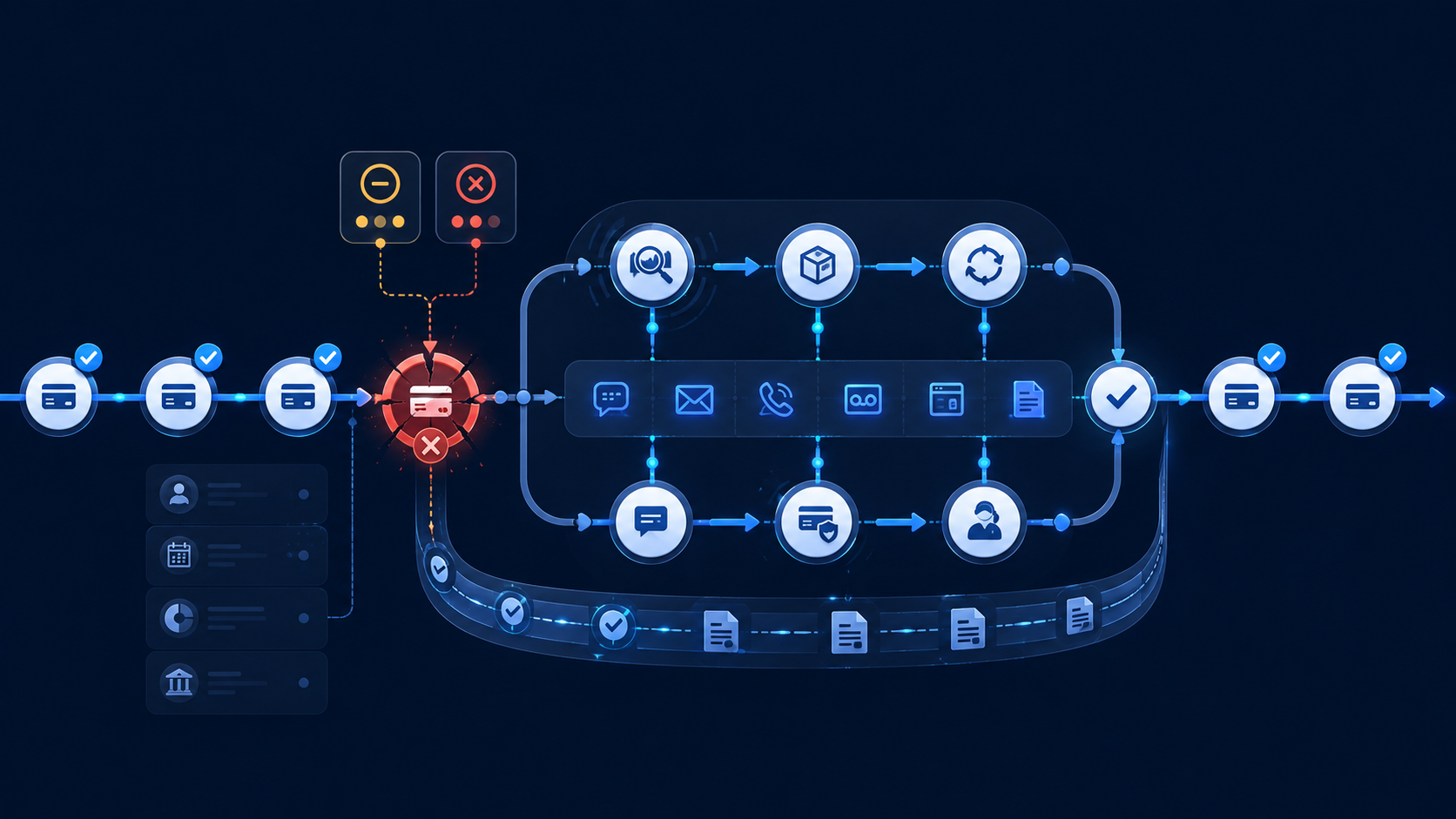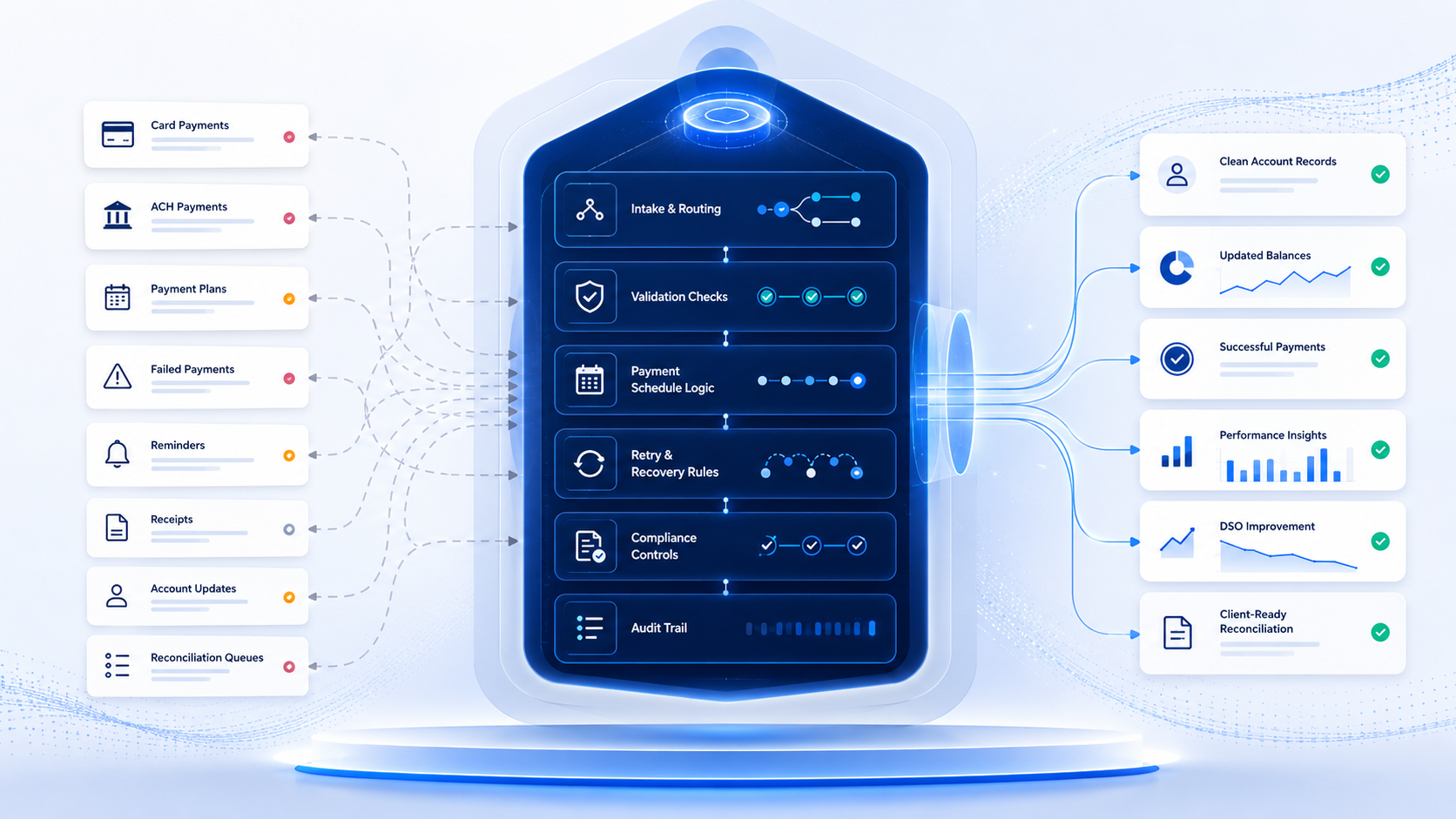
A consumer agrees to pay, enters card details, and receives a confirmation. That apparent simplicity depends on underwriting, a gateway, an acquiring relationship, settlement processes, authorization controls, fees, and timely posting to the collection account. Debt collection merchant services should be evaluated as the infrastructure behind the payment, not merely a checkout screen. A convenient consumer experience means little if approved funds cannot be reconciled accurately or a return reopens the account unexpectedly.
Map Gateways, Processors, Merchant Accounts, and Settlement
The payment gateway securely transmits payment information for payment processing. Payment processors and acquiring banks help route credit card processing transactions and manage authorization, clearing, and settlement. The merchant account arrangement establishes who is permitted to accept funds for the relevant activity. A high risk merchant account proposal needs explicit underwriting review. The debt collection industry includes different business models, and approval should identify whether consumer or commercial collection activity is covered.
For a collection agency merchant account, map consumer authorization through bank settlement, client allocation, commission, and reversal handling. Debt buyers should confirm merchant-of-record responsibilities too. A debt collection merchant account must connect transaction references to individual records; a daily deposit total alone cannot explain where each payment went.
The important distinction is between information that has merely been entered and information that has been reviewed and accepted for operational use. That boundary should be visible to supervisors and administrators, especially when a client places high volumes of accounts in a short period. An agency that knows exactly where an account is blocked can correct the underlying issue without asking every collector to develop a workaround.
For bank debits, connect ACH authorization records to the relevant account and transaction reference, so finance can distinguish permission to initiate a payment from evidence that the funds actually settled.
Compare ACH Returns, Card Chargebacks, and Processing Costs
Card payments can be fast and familiar but carry network costs and the possibility of chargebacks. ACH may have a different fee structure and settlement timetable, with its own return codes, authorization requirements, and operational risks. Agencies should compare total cost per successful payment rather than only an advertised transaction rate. A low processing fee can be offset by reserves, minimums, exception labor, or delayed access to funds.
In credit card processing, a chargeback is not the same event as a declined authorization. Test both, alongside an ACH return, partial payment, refund, and disputed charge. Payment plans must distinguish attempted, authorized, settled, returned, and reversed amounts. Accurate receipts and current balances help consumers understand what was actually completed.
A chargeback can change what happens in every channel. The payment gateway, account ledger, and collection tools should share the resulting state before acting again. For debt buyers, a reversed payment also affects ownership-level reporting. Review chargeback ratios alongside investigation outcomes rather than assuming every disputed transaction is friendly fraud or every dispute proves collector error.
A strong payment posting architecture carries returns and reversals back into balances, arrangements, and client reporting, preventing a successful checkout message from becoming the agency's only record of payment status.
Evaluate Underwriting, Payment Security, and Vendor Portability
Evaluate underwriting policy, supported payment methods, security responsibilities, portability, payment-page design, chargeback support, and contractual obligations for a debt collection merchant account. Determine whether the provider allows the agency to bring an existing gateway or payment processor and how smoothly the software can switch vendors. Review any convenience fee or surcharge model with counsel and the payment networks; fee permission can vary by law, contract, location, and method.
Ask vendors to demonstrate a transaction flowing into the account ledger, updating an arrangement, suppressing unnecessary follow-up, and appearing in client reporting. PCI DSS obligations do not disappear merely because a vendor hosts a payment form. Identify which parties store, transmit, or can access card data, then document the controls and incident response responsibilities.
Compare payment processing solutions against actual collection scenarios. A virtual terminal should preserve account references and authorization evidence. Ask whether tokenization supports recurring payments without placing sensitive credentials in account notes. For debt collection agencies, security, chargeback support, and accurate status updates matter more than the appearance of a checkout page.
Evaluate the consumer payment portal alongside merchant services, checking that payment methods, receipts, authentication, and failures remain connected to the same collection account rather than a separate checkout history.
Test Payment States Before Launching Merchant Services
Appoint one owner across collections, compliance, finance, technology, and client services. Merchant service providers and acquiring banks should identify their corresponding contacts. Document the sponsor bank relationship, escalation route, and who can suspend processing. Whether evaluating PayPal or another provider, obtain written acceptance of your debt collection business model instead of assuming ordinary ecommerce permissions apply.
Test a representative portfolio, including payment plans for recent placements and older accounts with history. Debt buyers and third-party collections teams should test their respective ownership and allocation rules. Include ACH payments, an eCheck return, and recurring billing changes. Define expected results before rollout; successful payment processing means the account and funding records agree, not merely that a screen turns green.
Run a sample payment through authorization, settlement, posting, and client remittance, then reverse it with a card chargeback or ACH return. Check that the collection balance, payment arrangement, receipt history, and finance ledger all reflect the same outcome. Ask the merchant services provider to show transaction IDs, funding delays, processor fees, and reserve deductions. A successful checkout matters less than a transaction finance can reconcile.
Track failed payments, time to resolve exceptions, settlement delays, and chargeback ratios by portfolio. Compare chargeback ratios using the provider's stated calculation, and review reserve requirements with acquiring banks. A collection agency merchant account can look inexpensive until manual investigation and delayed funds are included. Measure total cost per successful payment, not only the advertised rate. Debt collection agencies should request an example month showing monthly processor charges, returned transactions, reserves, and the resulting deposit. Reconcile that example to the ledger before signing. The proposal should explain which charges continue during a processing interruption and who must approve any change in the contract terms.
Assign Payment Authorization, Security, and Fee Responsibilities
Review PCI DSS responsibilities with processors. Apply Regulation E's authorization requirements, review fees under Regulation F and the FDCPA with counsel, and use ACA International for training. Provider assurances cannot replace payment evidence.
Ask a collection agency merchant account provider to demonstrate a deliberate exception. Use ACA International training questions to structure the discussion, not as proof of underwriting approval. Confirm who changes rules and retains audit evidence.
Aktos connects payment activity with collection workflows, account balances, and transaction history. Agencies can evaluate how payment updates reach balances, arrangements, and follow-up activity during a demonstration.
Final Thoughts: Follow the Money Beyond Checkout
Taking a payment is only the beginning. Debt collection merchant services also determine when funds settle, how transaction fees and reserves are recorded, and what happens when an ACH debit returns or a cardholder disputes a charge. Those events must find their way back to the right collection account and client ledger. An agency that can't reconcile a payment reversal quickly may end up reporting the wrong balance or pursuing a debt that has already been adjusted.
Bring your processor's transaction and return scenarios to an Aktos demo, and evaluate how payment events would flow into your agency's collection workflows and reporting.
FAQs About Debt Collection Merchant Services
Q: What is the difference between a payment gateway and processor?
A: A gateway transmits payment details securely to the processing ecosystem; a processor handles transaction messaging and related processing functions. Their exact roles can overlap by provider.
Q: Can collection agencies accept ACH and cards?
A: Yes, where supported by their providers and applicable rules. Agencies need the appropriate agreements, consumer authorizations, security controls, and reliable posting and returns procedures.